What Does “Research Use Only” (RUO) Mean?
What the RUO label signals, where the term comes from, what it does not permit, and why a disclaimer alone does not make a sale lawful.
 DODaniel Okafor, MSResearch Analyst, Molecular Biology~6 min read
 RUO
“For Research Use Only” is one of the most common phrases in laboratory supply catalogs and one of the most misunderstood. Getting the research use only meaning right matters to everyone in the supply chain, from the supplier who applies the label to the scientist who opens the vial. The label says something specific about what a product is intended for and, just as importantly, about what it is not intended for.
This article explains where the RUO designation comes from, how it is applied to research chemicals such as synthetic peptides, how research materials differ from regulated pharmaceutical products, and what documentation, testing and handling a laboratory should expect. It is general information, not legal advice.
Defining Research Use Only
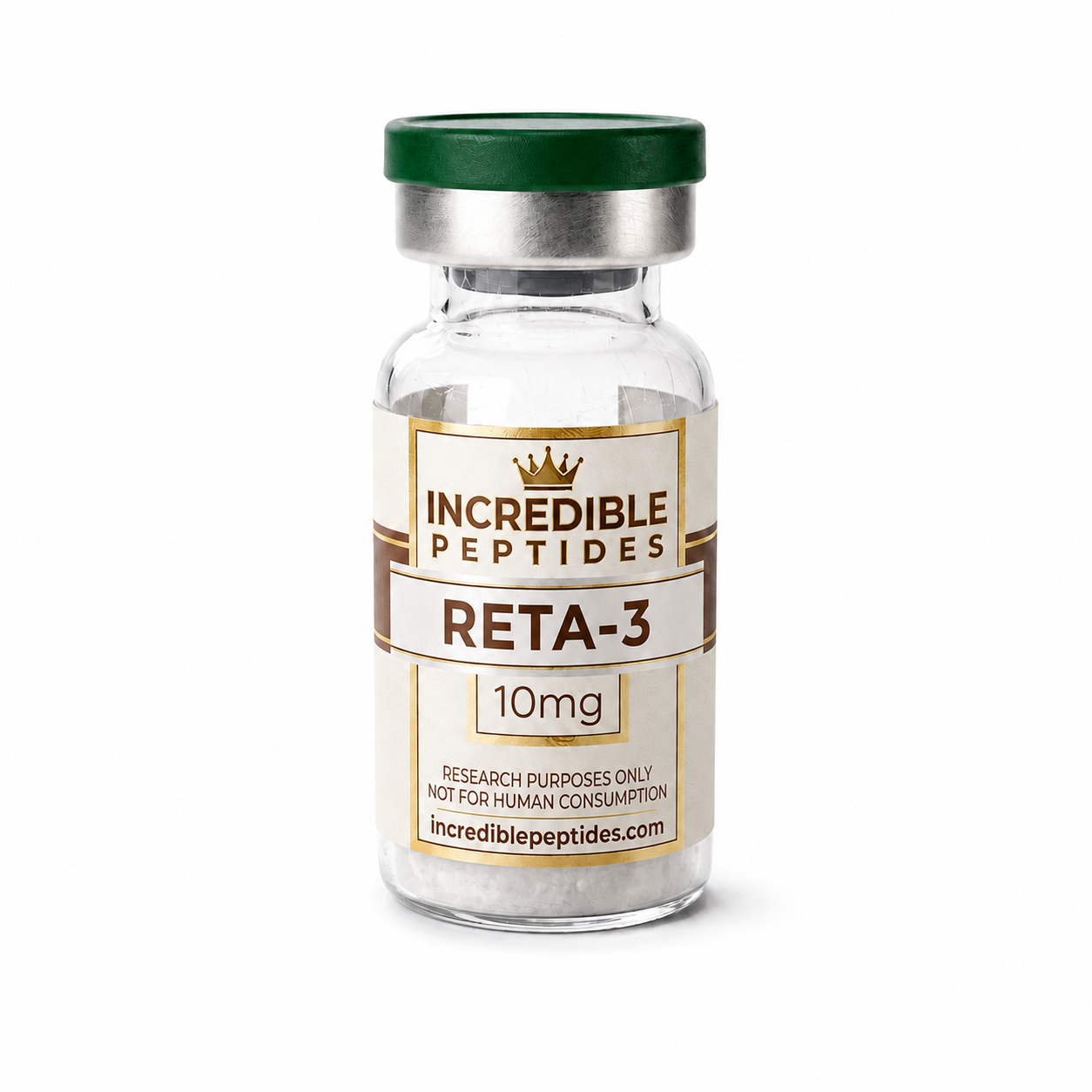
At its simplest, an RUO label states that a material is supplied for laboratory investigation and is not intended for diagnosis, treatment or any use in or on humans. It describes intended use. It is not a purity grade, not a certification and not a statement that a regulator has reviewed the product.
The regulatory origin of the term
In US regulation, the exact phrase has a specific home. Under 21 CFR 809.10(c), in vitro diagnostic (IVD) products that are in the laboratory research phase of development, and are not represented as effective diagnostic products, carry the statement “For Research Use Only. Not for use in diagnostic procedures.” The same section sets out a different statement for products in the investigational phase, known as investigational use only (IUO). Both statements rest on the understanding that the product is not being distributed for diagnostic use.
In 2013 FDA issued guidance on the distribution of IVD products labeled RUO or IUO. A central message of that guidance is that the label has to reflect reality: an RUO statement does not settle the question of intended use if the way a product is marketed, and the customers it is sold to, point toward diagnostic use.
How the term is used for research chemicals
Strictly, 809.10(c) concerns in vitro diagnostic products. Research chemicals, reagents and synthetic peptides sold for bench work are not diagnostics, and no single federal regulation defines “research use only” for every category of laboratory material. Across the life-science supply industry, however, the phrase is the standard way to communicate that a material is intended solely for in vitro research, analytical work or properly overseen animal studies, and not for human or veterinary use. Our research use only policy describes how Incredible Peptides applies that convention to its own products and sales. Outside the IVD context the phrase is a statement of intended use, and its practical meaning depends on the regulatory framework that applies to the specific material.
Research Materials Versus Pharmaceutical Products
RUO is easiest to understand by contrast with a regulated pharmaceutical product. Such a product, whether a drug, biologic or diagnostic, passes through full pharmaceutical development and regulatory review, with appropriate manufacturing controls and approved labeling. An RUO material has none of these. It has not undergone that development or review, it is not manufactured to drug-product standards and it carries no approved indication.
It follows that RUO material is for laboratory research use only and is not for human or veterinary use in any form, not for use as a food or dietary supplement and not for diagnostic decisions. Sharing a sequence with a regulated pharmaceutical product does not change this, because a research reagent and a pharmaceutical product are different products made and controlled for different purposes. Nor do published findings. Much of the literature on research peptides comes from cell culture and animal models, which are preliminary by nature and describe only the models studied.
Who Research Materials Are For
RUO products are intended for qualified users in appropriate settings. Typical purchasers include academic laboratories, pharmaceutical and biotechnology discovery groups, contract research organizations, analytical laboratories developing methods, and institutions conducting animal research under the oversight of an institutional animal care and use committee. What they share is trained personnel, suitable facilities and a defined experimental purpose.
Responsible suppliers take steps to confirm that buyers fit this profile, for example by asking for institutional details or an acknowledgment of research-use terms before purchase. Researchers browsing a research peptide catalog should expect each listing to describe a compound’s identity, form and storage, and to make no claims about biological effects. New staff may find our introduction to research peptides a useful starting point.
Documentation, Testing and Handling
Because RUO materials sit outside the drug-approval system, documentation does much of the work of establishing quality. Each production lot should be accompanied by a certificate of analysis that reports both the methods used and the results obtained. For synthetic peptides that normally means reversed-phase HPLC for purity and mass spectrometry for identity, with tests such as net peptide content or water content where relevant. A COA is only meaningful if it matches the lot in hand, so the lot number on the vial, the certificate and the purchase record should agree. Our guide to reading a peptide certificate of analysis explains how to interpret these results.
Testing of research materials is not standardized the way a pharmacopeial monograph standardizes a pharmaceutical substance, so researchers should read the method details, not just the headline number. An HPLC purity value reflects the conditions under which it was measured and does not by itself confirm identity, while an intact mass confirms identity without quantifying impurities. Where a result will be central to a publication, many laboratories run their own confirmatory testing on receipt.
Handling is the third element. An RUO label does not imply that a material is harmless. Many research compounds have limited toxicological data and should be handled according to the safety data sheet and the laboratory’s chemical hygiene plan. Storage conditions stated by the supplier, typically cold, dry and protected from light for lyophilized peptides, should be followed and recorded.
Regulatory Distinctions and Their Limits
A frequent misconception is that printing “research use only” on a label makes any sale lawful. It does not. FDA determines a product’s intended use from objective evidence, and its intended-use regulations for drugs and devices (21 CFR 201.128 and 21 CFR 801.4) describe how labeling claims, advertising, oral or written statements and the circumstances of distribution can all establish that intent. A material labeled RUO but promoted with claims or instructions pointing to non-research use may be judged by how it is actually marketed, not by its disclaimer.
Other frameworks may also apply. FDA’s investigational new drug regulations include a provision, 21 CFR 312.160, covering drugs shipped solely for tests in vitro or in laboratory research animals, with its own labeling and record-keeping conditions. State law, import and export controls, institutional biosafety rules and animal-welfare regulations may also be relevant, and which rules apply is fact-specific. Organizations with questions about a specific product or study should consult their institution’s compliance office or qualified regulatory counsel rather than relying on a label or a general article such as this one.
RUO and Research Integrity
The RUO designation also has a scientific dimension: research materials generate data that others rely on, so their provenance must be traceable. Recording the supplier, product name, lot number, certificate of analysis and storage history in the laboratory record allows results to be reproduced and anomalies to be investigated.
Integrity also extends to how findings are reported. Results obtained with an RUO material in a cell line or an animal model should be described as exactly that, with the limitations of the model stated, rather than presented as evidence of benefit beyond the model. Respecting the research-only boundary in practice and in communication protects the credibility of the work.
Shared Responsibilities Under an RUO Label
An RUO label is a commitment that runs in both directions. The supplier undertakes to market a material only as a research reagent, document each lot accurately and sell to appropriate users. The buyer undertakes to use it only for legitimate laboratory research, handle it safely and keep records that support reproducible science. How these responsibilities apply to orders placed with us is set out in our research use only policy, and our article on research use only labels explains the other elements found on a well-constructed label.
References
- US Code of Federal Regulations, 21 CFR 809.10(c): labeling of in vitro diagnostic products for research use only and investigational use only.
- US Food and Drug Administration. Distribution of In Vitro Diagnostic Products Labeled for Research Use Only or Investigational Use Only: Guidance for Industry and Food and Drug Administration Staff. 2013.
- US Code of Federal Regulations, 21 CFR 201.128 (drugs) and 21 CFR 801.4 (devices): meaning of “intended uses”.
- US Code of Federal Regulations, 21 CFR 312.160: drugs for investigational use in laboratory research animals or in vitro tests.
Educational content for research use only. Not for human consumption. Nothing here is medical advice or a claim about safety or efficacy.

 EM