How to Read a Peptide Certificate of Analysis (COA)
What a peptide COA reports, how to read each field, and how to check that a certificate matches the vial in front of you.
 EMElena Marsh, PhDSenior Research Analyst, Analytical Chemistry~6 min read
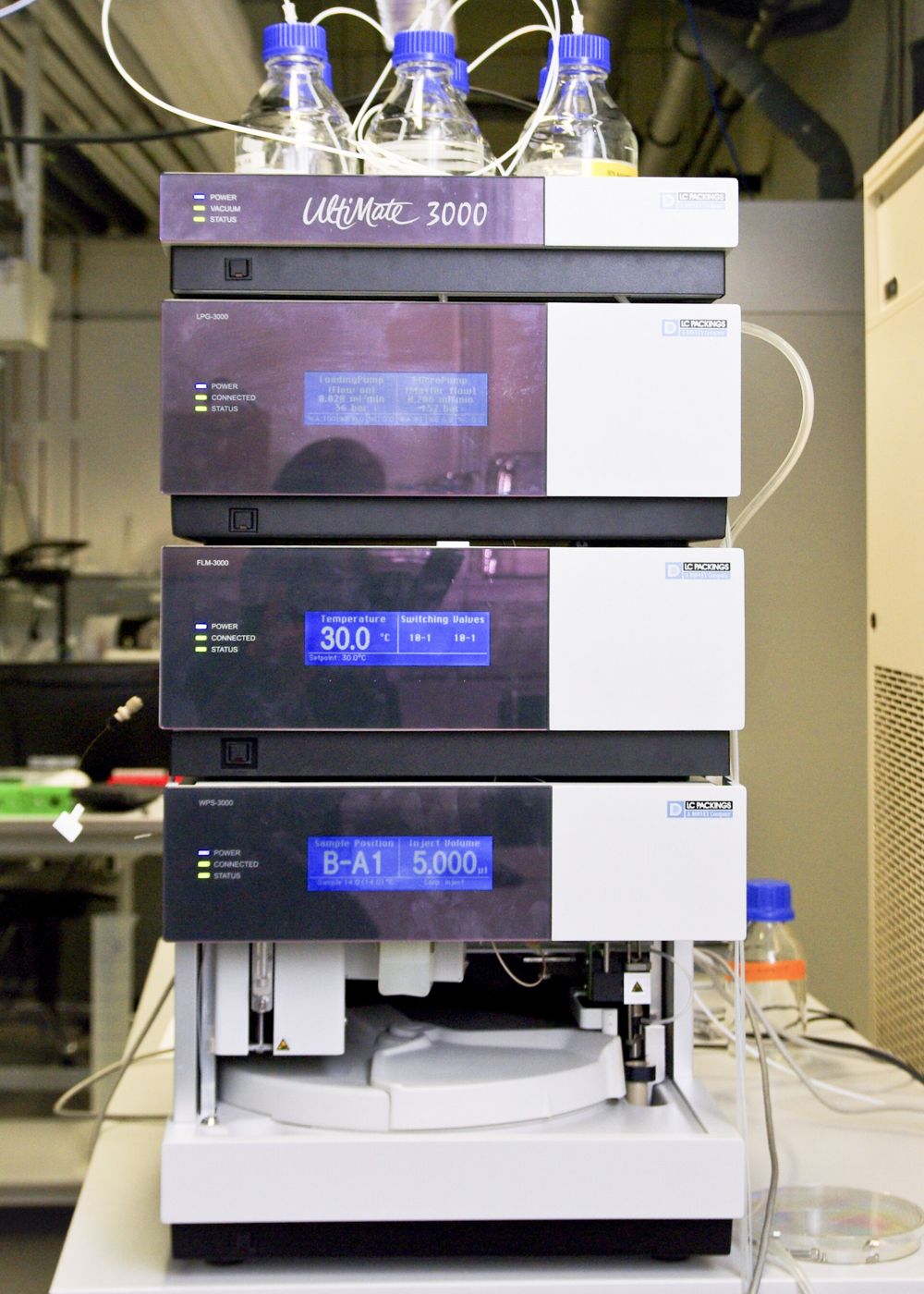
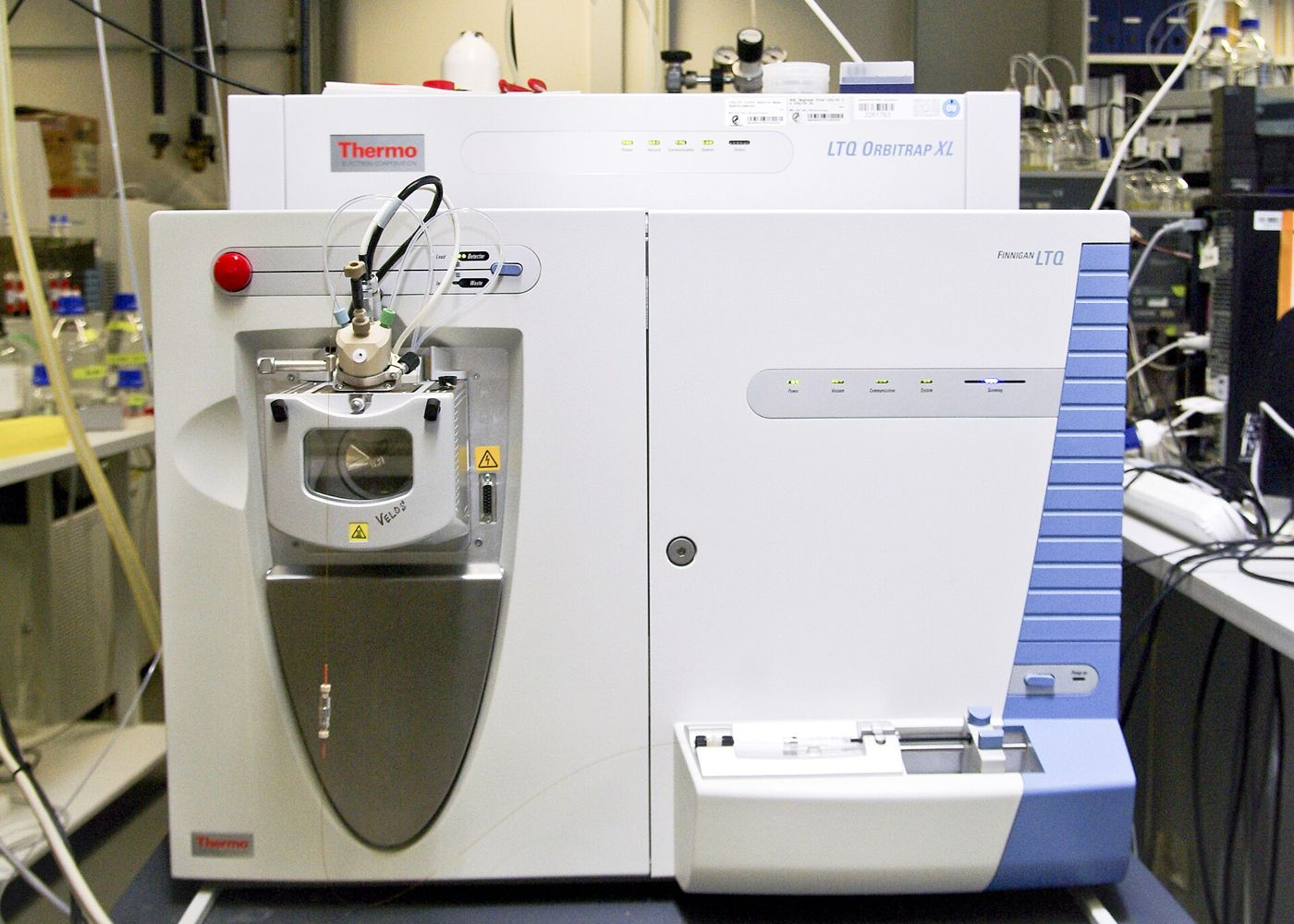
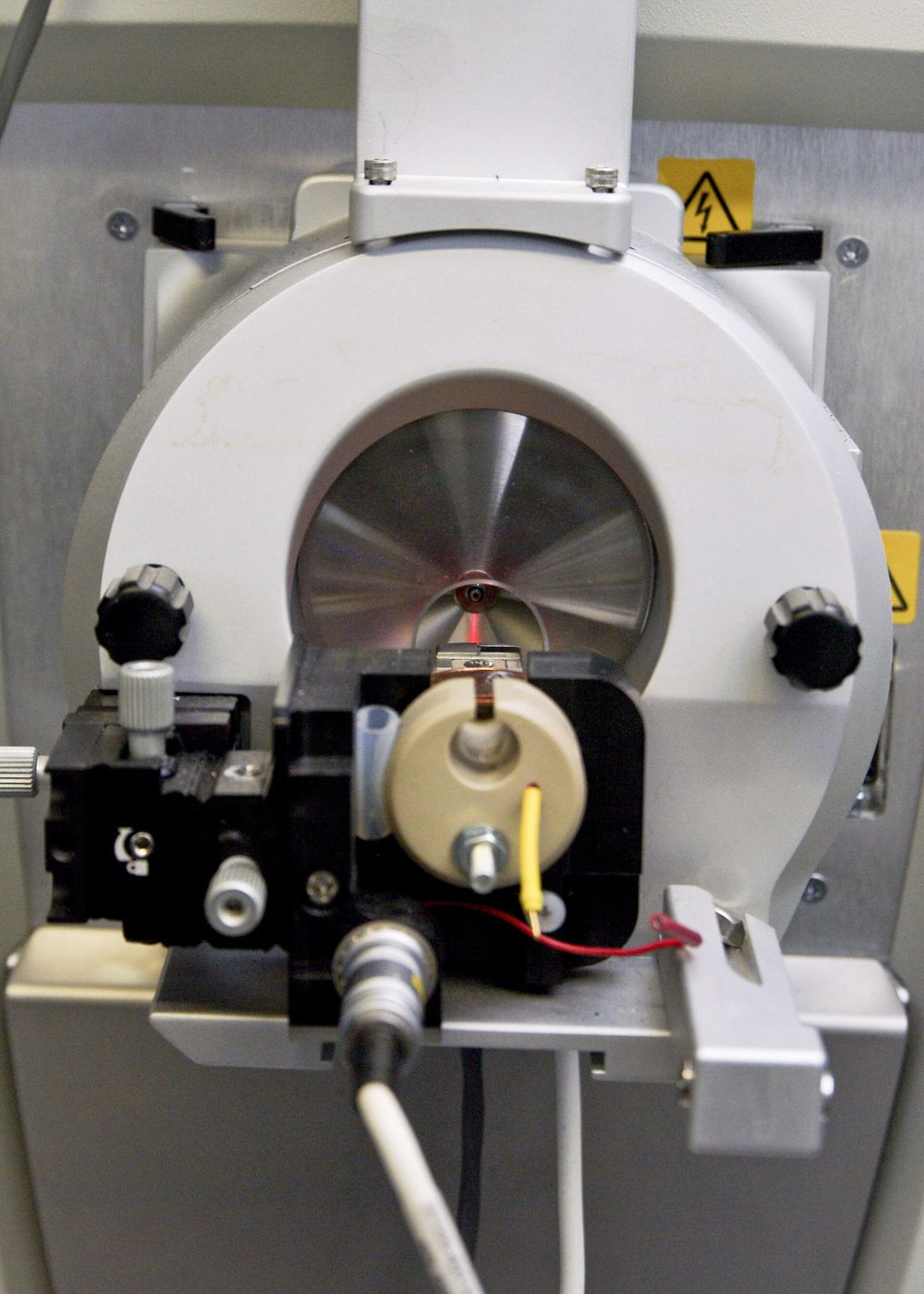 Analytical QCPhoto: Nadine90 / Wikimedia Commons, CC BY-SA 3.0
A peptide certificate of analysis is the document that connects a vial in your laboratory to the analytical data generated for the lot it came from. For researchers, it is the main evidence that a material is what its label says and that its quality was measured rather than assumed. Certificates vary widely in layout and completeness, however, and several of the figures they contain are easy to misread.
This guide explains what a COA is, works through the fields found on a typical peptide certificate, and describes how to interpret the identity and purity results. It finishes with a set of checks for confirming that a certificate genuinely belongs to the material in front of you.
What a certificate of analysis is
A certificate of analysis (COA) is a document that reports the results of tests run on one specific production lot. It ties a lot number to measured values such as identity, purity and appearance, along with the methods used and who ran them.
Because it describes a single lot, a COA is only useful if the lot number on the certificate matches the lot number on your vial. That lot-specific character is what separates a certificate from a specification sheet. A specification lists the acceptance criteria a product is expected to meet, for example a minimum purity; a certificate reports what was actually measured for one batch against those criteria. A document with no lot number, or one reused unchanged across many batches, is closer to a specification than to a certificate. The COA lookup tool is the place to retrieve the certificate that corresponds to a particular lot.
The concept is formalized in regulated manufacturing. ICH Q6B, for instance, describes a specification as a list of tests, references to analytical procedures and acceptance criteria. Research-use materials are not subject to pharmaceutical release requirements, but the same logic helps a researcher judge how much information a certificate actually conveys.
The fields on a typical peptide COA
Layouts vary between suppliers and laboratories, but most peptide certificates report the fields below.
| Field | What it reports |
|---|---|
| Product and lot | The compound name, size and lot number. Check the lot against your vial label first. |
| Identity | Usually by mass spectrometry. The observed mass is compared with the theoretical mass for the expected sequence. |
| Purity | Usually by reversed-phase HPLC, reported as the main peak’s share of total peak area at a stated wavelength. |
| Appearance | A visual description, for example a white lyophilized powder. |
| Test date and laboratory | When the tests ran and which laboratory ran them, which matters if you need to confirm accreditation. |
More detailed certificates add further fields. The sequence and molecular formula may be printed so that the theoretical mass can be checked independently. Net peptide content, water content (often by Karl Fischer titration) and counter-ion content describe what the powder is made of beyond the peptide itself. Some certificates include amino acid analysis or, for materials intended for cell-based work, an endotoxin result. A signature or approval line shows who reviewed and released the data. None of these is universal, so their absence is not automatically a problem, but their presence tells you more about the lot.
Reading the identity result
Mass spectrometry measures the mass-to-charge ratio of ionized molecules. For peptides, the result is usually deconvolved into a single molecular mass and compared with the value calculated from the sequence.
A close match supports identity. It does not, on its own, rule out isomers or sequence variants that share the same mass, which is why identity is often confirmed alongside other methods. The reasoning behind combining complementary techniques is set out on our peptide purity testing page, which describes which tests are run and why.
Two details make the comparison meaningful. First, both values should be shown: a certificate that prints only a calculated molecular weight has restated the sequence, not tested the sample. Second, the type of mass matters. A monoisotopic value from a high-resolution instrument and an average value calculated from natural isotope abundances can differ by more than a dalton for a peptide of a few kilodaltons, so a small apparent mismatch may simply reflect different conventions. Shifts of about 22 Da (sodium adduct) or 16 Da (oxidation) usually have a recognizable chemical explanation. The underlying technique is covered in mass spectrometry for peptide identity testing.
Reading the purity result
HPLC separates the components of a sample. Purity is commonly reported as area percent: the area of the main peak divided by the total area of all detected peaks.
- The figure depends on the detection wavelength and method, so values from different methods are not directly comparable.
- Area-percent purity does not measure water, salts or counter-ions. Net peptide content is a separate measurement.
- A high purity value says the sample is mostly one component. Identity testing says what that component is.
Most peptide methods detect at roughly 210 to 220 nm, where the peptide backbone absorbs. A certificate that states the wavelength and, ideally, the column or method reference lets a reader judge whether two purity figures are comparable. If a chromatogram is attached, look for a dominant, reasonably symmetrical main peak and note whether minor peaks were integrated or excluded. The chromatography itself is explained in our guide to peptide HPLC purity testing.
Net peptide content and other quantitative fields
Purity and content are frequently confused. Purity describes the proportion of peptide-related material that is the target sequence; net peptide content describes the proportion of the total powder weight that is peptide at all. Synthetic peptides are usually isolated as salts, commonly trifluoroacetate or acetate, and lyophilized solids hold residual water. As a result, the mass of actual peptide in a vial is lower than the gross weight of powder, even when HPLC purity is high.
For laboratory work that depends on accurate molar concentrations, this matters more than a fraction of a percent of purity. If net peptide content is reported, use it in concentration calculations. If it is not, record that the stated amount is a gross powder weight, so that results can be interpreted correctly later.
Checking that a COA matches your vial
Before relying on a certificate, confirm these points.
- The lot number on the COA matches the label on your vial.
- The product name and size match what you ordered.
- Both identity and purity are reported, with the method named for each.
- The testing laboratory is identified, and its accreditation can be checked if relevant to your work.
- The test date is consistent with the lot you received.
Accreditation to ISO/IEC 17025 indicates that a laboratory has demonstrated competence for specific tests; it is worth checking that the accreditation scope covers the methods named on the certificate. If anything does not match, set the material aside until the discrepancy is resolved. For a vial already in hand, you can use the COA lookup to retrieve the certificate for your lot number and compare the two directly.
Keeping the certificate with your records
A COA is most useful when it stays attached to the work that relied on it. Filing the certificate, or at least its lot number, identity result, purity figure and test date, alongside experimental records means that any unexpected result can later be traced back to the specific material used. That habit supports reproducibility within a laboratory and makes methods sections more complete. Lot numbers and their role in tracing materials are discussed further in batch traceability and lot numbers.
References
- International Council for Harmonisation. ICH Q6B: Specifications: Test Procedures and Acceptance Criteria for Biotechnological/Biological Products. 1999.
- United States Pharmacopeia. General Chapter <621> Chromatography.
- International Organization for Standardization. ISO/IEC 17025:2017 General requirements for the competence of testing and calibration laboratories.
- International Council for Harmonisation. ICH Q2(R2): Validation of Analytical Procedures.
Educational content for research use only. Not for human consumption. Nothing here is medical advice or a claim about safety or efficacy.