What Are Research Peptides? A Beginner’s Guide
A plain-language introduction to peptides, how research-grade material is made and tested, and how it differs from approved medicines.
 DODaniel Okafor, MSResearch Analyst, Molecular Biology~6 min read
 Fundamentals
Research peptides are short chains of amino acids produced for laboratory investigation. They appear in cell-culture experiments, receptor-binding assays, analytical method development and teaching labs, and they are bought by universities, contract research organizations and independent investigators. For anyone new to the field the term can be confusing, because the same molecule may exist as a research chemical, as a component of a regulated pharmaceutical product or as an endogenous substance in the body, and each of those contexts carries different expectations.
This guide explains what a peptide is chemically, how research-grade material is manufactured and characterized, how it differs from a regulated pharmaceutical product, and what a careful buyer should expect from a supplier. It is written for students, new laboratory staff and procurement teams who need a reliable starting point.
Peptides in Brief
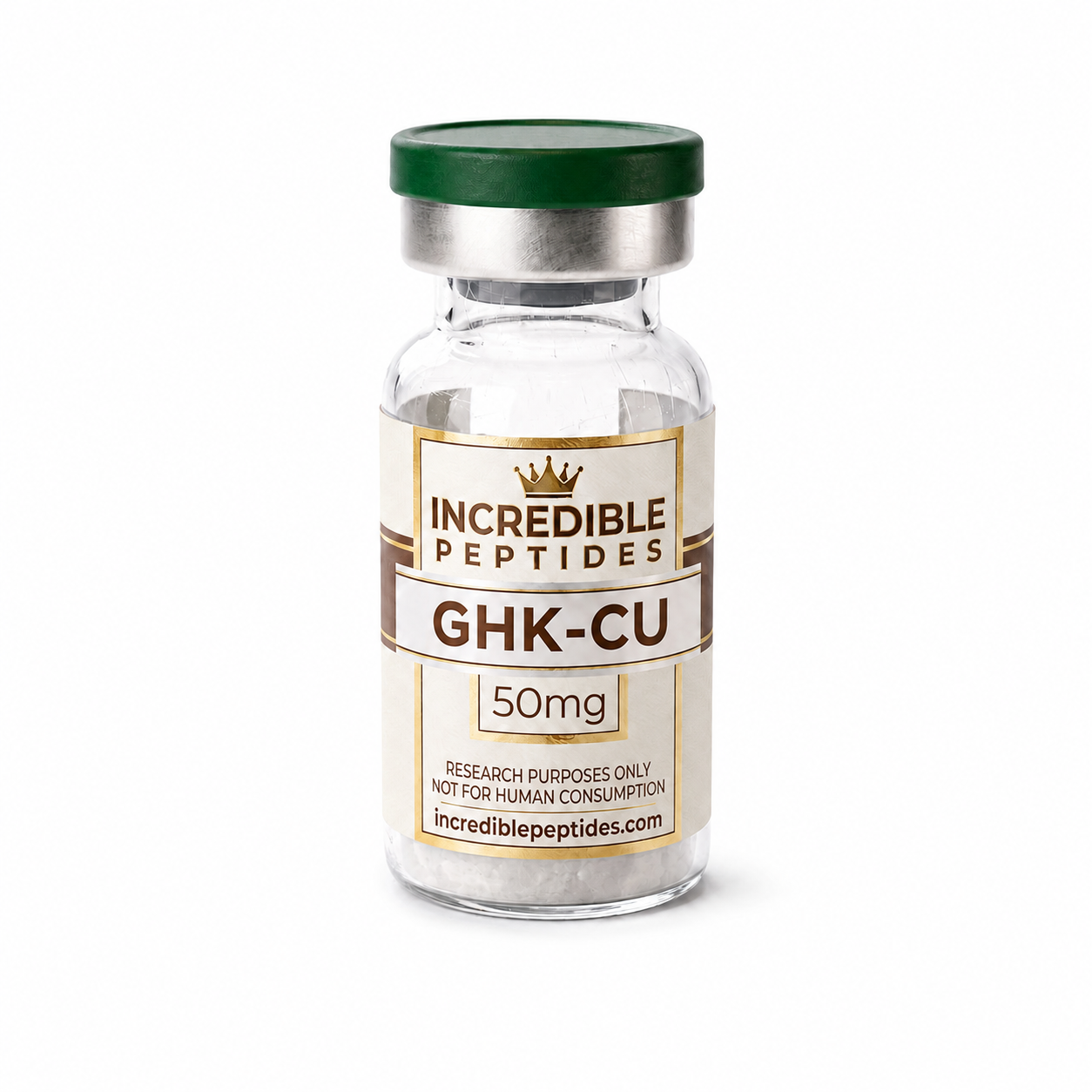
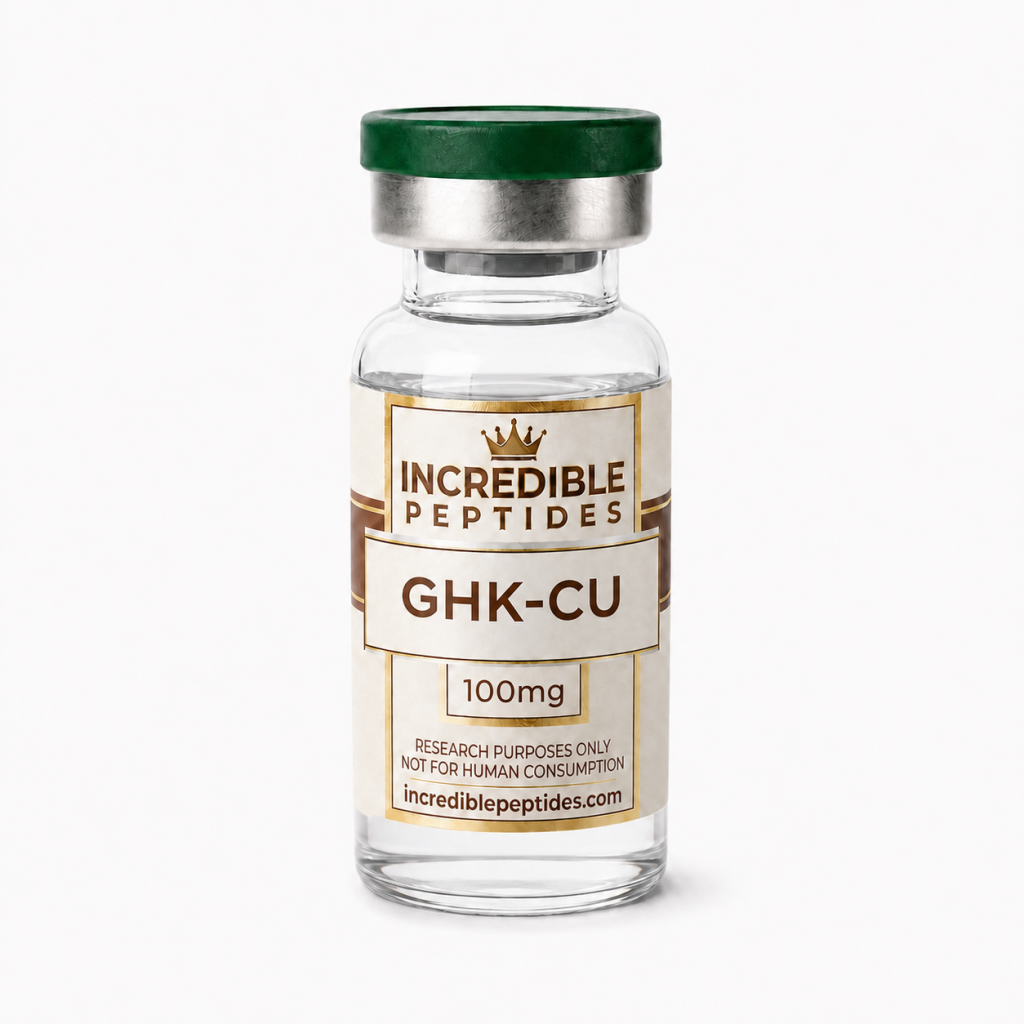
A peptide is a molecule built from amino acids joined end to end by amide linkages called peptide bonds. A useful concrete example at the small end of the size range is GHK-Cu, the copper(II) complex of the tripeptide glycyl-L-histidyl-L-lysine. Its three residues, Gly-His-Lys, show how even a very short sequence can carry distinctive chemistry: the N-terminal amine, a backbone amide nitrogen and the histidine imidazole ring together coordinate a copper ion, which makes the complex a common subject of coordination-chemistry and cell-based studies.
Each peptide bond forms between the carboxyl group of one amino acid and the amino group of the next, so the chain has a free amino group at one end (the N-terminus) and a free carboxyl group at the other (the C-terminus). The order of residues, written from N- to C-terminus, is the peptide’s primary sequence, and it determines nearly everything else about the molecule: its charge, polarity, tendency to adopt particular shapes and the way it interacts with other molecules. The chemistry of that linkage is covered in more detail in our explainer on peptide bonds and amino acid sequences.
Peptides span a wide size range. Dipeptides and tripeptides contain two or three residues, oligopeptides usually mean chains of up to roughly twenty, and longer chains are called polypeptides. There is no single agreed cutoff at which a polypeptide becomes a protein, although chains of around 50 residues or more, particularly those that fold into stable three-dimensional structures, are usually described as proteins.
How Peptides Are Made for Research
Most research peptides are produced by chemical synthesis rather than isolated from biological sources. The dominant method is solid-phase peptide synthesis (SPPS), introduced by R. Bruce Merrifield in 1963. In SPPS the C-terminal amino acid is anchored to an insoluble resin and the chain is extended one residue at a time. Each cycle removes a temporary protecting group from the growing chain’s amino terminus, couples the next protected amino acid and washes away excess reagents. Because the peptide stays attached to the solid support, purification between steps is reduced to filtration and washing. Most laboratories now use Fmoc (9-fluorenylmethoxycarbonyl) chemistry, with Boc chemistry retained for some applications.
When assembly is complete, the peptide is cleaved from the resin and its side-chain protecting groups are removed, usually with a strong acid cocktail. The crude product contains the target sequence alongside deletion sequences, truncated chains and other by-products, so it is purified, most often by preparative reversed-phase high-performance liquid chromatography (RP-HPLC). The purified fractions are then typically freeze-dried into a lyophilized powder, which is generally more stable in storage than a solution.
Longer chains, and especially folded proteins with several disulfide bonds, are often produced instead by recombinant expression in bacteria, yeast or mammalian cells, because the overall yield of stepwise chemical synthesis falls as length increases. Some small peptides are also manufactured by enzymatic or fermentation routes.
Characterization
A synthesized peptide is only useful if its identity and purity are known. Analytical HPLC with UV detection estimates purity as the proportion of total peak area attributable to the main peak, while mass spectrometry confirms that the measured molecular mass matches the expected sequence. These results are summarized in a certificate of analysis (COA) for each production lot. Our guide to reading a peptide COA explains what those figures mean and where their limits lie.
Research Material Versus Pharmaceutical Products
The same amino acid sequence can exist in very different regulatory categories. A regulated pharmaceutical product has passed through full pharmaceutical development and regulatory review: manufacturing under current good manufacturing practice (cGMP), a controlled formulation and review of the full dossier by a regulator such as the US Food and Drug Administration. That product is tied to a specific formulation, strength, labeled indication and manufacturing process.
A research peptide has none of those attributes. Each compound in a catalog of research peptides is supplied as a chemical reagent for in vitro work, analytical development or appropriately overseen animal studies, and it is labeled “for research use only” (RUO). That label is a statement about intended use, not a quality grade and not a lesser version of a medicine. Research-grade material has not undergone that development or review, is not manufactured to drug-product standards and is for laboratory research use only; it is not for human or veterinary use. Our article on what research use only means covers the regulatory background in more depth.
It is also worth separating research findings from broader conclusions. Much of the published literature on individual peptides comes from cell culture or animal models. Those results can be scientifically valuable, but they are preliminary: effects seen in a dish or a rodent frequently fail to generalize beyond the model studied, and they say nothing about the quality of any particular commercial material. Readers comparing suppliers should treat each product listing as a chemical specification rather than as evidence about biological outcomes.
What to Look For in a Supplier
Because research peptides are not regulated as finished drug products, much of the burden of verifying quality falls on the purchasing laboratory. A few criteria separate a dependable supplier from an unreliable one.
First, documentation should be lot-specific. A COA that reports HPLC purity and mass-spectrometry identity for the exact lot shipped is far more meaningful than a generic specification sheet. Second, labeling should be consistent: the vial, the COA and the order record should share the same product name, quantity and lot number, so that any result in the lab can be traced back to a defined batch. Third, the supplier should state recommended storage conditions and describe the physical form of the material, since a lyophilized powder and a solution behave very differently over time.
Fourth, the supplier’s communication should be appropriate to a research reagent. Listings that make benefit claims or suggest any use outside the laboratory are a warning sign, both about compliance and about the seriousness of the operation. A reputable vendor describes what a compound is, how it was tested and how it should be stored, and leaves interpretation of biological activity to the published literature. Finally, where independent testing is offered, it is worth checking which laboratory performed it and which methods were used.
Building on the Basics
Understanding research peptides starts with the chemistry of the amide bond and extends to synthesis, purification, analytical verification and the regulatory framing that keeps laboratory reagents distinct from pharmaceutical products. With those fundamentals in place, a researcher can read a COA critically, design appropriate controls and choose materials suited to the experiment. Those comparing sequences, sizes and formats can review the full peptide catalog together with its batch documentation, and use the related articles in this series to go deeper into analytical methods, storage and experimental design.
References
- Nelson DL, Cox MM. Lehninger Principles of Biochemistry. W. H. Freeman.
- Berg JM, Tymoczko JL, Gatto GJ, Stryer L. Biochemistry. W. H. Freeman.
- Merrifield RB. Solid phase peptide synthesis. I. The synthesis of a tetrapeptide. J. Am. Chem. Soc. 1963, 85, 2149.
- US Food and Drug Administration. Distribution of In Vitro Diagnostic Products Labeled for Research Use Only or Investigational Use Only: Guidance for Industry and Food and Drug Administration Staff. 2013.
Research Product in This Article
Educational content for research use only. Not for human consumption. Nothing here is medical advice or a claim about safety or efficacy.