Are Research Peptides Legal? How US Regulation Treats RUO Peptides
How US regulation approaches research use only peptides: intended use, what RUO labels can and cannot do, state variation and buyer restrictions. General information, not legal advice.
 DODaniel Okafor, MSResearch Analyst, Molecular Biology~6 min read
 RUOPhoto: CCAC North Library / Wikimedia Commons, CC BY 2.0
“Are peptides legal?” is one of the first questions new buyers and many experienced researchers ask about synthetic peptides. In the United States there is no single law that makes peptides, as a chemical class, either lawful or unlawful. How a particular research peptide is regulated depends mainly on its intended use, on how it is labeled and marketed, and on whether any specific federal or state rule applies to that compound.
This article outlines how US regulation generally approaches research use only (RUO) peptides: the intended-use doctrine, what RUO labeling does and does not accomplish, why sale for laboratory research is a different activity from sale for personal use, and why responsible vendors restrict who may buy. It is general information, not legal advice. Laws change and depend on specific facts, so a laboratory with a concrete question should consult a qualified attorney or its institution’s compliance office.
Why the Question Has No One-Word Answer
“Peptide” describes a structure, not a legal category. The term covers molecules as different as the tripeptide glutathione and large endocrine hormones. Regulators generally do not write rules for “peptides” as such. They regulate products according to what those products are for, and occasionally regulate particular substances by name.
The practical consequence is that the same molecule can sit in very different legal positions depending on context. A peptide synthesized as a reference standard for an HPLC method, a peptide supplied to a cell-biology laboratory as a receptor agonist, and a peptide offered to the general public with claims about what it will do for the buyer are not regulated the same way, even if the vial contents are chemically identical. Our research use only policy explains how Incredible Peptides applies this distinction to its own catalog and sales.
The Intended-Use Doctrine
The Federal Food, Drug, and Cosmetic Act (FD&C Act) defines a drug largely by purpose. In broad terms, its definition covers articles intended for use in diagnosing or preventing disease, along with articles other than food intended to affect the structure or any function of the body. Whether a substance meets that definition therefore depends heavily on what it is intended for, not only on its chemistry.
FDA’s regulation on the meaning of “intended uses” for drugs, 21 CFR 201.128, explains that intended use is judged objectively. Regulators look at the expressions of the persons responsible for the product, including labeling, advertising, website copy and other statements, and at the circumstances surrounding its distribution.
This is why a disclaimer on its own decides very little. If a product page carries a research-only statement while the surrounding marketing, imagery or customer communications point toward personal use, regulators can look at the whole picture. Such a product may be regulated as an unlawfully marketed drug regardless of the small print.
What RUO Labeling Does and Does Not Do
Where the RUO statement comes from
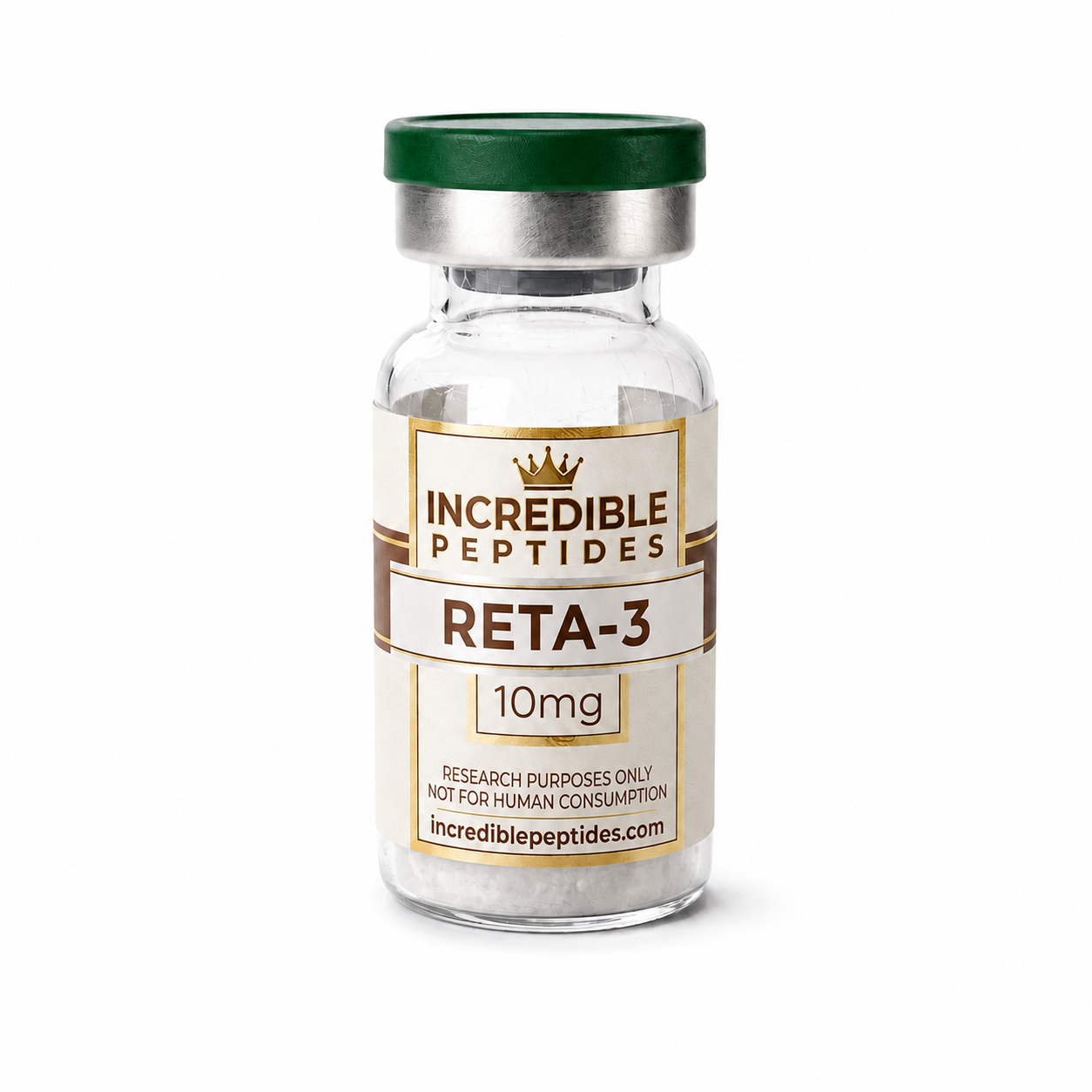
The phrase “For Research Use Only” has a defined place in US regulation. Under 21 CFR 809.10(c), in vitro diagnostic products in the laboratory research phase of development carry that statement, and FDA’s 2013 guidance on products labeled RUO or investigational use only stresses that the label must reflect how a product is actually marketed and to whom it is sold. Synthetic peptides sold as laboratory reagents are not diagnostic products, so that regulation does not govern them directly, but the life-science supply industry uses the same wording as its standard statement of intended use. Our article on what research use only means covers this background in more detail.
A label is not a shield
An RUO statement communicates that a material is intended for laboratory investigation, typically in vitro work or properly overseen animal studies, and is not for human or veterinary use. What it cannot do is convert an activity regulators would otherwise view as drug distribution into reagent supply. FDA has issued public warning letters to companies selling so-called research chemicals where the marketing contradicted the research-only labeling. Labeling, product descriptions, customer screening and post-sale communication all need to point the same way.
Laboratory Research Sale Versus Sale for Personal Use
Supplying characterized reagents to laboratories is a long-established, ordinary part of the research economy. Academic, contract and industrial laboratories buy synthetic peptides to build assays, validate analytical methods, map receptor pharmacology and run preclinical animal studies. In that setting the buyer is a researcher, the material is used at the bench, and work involving animals is subject to institutional oversight such as an animal care and use committee.
Selling the same compound for personal use is a different activity in law and in practice. Product descriptions that focus on outcomes for the buyer, rather than on identity and chemistry, are a strong signal of a non-research intended use. A compliant research listing, such as those in our catalog of research peptides, describes a compound by its sequence, molecular formula, analytical testing and storage needs, and stops there.
Advertising law adds another layer. The Federal Trade Commission Act prohibits unfair or deceptive acts and practices, and the FTC expects objective claims in advertising to be substantiated. A vendor that implies benefits for its customers invites scrutiny on that front as well as from FDA.
Federal and State Variation
Federal food and drug law is not the only framework that can apply. The Controlled Substances Act places specific substances into schedules, and the schedules are amended over time. Many research peptides are not named in the federal schedules, but that is a compound-by-compound question that should be checked against the current lists rather than assumed.
States add their own layers. A state may maintain its own controlled substance list, regulate certain hormones or classes of compounds more tightly than federal law does, or impose rules on who may receive particular materials. Institutions often add internal requirements on top of that, through procurement rules, chemical inventory systems and chemical safety review. Shipping across borders brings import and export rules into play as well.
The absence of an explicit prohibition does not make a compound lawful for every purpose, and a laboratory’s obligations continue after purchase through storage, inventory records and disposal.
Why Responsible Vendors Restrict Buyers
Because intended use is judged partly from the circumstances of distribution, a supplier’s sales practices are part of its compliance posture. Responsible vendors therefore do more than print a disclaimer. Common measures include verifying that buyers are researchers or institutions, requiring an attestation that material will be used only for laboratory research, declining orders that indicate personal use, and refusing to give usage guidance outside a laboratory context.
A vendor that screens customers and keeps its listings to chemistry is more likely to be one that documents identity and purity carefully, publishes lot-specific certificates of analysis and stands behind traceable records. Our guide to evaluating peptide suppliers covers those quality signals. The specific obligations that apply to orders placed with Incredible Peptides, including the attestation required at checkout, are set out in our RUO policy.
Practical Takeaways for Laboratories
For a research group, the workable position is straightforward. Buy research peptides from suppliers whose labeling, marketing and screening are consistent with laboratory use. Keep the material within documented research protocols, record lot numbers and certificates of analysis, and follow institutional rules on storage, inventory and disposal. Check current federal and state lists for any compound that may be scheduled, and ask your compliance office when anything is unclear.
The short answer to the question, then, is that the legal status of a research peptide depends on what it is, how it is presented and what it is used for. RUO materials are supplied for laboratory research use only and are not for human or veterinary use. This article is general information, not legal advice.
References
- Federal Food, Drug, and Cosmetic Act, section 201(g)(1), 21 U.S.C. 321(g)(1) (definition of “drug”).
- 21 CFR 201.128, Meaning of “intended uses” (drugs).
- 21 CFR 809.10(c), Labeling for in vitro diagnostic products: research use only and investigational use only statements.
- US Food and Drug Administration. Distribution of In Vitro Diagnostic Products Labeled for Research Use Only or Investigational Use Only: Guidance for Industry and Food and Drug Administration Staff. 2013.
- Controlled Substances Act, 21 U.S.C. 812 (schedules of controlled substances).
- Federal Trade Commission Act, section 5, 15 U.S.C. 45 (unfair or deceptive acts or practices).
Educational content for research use only. Not for human consumption. Nothing here is medical advice or a claim about safety or efficacy.

 EM