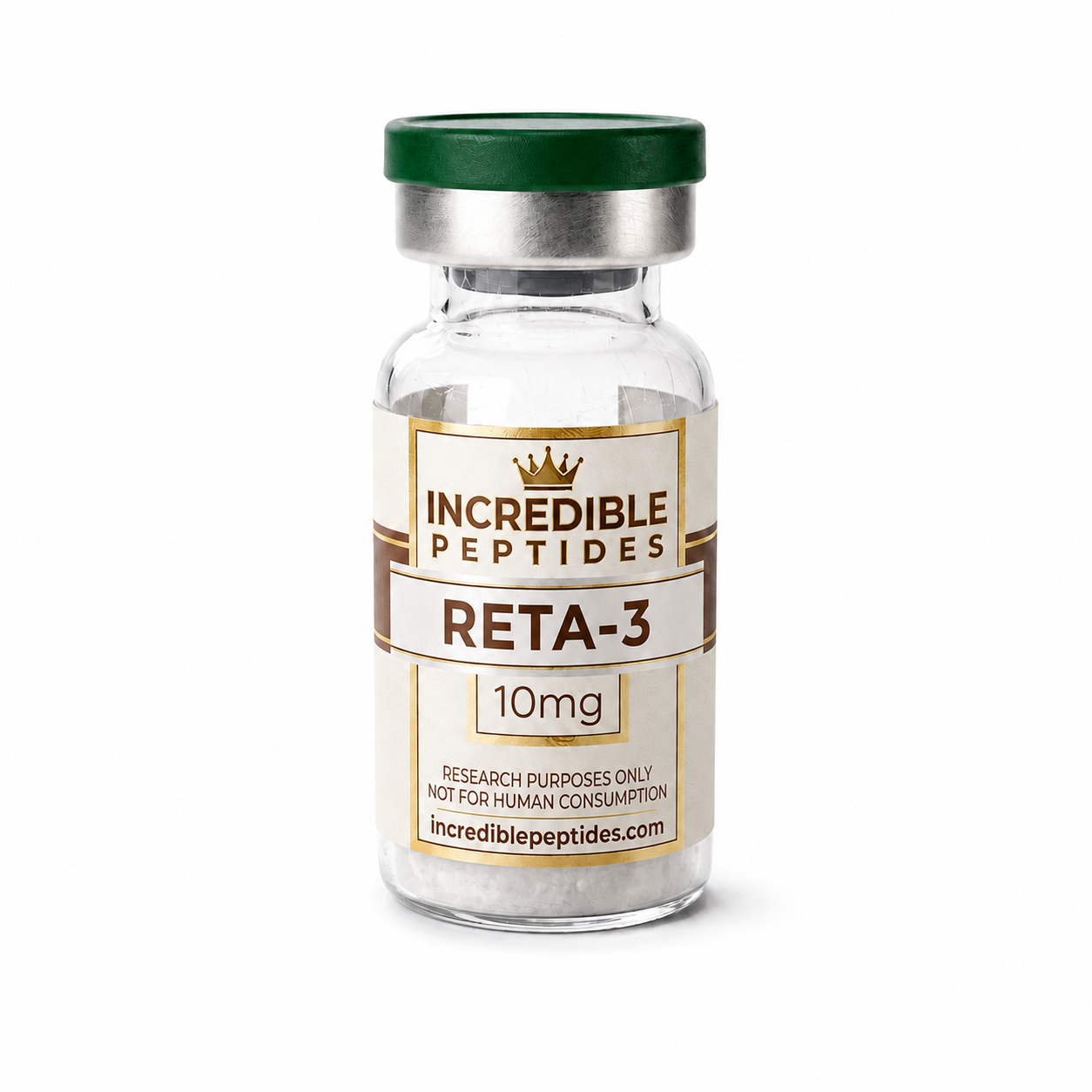
RUO Science Peptides: Labels, Literature and Lab Practice
How the research use only category shapes peptide work in the laboratory, from labeling and documentation to literature searches that confuse RUO with RuO2.
 DODaniel Okafor, MSResearch Analyst, Molecular Biology~6 min read
The phrase ruo science peptides refers to synthetic peptides supplied under the research use only (RUO) category, meaning they are intended for laboratory investigation such as in vitro assays, analytical method development and mechanistic studies in experimental models. The RUO designation describes the intended scope of a material. It is not a statement about purity, identity or biological activity, and it does not imply suitability for any use outside the laboratory.
This article explains what the RUO category means in day to day peptide science, why it should not be read as a quality grade, how RUO status is stated and reported, and what documentation, handling and record keeping practices help laboratories work with RUO peptides in a reproducible way.
What the RUO Category Means in Peptide Science
Research use only is a labeling category used across the life sciences for reagents, antibodies, assay kits, standards and synthetic peptides. Its core purpose is to define scope: a material carrying the designation is intended for research and is not intended for diagnostic procedures or for use in people or animals. For a broader overview of how the category is defined, see our explainer on ruo peptides.
In peptide work, the RUO category typically covers materials used for:
- Receptor binding and functional assays in cell lines or membrane preparations
- Structure and activity relationship studies comparing sequence variants
- Analytical work, such as developing HPLC or mass spectrometry methods
- Stability studies examining degradation under defined conditions
- Use as standards, controls or substrates in enzyme and immunoassay development
The common thread is that the peptide is an experimental tool. The questions asked are about chemistry, structure, molecular recognition and mechanism, examined in controlled laboratory systems.
RUO Is a Scope Statement, Not a Quality Grade
A frequent misunderstanding is that RUO implies lower quality, or conversely that it guarantees research grade quality. Neither is correct. The designation says what a material is for, not how well it was made or characterized. Two RUO peptides of the same sequence can differ substantially in purity, counterion content, water content and the presence of truncated or deletion sequences.
For that reason, researchers should evaluate each lot on its own documentation rather than on the label category. Our article on the research use only label covers what labeling elements typically communicate and what they leave out.
What the label does not tell you
- Whether the measured mass matches the expected sequence
- The chromatographic purity and the method used to determine it
- Net peptide content, which differs from gross weight because of counterions and residual water
- Whether the material has been tested for endotoxin or other contaminants relevant to cell culture
Each of these must be established through analytical data, not inferred from the RUO designation.
How RUO Status Is Stated and Reported
The research use only category has a regulatory origin. In the United States, the labeling rules for in vitro diagnostic products in 21 CFR 809.10(c) require products in the laboratory research phase to carry the statement “For Research Use Only. Not for use in diagnostic procedures.” [2] FDA guidance published in 2013 explains how the agency views products labeled research use only or investigational use only, and makes clear that the label should reflect how a product is actually intended and presented [1]. Synthetic peptides supplied to laboratories use the same language to communicate that they are tools for research rather than products for diagnostic or any other use.
In published research, good practice is to report the status of each reagent alongside its supplier, catalog identifier and lot number. That lets readers interpret results in context and lets other laboratories reproduce the work with equivalent materials.
Documentation for RUO Peptides
Because the RUO designation carries no quality guarantee, documentation is what makes a peptide usable in a reproducible study. A complete record for a research peptide lot generally includes the elements below.
| Document or data | What it establishes | What to check |
|---|---|---|
| Certificate of analysis | Lot specific summary of identity and purity testing | Lot number matches the vial; test dates are recorded |
| Mass spectrometry data | Observed mass consistent with the expected sequence | Observed versus theoretical mass; ionization method |
| HPLC chromatogram | Chromatographic purity under stated conditions | Column, gradient, detection wavelength and integration |
| Counterion and content information | Relationship between gross weight and peptide content | Salt form, such as trifluoroacetate or acetate |
| Storage guidance | Conditions intended to limit degradation | Temperature, light and moisture recommendations |
When reviewing suppliers, the availability and transparency of this documentation is more informative than marketing descriptions. Our guide on where to buy peptides discusses how to evaluate supplier documentation critically.
Handling, Storage and Record Keeping
Good laboratory practice applies to RUO peptides as much as to any other reagent. Lyophilized peptides are generally stored cold and dry, protected from light, and allowed to reach room temperature in a desiccator before opening to limit condensation. Once reconstituted, peptides are more vulnerable to hydrolysis, oxidation of susceptible residues such as methionine and cysteine, and aggregation, so aliquoting to avoid repeated freeze and thaw cycles is standard practice.
Records that support reproducibility
- Supplier, catalog identifier and lot number for every vial used
- Date received, storage location and storage conditions
- Reconstitution solvent, concentration and date of preparation
- Calculation basis, stating whether concentrations use gross weight or net peptide content
- Any analytical rechecks performed in house
These records allow a laboratory to trace unexpected results back to a particular lot or preparation step, which is often the fastest way to resolve an anomaly.
Reading Preclinical Findings Modestly
Research using RUO materials often involves cell systems or animal models, and the results must be read within those boundaries. Such findings describe the behavior of a material in a particular experimental system and do not establish anything beyond it. The same caution applies to peptide studies.
Useful questions when reading any preclinical paper include:
- What model was used, and how closely does it reflect the mechanism being studied?
- Were appropriate controls included, such as vehicle, scrambled sequence or inactive analog controls?
- Was the identity and purity of the test material reported?
- Were mechanistic claims supported by more than one independent method?
Summary
RUO science peptides are experimental tools defined by their intended scope: laboratory research. The designation is a scope statement rather than a quality grade, so each lot must be judged on its analytical documentation. Correct use of the term in published methods signals the status of a reagent rather than its performance. Careful documentation, sound storage and handling, and modest interpretation of model based findings are the practices that make research with RUO peptides reliable.
References
- U.S. Food and Drug Administration. Distribution of In Vitro Diagnostic Products Labeled for Research Use Only or Investigational Use Only: Guidance for Industry and Food and Drug Administration Staff. 2013.
- U.S. Code of Federal Regulations. 21 CFR 809.10(c): Labeling requirements for in vitro diagnostic products for research use only or investigational use only.
Educational content for research use only. Not for human consumption. Nothing here is medical advice or a claim about safety or efficacy.
 EM