
Research Material Labeling: What Each Element Means
What appears on a research-material label, from identity and lot number to the RUO statement, storage and hazard information, and why each element is there.
 DODaniel Okafor, MSResearch Analyst, Molecular Biology~5 min read
 RUO
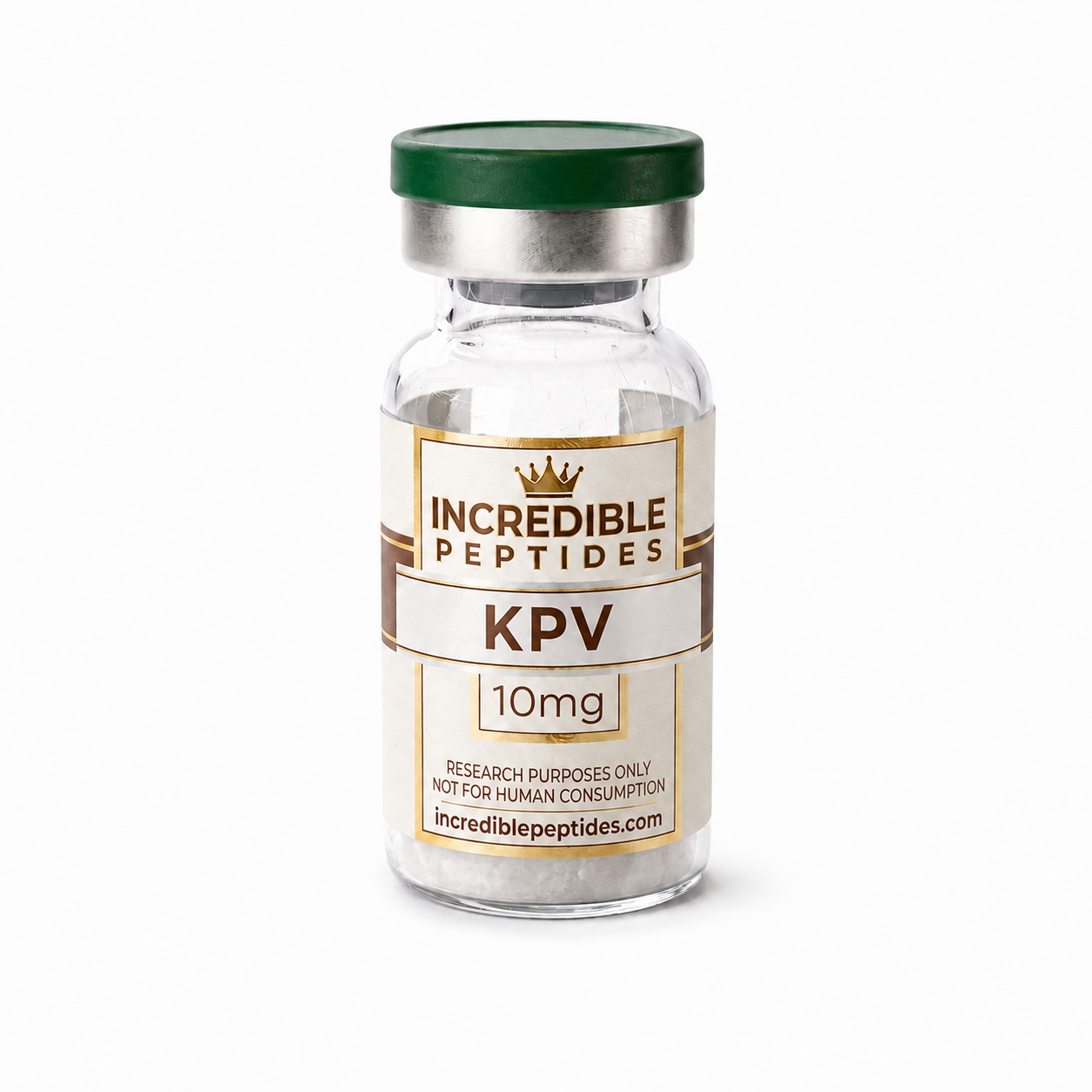
The label on a vial of research material is small, but it carries the information that connects a physical sample to its documentation, its safe handling and its permitted use. Good research chemical labeling lets a laboratory confirm that it received what it ordered, trace results back to a defined production batch, store the material correctly and protect the staff who handle it. When an element is missing or ambiguous, each of those tasks becomes harder.
This article walks through the elements typically found on a research-material label, explains why each one is there, and notes where formal requirements apply and where practice rests on good laboratory convention instead. It is written for lab managers, purchasing staff and compliance teams who receive, log and audit incoming materials.
Product Identity
The first job of a label is to state unambiguously what is in the container. For a synthetic peptide, a product name alone is often not enough, because names can be informal, can vary between suppliers or can refer to several related forms. A complete identity statement may include the common name, the amino acid sequence or a recognized abbreviation, the chemical form supplied (for example a free acid, an amide, a particular salt or a metal complex) and, where one exists, an identifier such as a CAS Registry Number.
The label should also give the quantity, usually as a mass in milligrams for a lyophilized peptide. It helps to know what that figure refers to. A peptide powder generally contains counter-ions and residual water as well as the peptide itself, so the gross mass of powder and the net peptide content are not the same thing, and a certificate of analysis may report peptide content separately. Finally, the physical form, such as lyophilized powder or solution, tells the receiving lab what to expect when the container is opened.
Lot Number and Dates
After identity, the lot or batch number is arguably the most important element on the label. It ties the vial to a specific production run and, through that run, to its analytical results, manufacturing records and any later investigation. The lot number is also the key to documentation: a certificate of analysis lookup by lot number makes it straightforward to match the vial in hand to its test results. A laboratory that records lot numbers can check whether an unexpected result coincides with a change of batch, compare data across lots and act on any notice a supplier issues about a particular batch. Our article on batch traceability and lot numbers covers this in more depth.
Dates provide context for a material’s age and expected stability. Labels may show a date of manufacture, a retest date or an expiry date, and these are not interchangeable. A retest date marks when the material should be re-examined to confirm it still meets specification, while an expiry date marks the end of the period during which it is expected to remain within specification under the stated storage conditions. Both concepts come from stability testing of the kind described in ICH Q1A(R2). Receiving laboratories commonly add their own date of receipt and, once a container is opened or a solution prepared for an assay, the date of opening or preparation.
The Research Use Only Statement
A research-material label should state clearly that the product is for research use only and not for human or veterinary use. The formal phrase “For Research Use Only” has its regulatory origin in 21 CFR 809.10(c), which governs the labeling of in vitro diagnostic products in the research phase of development. For research chemicals more broadly, the statement is an industry convention that communicates intended use. It is neither a quality grade nor a legal shield, since regulators look at how a product is actually marketed as well as at what its label says. Our policy on research-use-only sales describes how the statement applies to the products we supply, and our explainer on what research use only means discusses the regulatory background in more detail.
The RUO statement should be consistent across every document associated with a product: the container label, the outer packaging, the certificate of analysis, the safety data sheet and the product listing. Inconsistency, such as a vial marked RUO alongside marketing that implies personal use, undermines the whole purpose of the statement.
Storage Information
Storage conditions on the label tell the receiving lab how to preserve the material’s quality. For lyophilized peptides, typical instructions specify a temperature range, such as refrigerated or frozen, together with protection from light and moisture. Some labels add that a sealed vial should be allowed to reach room temperature before opening, which limits condensation on a cold, hygroscopic powder. These instructions have a chemical basis: oxidation, deamidation and hydrolysis are all accelerated by heat, light or moisture, and material stored outside its stated conditions may no longer match its certificate of analysis.
Because space on a small vial is limited, the label may carry only a brief instruction and refer to the product documentation for detail. Laboratories should transfer the key conditions into their inventory system so that storage can be monitored and deviations recorded. Our guide to peptide storage temperature explains the reasoning behind common conditions.
Hazard Information
In the United States, hazard communication for chemicals is governed by the OSHA Hazard Communication Standard, 29 CFR 1910.1200, which is aligned with the Globally Harmonized System of Classification and Labelling of Chemicals (GHS). For a chemical classified as hazardous, the label on a shipped container must carry a product identifier, a signal word, hazard statements, pictograms, precautionary statements and the name, address and telephone number of the responsible party. Manufacturers and importers must also provide a safety data sheet in the standard 16-section format.
Many research peptides have limited toxicological data, and whether a given material meets the criteria for hazard classification depends on the information available about it. The absence of pictograms should therefore not be read as evidence that a material is safe. Laboratories are also covered by the OSHA Laboratory Standard, 29 CFR 1910.1450, which among other things requires that labels on incoming containers of hazardous chemicals are not removed or defaced and that each laboratory maintains a chemical hygiene plan. Handling research materials with appropriate protective equipment and sound laboratory practice is prudent whatever their classification.
Connecting the Label to the Record
A label is the visible end of a documentation chain. Its identity statement points to a specification, its lot number to a certificate of analysis and production record, its dates to stability data, its RUO statement to the supplier’s terms of sale and its hazard information to a safety data sheet. A practical receiving procedure checks each element on arrival. The name and quantity should match the order, the lot number should be logged and its documentation retrieved, for example through a certificate of analysis lookup, storage conditions should be applied immediately and the SDS filed where staff can find it. Done consistently, this turns a small printed label into a dependable link between the sample on the bench and the data it produces.
References
- US Occupational Safety and Health Administration. Hazard Communication Standard, 29 CFR 1910.1200.
- US Occupational Safety and Health Administration. Occupational Exposure to Hazardous Chemicals in Laboratories, 29 CFR 1910.1450.
- United Nations. Globally Harmonized System of Classification and Labelling of Chemicals (GHS).
- US Code of Federal Regulations, 21 CFR 809.10(c): labeling of in vitro diagnostic products for research use only and investigational use only.
- International Council for Harmonisation. ICH Q1A(R2): Stability Testing of New Drug Substances and Products.
Educational content for research use only. Not for human consumption. Nothing here is medical advice or a claim about safety or efficacy.

 EM