Peptide Formulation Basics for Researchers
The goals of peptide formulation science and the main variables formulators control, from pH and buffers to stabilizers, containers and stability testing.
 EMElena Marsh, PhDSenior Research Analyst, Analytical Chemistry~6 min read
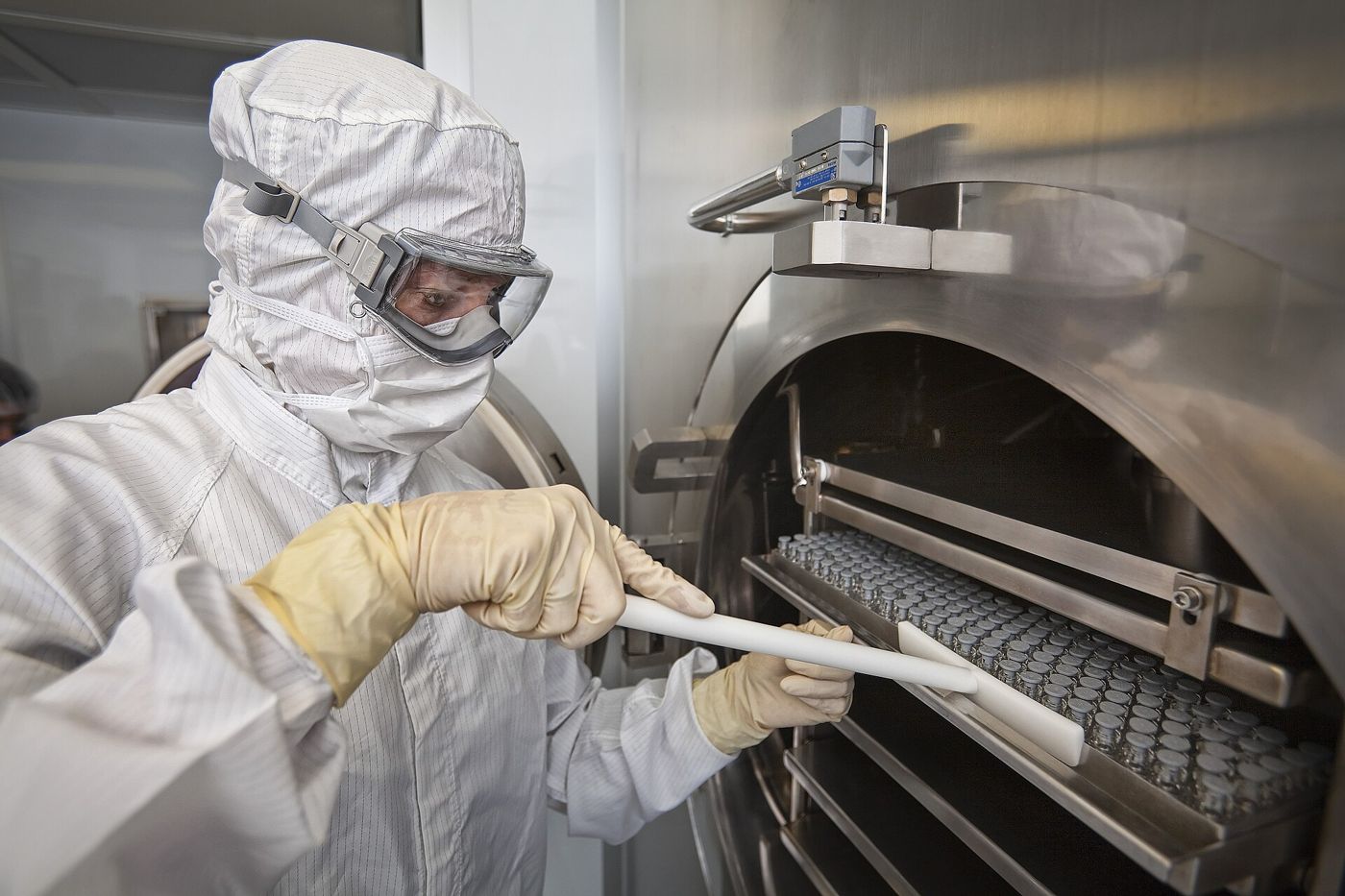
 FormulationPhoto: Nadine90 / Wikimedia Commons, CC BY-SA 3.0
A peptide that is highly pure on the day it leaves the synthesis lab can lose a measurable share of that purity within weeks if it sits in the wrong solution. Peptide formulation is the discipline of choosing the conditions, meaning the solvent, pH, buffer, additives and container, that keep a peptide chemically intact and physically in solution for as long as an experiment or a product requires. In pharmaceutical development it is a specialty in its own right, supported by decades of literature on protein and peptide stability.
Researchers rarely design a formulation from scratch, but they make formulation decisions every time they dissolve a peptide, pick a buffer for a stock solution or decide how to store aliquots. This article outlines the main variables formulators control and how a formulation is tested, with the emphasis on the laboratory setting.
Why Formulation Matters for Peptides
Peptides occupy an awkward middle ground. They are larger and more chemically varied than most small molecules, yet usually lack the stable folded structure that shields some residues in proteins, so most of their side chains are exposed to solvent. The result is a predictable set of degradation pathways: deamidation of asparagine and glutamine, isomerization and backbone cleavage at aspartate, oxidation of methionine, cysteine, tryptophan and histidine, disulfide scrambling, and aggregation or fibril formation in aggregation-prone sequences. Reviews of protein and peptide stability by Manning and colleagues catalog these routes and the conditions that accelerate them.
Because nearly every one of these reactions depends on formulation variables, the same molecule can behave very differently in two solutions. That is one reason suppliers of research peptides usually ship them as lyophilized solids and leave solution preparation to the end user, and why the end user’s choices matter. Our article on peptide degradation pathways covers the chemistry in more depth.
pH, Buffers and Ionic Strength
pH as the primary lever
pH is usually the first variable screened, because it influences so many pathways at once. Deamidation of asparagine through a cyclic succinimide intermediate is comparatively slow under mildly acidic conditions and speeds up as pH rises toward neutral and alkaline values. Cleavage at aspartate bonds, by contrast, tends to be favored under more acidic conditions. Cysteine oxidation is faster at higher pH, where the reactive thiolate form predominates. Solubility also depends on pH, and a peptide is generally least soluble near its isoelectric point, where its net charge approaches zero. A pH-rate profile, measuring degradation across a range of pH values under accelerated conditions, is the classic way to locate the most stable window for a given sequence.
Choosing a buffer
A buffer holds the chosen pH against small additions of acid or base and against drift from absorbed carbon dioxide. Common choices include acetate, citrate, histidine, phosphate and Tris, each most effective within about one pH unit of its pKa. None is truly inert. Sodium phosphate can crystallize selectively during freezing and cause large pH shifts in the frozen solution. The pKa of Tris changes noticeably with temperature. Citrate chelates metal ions, which can help suppress metal-catalyzed oxidation but may interfere with metal-dependent enzymes in an assay. Buffer concentration should be high enough to resist drift without adding unnecessary ionic load.
Ionic strength
Ionic strength, set by buffer salts and any added sodium chloride, influences electrostatic interactions between peptide molecules. Moderate salt can screen charge repulsion and encourage aggregation of some sequences while improving the solubility of others, so its effect is usually determined empirically. Synthetic peptides also arrive as salts, most often trifluoroacetate or acetate, and the counter-ion contributes to the pH and ionic composition of an unbuffered solution.
Stabilizers and Other Additives
Beyond the buffer, formulators add excipients to address specific failure modes. Sugars and polyols such as sucrose, trehalose and mannitol help preserve structure in solution and protect molecules during freezing and drying. Nonionic surfactants such as polysorbate 20 and polysorbate 80 reduce adsorption to surfaces and aggregation at air-liquid interfaces, although Kerwin’s review shows that polysorbates themselves degrade by oxidation and hydrolysis and can generate peroxides that damage oxidation-sensitive residues. Methionine is sometimes added as a sacrificial antioxidant, and chelators such as EDTA sequester trace metals that catalyze oxidation.
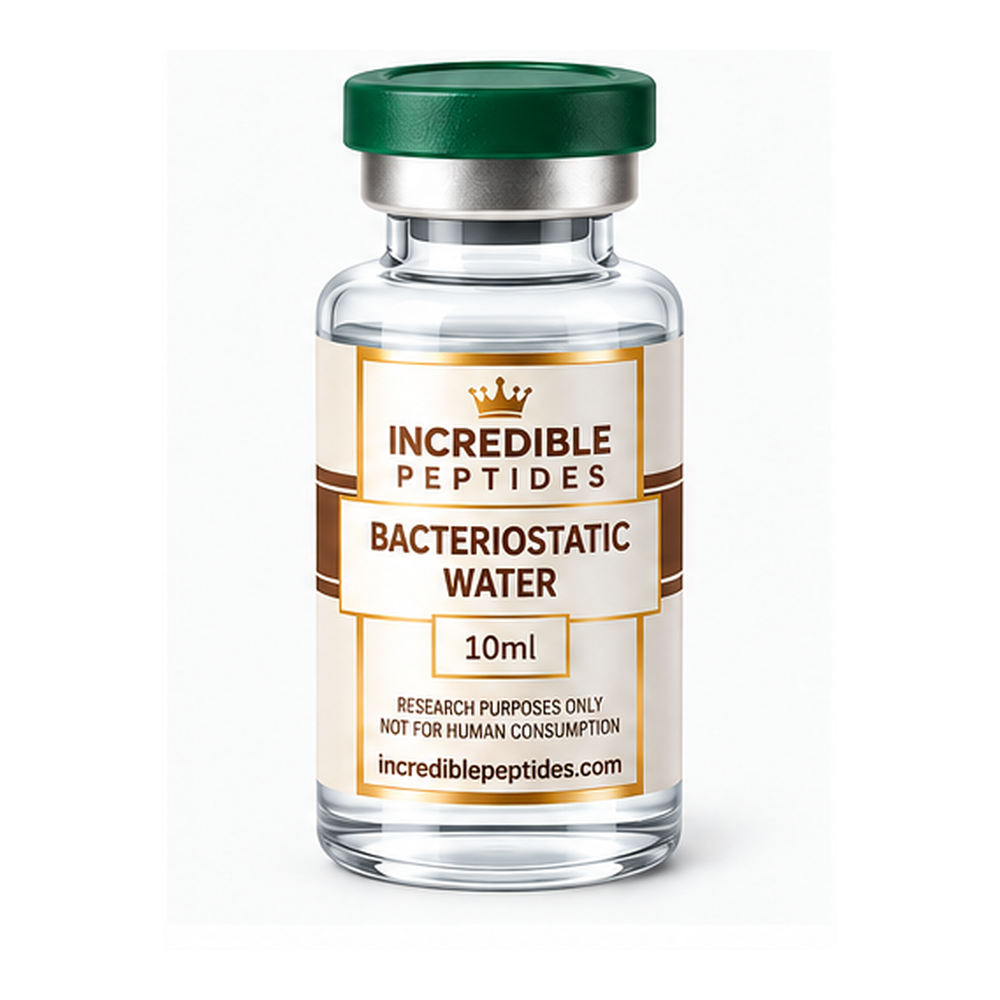
Solutions that will be sampled more than once add another requirement: control of microbial growth. Antimicrobial preservatives such as benzyl alcohol, phenol and m-cresol fill this role. In the laboratory the same logic explains the use of bacteriostatic water, which is sterile water containing a preservative, typically 0.9% benzyl alcohol, used when a stock solution will be sampled repeatedly. Preservatives carry trade-offs, since some have been reported to promote aggregation of certain proteins, so compatibility should be checked rather than assumed. These additive classes are covered in more detail in our guide to common excipients in peptide formulations.
Container and Closure
The container is part of the formulation. Peptides, especially hydrophobic or strongly basic ones, can adsorb to glass and plastic, and at low concentrations a significant fraction of the material can be lost to vial walls and pipette tips. Low-binding polypropylene, silanized glass or the addition of a carrier protein or surfactant are common laboratory responses, provided the additive does not interfere with the downstream assay. Type I borosilicate glass is the usual vial material because of its low extractables, though ion leaching and, in some conditions, glass delamination are documented concerns for long-term liquid storage.
Closures matter for other reasons. Elastomeric stoppers can release extractables and leachables, and they are the main barrier against moisture and oxygen entering a sealed vial. A dried peptide can take up water through a poorly seated stopper, and an oxidation-sensitive solution can degrade in a vial with a large air headspace. Nitrogen overlay, sensible fill volumes and protection from light with amber glass or secondary packaging are standard measures.
Testing a Formulation
A formulation is only as good as the evidence behind it. Stability testing follows the framework in ICH Q1A(R2), in which samples are stored under defined long-term and accelerated conditions and tested at set intervals; photostability is addressed separately in ICH Q1B. Accelerated conditions are useful for ranking candidate formulations quickly, but extrapolating from high temperature to recommended storage is uncertain for peptides, because different degradation pathways can dominate at different temperatures.
The analytical panel typically combines reversed-phase HPLC for purity and degradant profile, mass spectrometry to identify species such as deamidated or oxidized forms, size-exclusion chromatography or light scattering for aggregates, pH measurement, and visual inspection for color, clarity and particles. A good study tracks the specific degradants that matter for the sequence rather than a single purity figure. For researchers the same logic scales down: before relying on a stored stock solution of any of the research peptides in our catalog across a long experimental series, re-checking a sample by HPLC confirms that the solution still contains what its label says.
Bringing Formulation Thinking into the Lab
Formulation science gives researchers a short, practical sequence. Know the sequence and its vulnerable residues. Choose a pH and buffer that suit both the peptide and the assay. Add only excipients that address a real risk, and confirm they do not interfere with the experiment. Use containers that limit adsorption and closures that keep moisture and oxygen out. Then confirm with data that the solution stays stable for as long as it will be used.
References
- Manning MC, Chou DK, Murphy BM, Payne RW, Katayama DS. Stability of protein pharmaceuticals: an update. Pharmaceutical Research. 2010;27(4):544-575.
- Wang W. Instability, stabilization, and formulation of liquid protein pharmaceuticals. International Journal of Pharmaceutics. 1999;185(2):129-188.
- Kerwin BA. Polysorbates 20 and 80 used in the formulation of protein biotherapeutics: structure and degradation pathways. Journal of Pharmaceutical Sciences. 2008;97(8):2924-2935.
- International Council for Harmonisation. ICH Q1A(R2): Stability Testing of New Drug Substances and Products.
- International Council for Harmonisation. ICH Q1B: Photostability Testing of New Drug Substances and Products.
Research Product in This Article
Educational content for research use only. Not for human consumption. Nothing here is medical advice or a claim about safety or efficacy.