Peptide Stability and Degradation Pathways
The main chemical and physical routes by which peptides degrade, how they appear in analytical data, and how stability studies are designed.
 EMElena Marsh, PhDSenior Research Analyst, Analytical Chemistry~6 min read
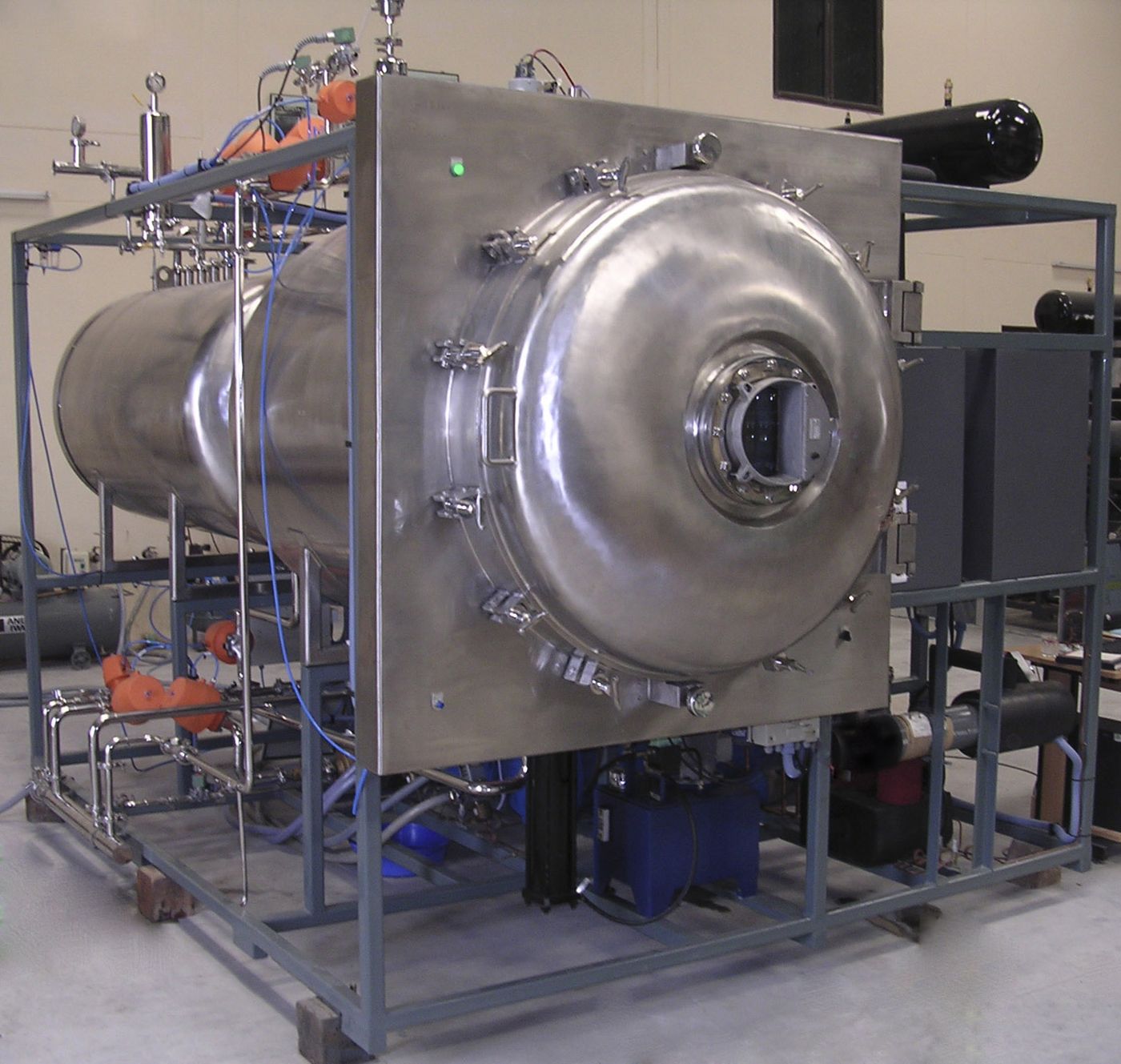 StabilityPhoto: Millrock / Wikimedia Commons, Public domain
Peptides are chemically more fragile than most small-molecule reagents. Their backbones contain hydrolyzable amide bonds, and their side chains include thiols, thioethers, amides and aromatic rings that react with oxygen, water and light. Peptide stability, meaning the extent to which a sample keeps its original covalent structure and physical state over time, therefore depends heavily on sequence, formulation and storage history. Two peptides of similar size can behave very differently on the same shelf.
For researchers planning storage and experiments, the practical question is which degradation pathways are plausible for a given sequence and how they would show up in analytical data. This article reviews the main chemical routes (oxidation, deamidation and hydrolysis), the main physical routes (aggregation and surface adsorption), and the way formal stability studies are designed and interpreted.
Chemical Degradation Pathways
Chemical degradation changes covalent structure, producing new molecular species with different masses, charges or chromatographic behavior. Most of these reactions are slow in a dry, cold solid and considerably faster in solution, where water, dissolved oxygen, trace metals and pH all come into play.
Oxidation
Methionine and cysteine are the residues most prone to oxidation. Methionine is converted to methionine sulfoxide, a mass increase of 16 Da that often shifts retention on reversed-phase HPLC. Free cysteine thiols oxidize to form disulfide bonds, either within one molecule or between two, and under harsher conditions can proceed further to sulfinic and sulfonic acids. Tryptophan, histidine and tyrosine are also susceptible, particularly when oxidation is driven by light or reactive oxygen species. Common drivers include dissolved oxygen, transition-metal contaminants, peroxide impurities in some excipients, and alkaline pH, which favors the reactive thiolate form of cysteine.
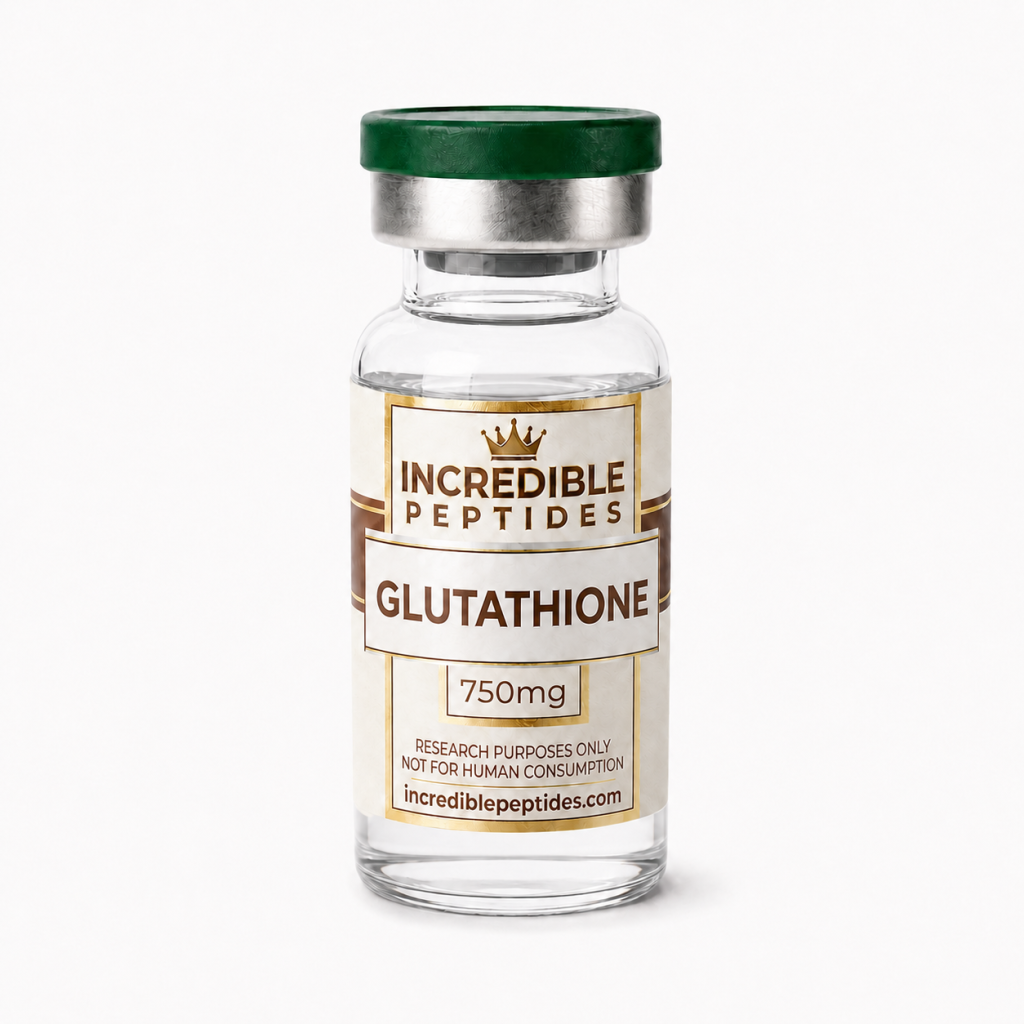
A clear illustration is glutathione, the thiol-containing tripeptide γ-glutamyl-cysteinyl-glycine. Its single cysteine carries a free sulfhydryl group, and two molecules readily couple through a disulfide bond to give glutathione disulfide. The same chemistry applies to any research peptide with an unpaired cysteine, which is why such sequences are often handled in degassed solvents and kept away from metal contamination.
Deamidation and Isomerization
Asparagine residues can deamidate through a cyclic succinimide intermediate, which then opens to give a mixture of aspartate and isoaspartate, with isoaspartate usually the larger product. The mass change is small, about +1 Da, but the introduction of a negative charge and, for isoaspartate, an extra backbone methylene can alter structure and chromatographic behavior. Rates depend strongly on the following residue: asparagine followed by glycine is among the fastest-reacting motifs, because the small glycine side chain allows the backbone to adopt the geometry needed for cyclization. Deamidation accelerates with rising pH and temperature. Glutamine deamidates far more slowly. Aspartate itself can isomerize through the same succinimide route, a reaction with no net mass change that can only be detected chromatographically.
Hydrolysis and Other Backbone Reactions
Peptide bonds are thermodynamically unstable in water but kinetically slow to hydrolyze under neutral conditions. Certain sequences are exceptions. Bonds on the C-terminal side of aspartate, particularly Asp-Pro and Asp-Gly, are notably labile under acidic conditions. Other sequence-specific reactions include cyclization of an N-terminal glutamine to pyroglutamate (a loss of 17 Da), diketopiperazine formation that cleaves an N-terminal dipeptide, racemization at susceptible residues, and β-elimination at cysteine or serine under alkaline conditions.
Physical Degradation Pathways
Physical instability changes the state of a peptide without necessarily altering its covalent structure. It is easy to overlook, because a sample can look chemically intact by reversed-phase HPLC and mass spectrometry, the methods at the center of routine analytical quality testing, and still be partly unusable.
Aggregation
Aggregation ranges from small soluble oligomers to amorphous precipitates and, for some sequences, highly ordered amyloid-like fibrils. It is promoted by high concentration, pH near the isoelectric point, hydrophobic or β-sheet-prone segments, agitation, air-liquid and ice-liquid interfaces, and elevated temperature. Some aggregates form through intermolecular disulfide bonds and are therefore covalent. Aggregation can be partly irreversible, and soluble aggregates may not be visible at all, so size-exclusion chromatography or light-scattering methods are needed to detect them.
Adsorption to Surfaces
Peptides adsorb to glass and plastic surfaces, sometimes rapidly. The effect is proportionally largest in dilute solutions, where a monolayer on the container wall can represent a substantial fraction of the total peptide, and it is pronounced for hydrophobic and strongly cationic sequences. Adsorption looks like loss of concentration rather than appearance of new peaks, which makes it easy to misattribute to chemical degradation. Low-binding tubes, appropriate solvent composition and avoiding unnecessary dilution all reduce the problem.
How Stability Studies Are Designed
Formal stability testing in the pharmaceutical sector follows ICH Q1A(R2), with ICH Q5C covering biotechnological products. Although research reagents fall outside these guidelines, their logic is the standard reference point. Q1A(R2) distinguishes long-term studies at the intended storage condition from accelerated studies at elevated temperature and humidity. For material intended for room-temperature storage, the general long-term condition is 25 °C with 60% relative humidity and the accelerated condition is 40 °C with 75% relative humidity; for refrigerated material the long-term condition is 5 °C ± 3 °C, with 25 °C used for accelerated testing.
Alongside these, stress or forced-degradation studies deliberately expose material to heat, extreme pH, oxidants such as hydrogen peroxide, and light. The aim is not to predict shelf life but to reveal which pathways operate and to show that the analytical method is stability-indicating, meaning it can separate and detect the resulting degradants. Reversed-phase HPLC for purity and mass spectrometry for identity form the core of most peptide stability programs, supplemented by size-exclusion methods when aggregation is a concern.
| Pathway | Approximate mass change | Typical detection |
|---|---|---|
| Methionine oxidation | +16 Da per residue | RP-HPLC shift, LC-MS |
| Intramolecular disulfide formation | -2 Da | LC-MS, RP-HPLC |
| Intermolecular disulfide (dimer) | 2M – 2 Da | LC-MS, size-exclusion |
| Asparagine deamidation | +1 Da | RP-HPLC or ion exchange, high-resolution MS |
| Aspartate isomerization | none | Chromatography only |
| N-terminal pyroglutamate (from Gln) | -17 Da | LC-MS |
| Hydrolysis | Fragments | LC-MS of new peaks |
| Non-covalent aggregation | none (monomer) | Size-exclusion, light scattering |
Reading Stability Data
A single purity value at one time point says little about stability. What matters is the trend: how the main peak and individual impurities change across time points under defined conditions, relative to the variability of the method. A decline of half a percentage point means nothing if the method’s repeatability is of the same order. Mass balance is another useful check. If the main peak falls but no corresponding degradant peaks appear, the missing material may have aggregated, adsorbed to the container, or formed species the method does not detect.
Look at which specific impurities grow, because they indicate mechanism. For a free-thiol compound such as research-grade reduced glutathione, growth of a disulfide-linked species points to oxidation and suggests reviewing oxygen exposure and headspace. Growth of a +1 Da shoulder in an asparagine-containing sequence suggests deamidation and draws attention to pH and temperature. Data from accelerated conditions should be extrapolated with caution. Arrhenius-type predictions assume that the same mechanism dominates across temperatures, which often fails for peptides, especially in the solid state, where glass transitions and moisture uptake can change the rate-limiting process. Real-time data at the actual storage condition remain the most reliable basis for any stability conclusion.
Applying Stability Knowledge in the Lab
Most of the practical rules for peptide handling follow directly from these pathways. Removing water by freeze-drying slows hydrolysis and deamidation, which is why most peptides are supplied as lyophilized solids; our article on peptide lyophilization explains the process. Low temperature slows nearly every reaction, protection from light and oxygen limits oxidation, and storing solutions in aliquots avoids repeated freeze-thaw stress. Temperature effects are covered further in our guide to peptide storage temperature. Knowing which residues a sequence contains is the best guide to which precautions matter most.
References
- Manning MC, Patel K, Borchardt RT. Stability of protein pharmaceuticals. Pharmaceutical Research, 1989.
- Manning MC, Chou DK, Murphy BM, Payne RW, Katayama DS. Stability of protein pharmaceuticals: an update. Pharmaceutical Research, 2010.
- Geiger T, Clarke S. Deamidation, isomerization, and racemization at asparaginyl and aspartyl residues in peptides. Journal of Biological Chemistry, 1987.
- ICH Q1A(R2). Stability Testing of New Drug Substances and Products. International Council for Harmonisation.
- ICH Q5C. Quality of Biotechnological Products: Stability Testing of Biotechnological/Biological Products. International Council for Harmonisation.
Research Product in This Article
Educational content for research use only. Not for human consumption. Nothing here is medical advice or a claim about safety or efficacy.