5-Amino-1MQ: An NNMT Inhibitor Used in Research
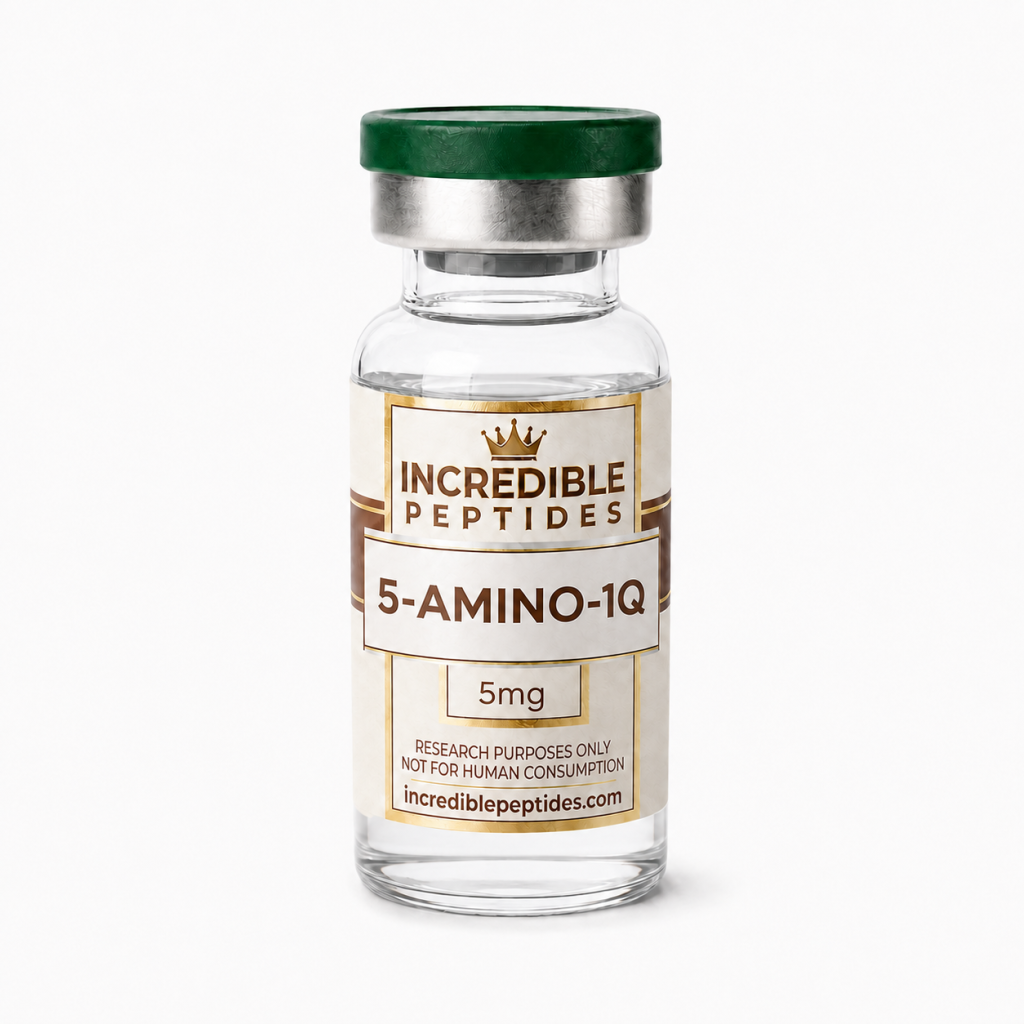
5-Amino-1MQ is a quinolinium small molecule, not a peptide, studied as an inhibitor of NNMT at the junction of NAD+ salvage and methylation.
 EMElena Marsh, PhDSenior Research Analyst, Analytical Chemistry~5 min read
 Compounds
5 amino 1MQ, written in full as 5-amino-1-methylquinolinium, is a small aromatic cation studied as an inhibitor of nicotinamide N-methyltransferase (NNMT), a cytosolic enzyme that sits at the junction of NAD+ salvage and cellular methylation. It appears in peptide catalogs and is often searched for as a “5-amino-1MQ peptide”, but it is not a peptide at all. It has no amino acids and no amide backbone; it is a methylated quinoline derivative with a molecular mass of under 160 Da for the cation.
This profile sets out what 5-Amino-1MQ is chemically, how NNMT works, how quinolinium compounds were developed as NNMT inhibitors, what the compound has been used to investigate in cell and rodent models, and how the material should be characterised and handled in the laboratory. It is a research chemical for laboratory research use only and is not for human or veterinary use.
A Small Molecule, Not a Peptide
The distinction matters for analytical work as much as for accuracy. Peptide quality control centres on sequence confirmation, amino acid analysis and peptide-related impurities such as deletion sequences. None of that applies to 5-Amino-1MQ, which is assessed the way any small organic compound is: by chromatographic purity, mass spectrometry, NMR spectroscopy and, for a salt, counterion content. The 5-Amino-1MQ research compound is listed among peptides because it is sold to the same laboratories in similar vials, not because of its chemistry. Our explainer on what is a peptide gives the structural definition it does not meet.
Chemical Structure
Quinoline is a bicyclic aromatic heterocycle, a benzene ring fused to a pyridine ring. In 5-Amino-1MQ the ring nitrogen (position 1) carries a methyl group, which makes it a quaternary quinolinium ion with a permanent positive charge, and an amino group is attached at carbon 5 on the benzenoid ring. Because the charge does not depend on pH, the compound always exists as a salt, paired with an anion such as iodide or chloride depending on the synthetic route. The counterion changes the formula mass of the solid and should be read from the supplier’s documentation for each lot.
| Property | 5-Amino-1MQ (cation) |
|---|---|
| Systematic name | 5-amino-1-methylquinolin-1-ium |
| Formula (cation) | C10H11N2+ |
| Average mass (cation) | about 159.2 Da |
| Monoisotopic m/z | about 159.09 |
| Compound class | Quaternary N-methylquinolinium, aromatic amine |
| Counterion | Varies by preparation; confirm on the lot certificate |
NNMT: The Enzyme Target
NNMT is a S-adenosylmethionine (SAM)-dependent methyltransferase. It transfers a methyl group from SAM to the pyridine nitrogen of nicotinamide, producing 1-methylnicotinamide (often abbreviated MNAM or 1-MNA) and S-adenosylhomocysteine (SAH). In mammals the enzyme is most abundant in the liver, where it was long regarded mainly as a route for clearing excess nicotinamide, but it is expressed in a range of other tissues and cultured cell types.
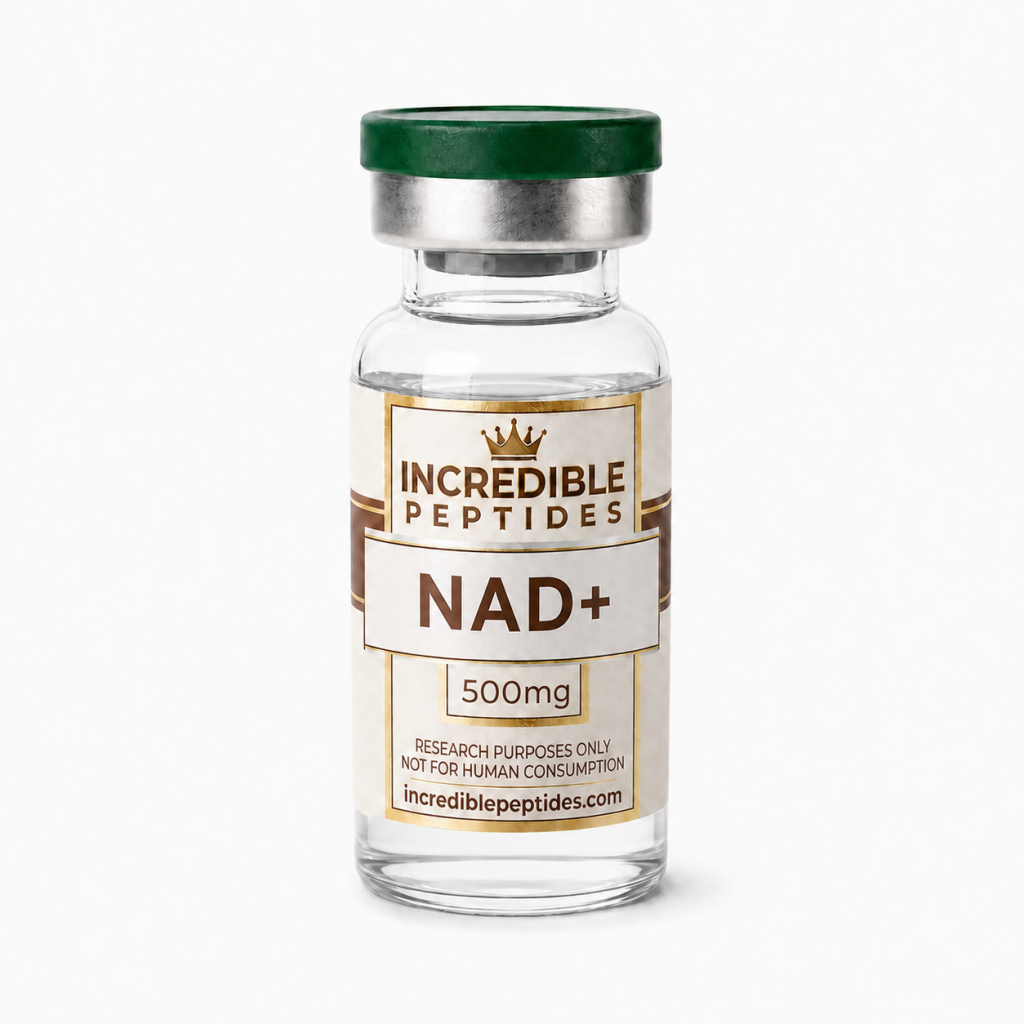
Two features of this reaction explain the research interest. First, nicotinamide is the substrate of the NAD+ salvage pathway, in which nicotinamide phosphoribosyltransferase (NAMPT) converts it to nicotinamide mononucleotide on the way back to NAD+. Methylated nicotinamide cannot re-enter that pathway, so NNMT activity diverts substrate away from NAD+ regeneration. Laboratories quantifying that balance often use NAD+ supplied as a research reagent as an assay standard and enzyme cofactor. Second, every NNMT turnover consumes a SAM molecule and produces SAH, a product inhibitor of many methyltransferases. In tumour-derived cell lines with high NNMT expression, Cravatt and colleagues proposed that the enzyme acts as a “methylation sink” that alters the SAM to SAH ratio available for histone methylation. NNMT therefore links vitamin B3 metabolism to the cell’s methyl donor economy.
How 5-Amino-1MQ Inhibits NNMT
The product of the NNMT reaction, 1-methylnicotinamide, is itself an N-methylated aromatic cation. Researchers at the University of Texas Medical Branch used this observation, together with the enzyme’s crystal structures, to explore N-methylated quinolinium, pyridinium and related scaffolds as compounds that occupy the nicotinamide-binding pocket. Their structure-activity study, published in 2017, compared substituents around the quinolinium ring and reported that small electron-donating groups such as an amino group at position 5 gave some of the more potent analogues in biochemical assays, with inhibition in the low micromolar range.
A follow-up study reported that 5-Amino-1MQ was active in cultured cells despite its permanent charge, lowering intracellular 1-methylnicotinamide and showing selectivity over several related SAM-dependent methyltransferases and NAD+ salvage enzymes in the panels tested. These are in vitro observations from a single research group’s initial characterisation, and independent replication of selectivity across broader enzyme panels is limited.
Connections to NAD+ and Methylation Research
Because NNMT draws nicotinamide away from salvage, inhibiting it is one experimental way to ask how much NNMT activity constrains NAD+ levels in a given cell type. Studies using 5-Amino-1MQ in cell models have reported changes in intracellular NAD+ and SAM alongside the expected fall in 1-methylnicotinamide. NAD+ quantification is therefore a central readout in this work. Our article on NAD+ powder in research covers the coenzyme’s structure, the enzymes that consume it, and the full salvage pathway.
Rodent studies have also used 5-Amino-1MQ, and genetic NNMT knockdown, to examine metabolic signalling in vivo. Those findings are preclinical, come from a limited number of models, and do not establish mechanism or effect in any other species. Claims that go beyond the enzymology deserve caution, particularly where secondary sources overstate what the animal data show.
Characterisation and Handling in the Laboratory
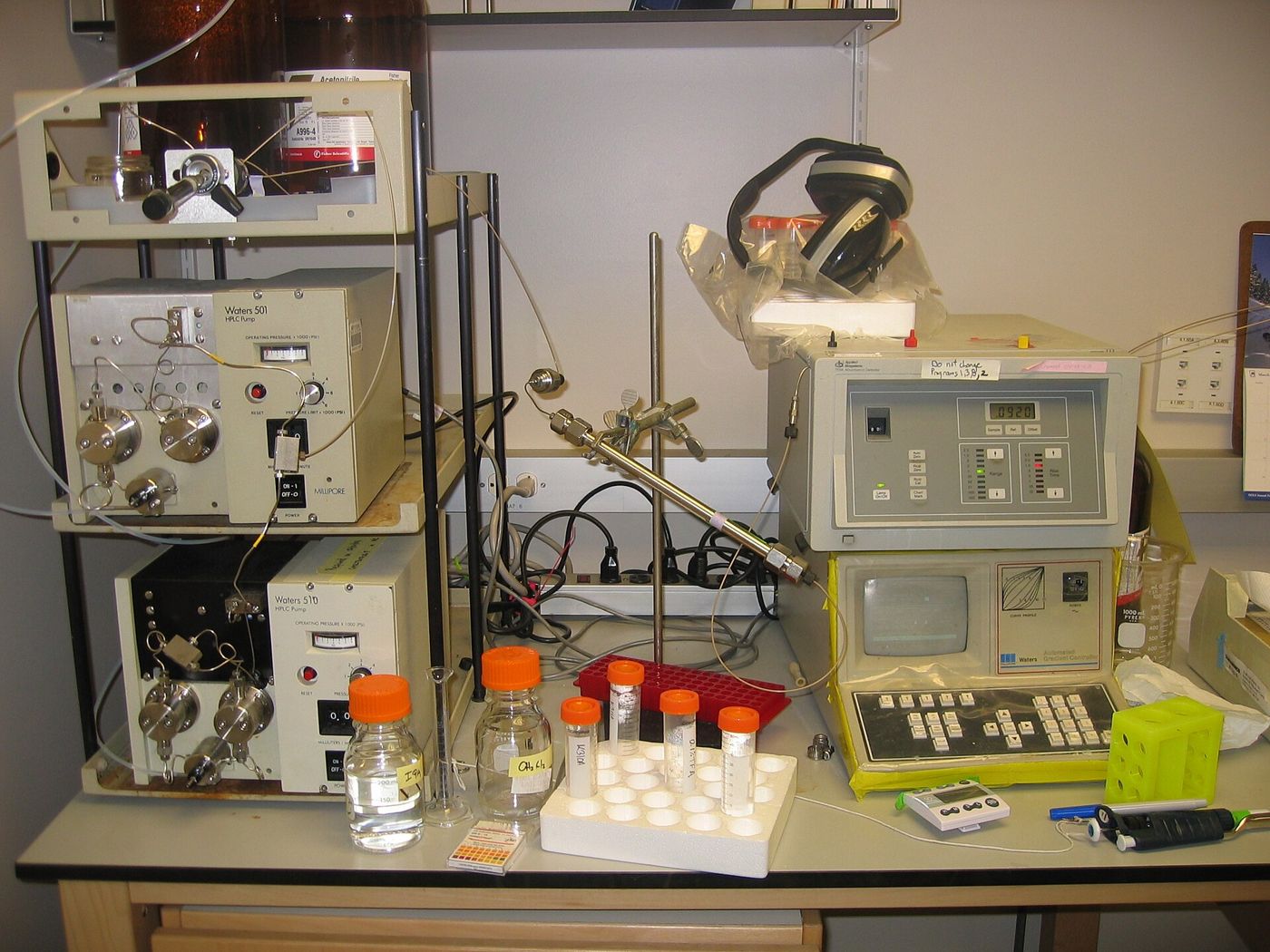
For a small aromatic cation, reversed-phase HPLC with UV detection is a practical purity method, although the permanent positive charge can cause poor retention or peak tailing on standard C18 columns. Ion-pairing reagents, mixed-mode columns or hydrophilic interaction chromatography are common solutions. Electrospray mass spectrometry in positive mode should show the intact cation near m/z 159.09; unlike a peptide, no protonation step is needed, so the observed ion is the cation itself. Proton NMR confirms the N-methyl singlet and the substitution pattern on the quinolinium ring.
Aromatic amines can darken through slow oxidation, and quinolinium salts are often light-sensitive, so storage in sealed, light-protected containers in a cool, dry place is sensible. The compound is water-soluble as a salt and is also commonly prepared in DMSO for cell-based assays. As with any research chemical, record the lot number, counterion and purity from the certificate, and calculate molar concentrations from the formula mass of the salt rather than the cation. Our guide on how to read a COA applies equally to small molecules.
Summary for Researchers
5-Amino-1MQ is a quaternary quinolinium small molecule designed to occupy the nicotinamide site of NNMT. Its research value lies in the enzyme it blocks: NNMT connects nicotinamide clearance, NAD+ salvage and SAM-dependent methylation, and a cell-active inhibitor lets those connections be tested directly in culture. The supporting literature is mostly biochemical and cell-based, with a smaller preclinical rodent component. Laboratories working with the 5-amino-1MQ NNMT inhibitor should verify the salt form and purity for each lot and choose chromatographic conditions suited to a permanently charged analyte.
References
- Neelakantan H, et al. Structure-activity relationship for small molecule inhibitors of nicotinamide N-methyltransferase. Journal of Medicinal Chemistry, 2017.
- Pissios P. Nicotinamide N-methyltransferase: more than a vitamin B3 clearance enzyme. Trends in Endocrinology and Metabolism, 2017.
- Ulanovskaya OA, Zuhl AM, Cravatt BF. NNMT promotes epigenetic remodeling in cancer by creating a metabolic methylation sink. Nature Chemical Biology, 2013.
- Cantó C, Menzies KJ, Auwerx J. NAD+ metabolism and the control of energy homeostasis: a balancing act between mitochondria and the nucleus. Cell Metabolism, 2015.
Research Products in This Article
Educational content for research use only. Not for human consumption. Nothing here is medical advice or a claim about safety or efficacy.
 DO