How Temperature Affects Peptide Stability
How temperature drives peptide degradation, what freeze-thaw cycles do to solutions, and how to judge shipping excursions.
 EMElena Marsh, PhDSenior Research Analyst, Analytical Chemistry~5 min read
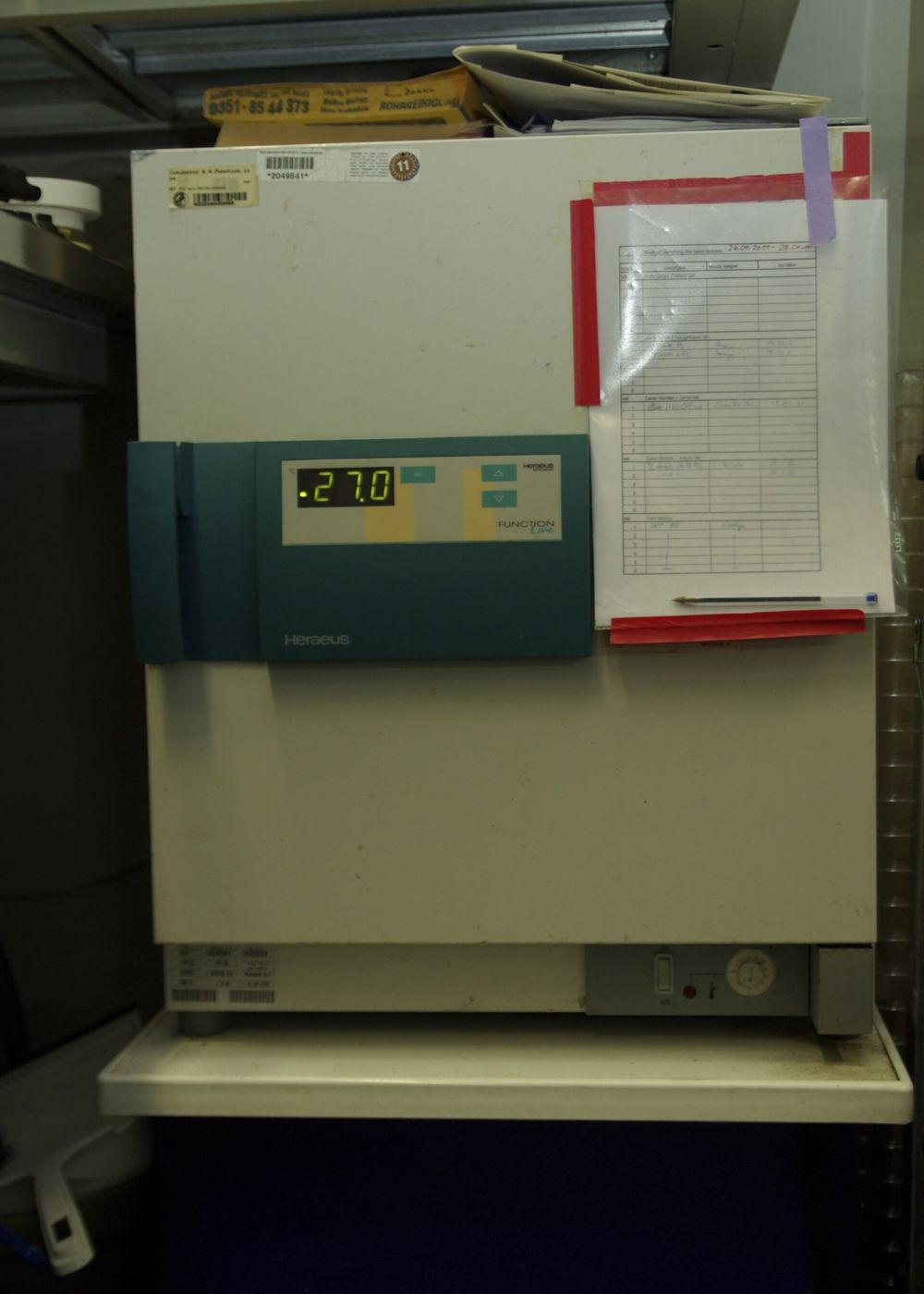 StabilityPhoto: Nadine90 / Wikimedia Commons, CC BY-SA 3.0
Temperature is the single storage variable that researchers control most directly, and it influences almost every degradation pathway a peptide can undergo. Choosing the right peptide storage temperature means understanding why cold slows chemical change, where that rule breaks down, and which handling steps introduce thermal stress that a freezer setting alone cannot prevent. Freeze-thaw cycling and uncontrolled shipping conditions are the two most common examples.
This article is written for laboratory staff who receive, store and prepare peptide materials. It explains the relationship between temperature and reaction rate, compares freezer, refrigerator and room-temperature storage for solid and dissolved peptides, examines what happens during freezing and thawing, and discusses how temperature excursions in transit should be assessed.
Temperature and Reaction Rates
Most chemical degradation reactions in peptides, including deamidation, hydrolysis and many oxidation processes, speed up as temperature rises. The Arrhenius equation describes this: the rate constant increases exponentially with temperature, scaled by the activation energy of the reaction. A frequently quoted rule of thumb holds that rates roughly double or triple for every 10 °C increase, but this is an approximation, not a law. Different reactions have different activation energies, so the dominant pathway at 40 °C may not be the dominant one at 5 °C.
That limitation matters when interpreting accelerated stability data. ICH Q1A(R2) uses elevated-temperature studies to support predictions at the intended storage condition, but extrapolation assumes a consistent mechanism. Peptides frequently violate that assumption. In lyophilized solids, molecular mobility changes sharply near the glass transition temperature, and absorbed moisture lowers that transition. In frozen solutions, the solutes become concentrated in the unfrozen liquid between ice crystals, and some reactions can proceed faster there than in the corresponding liquid at a slightly higher temperature. Cold is protective in general, but the relationship is not always smooth.
Freezer, Refrigerator and Room Temperature
Physical form changes the picture more than any other factor. Lyophilized research peptides, the format in which most of the research peptides in our catalog are supplied, contain little water, so hydrolysis and deamidation are slow even at moderate temperatures. Solutions are a different matter: in water, every pathway described in our overview of peptide stability and degradation becomes more active.
| Condition | Lyophilized solid | Peptide in solution |
|---|---|---|
| -80 °C | Suitable for long-term archival storage | Preferred for long-term storage of aliquots |
| -20 °C | Common long-term condition for most peptides | Acceptable for many sequences; aliquot to avoid refreezing |
| 2–8 °C | Generally suitable for short periods | Short-term working storage only, sequence dependent |
| Room temperature | Often tolerated during brief handling or transit | Not recommended beyond the duration of an experiment |
The table reflects general practice rather than validated limits for any specific compound. Sequences rich in cysteine, methionine, tryptophan, asparagine or glutamine are more sensitive than average, and supplier or literature data for a particular peptide should take precedence. The type of freezer also matters. Frost-free units periodically warm their evaporator coils to remove ice, and the resulting temperature cycling can expose samples near the walls to repeated partial warming. A manual-defrost freezer or an ultra-low unit gives a more stable environment, and a temperature log or alarm provides evidence that the condition was actually maintained.
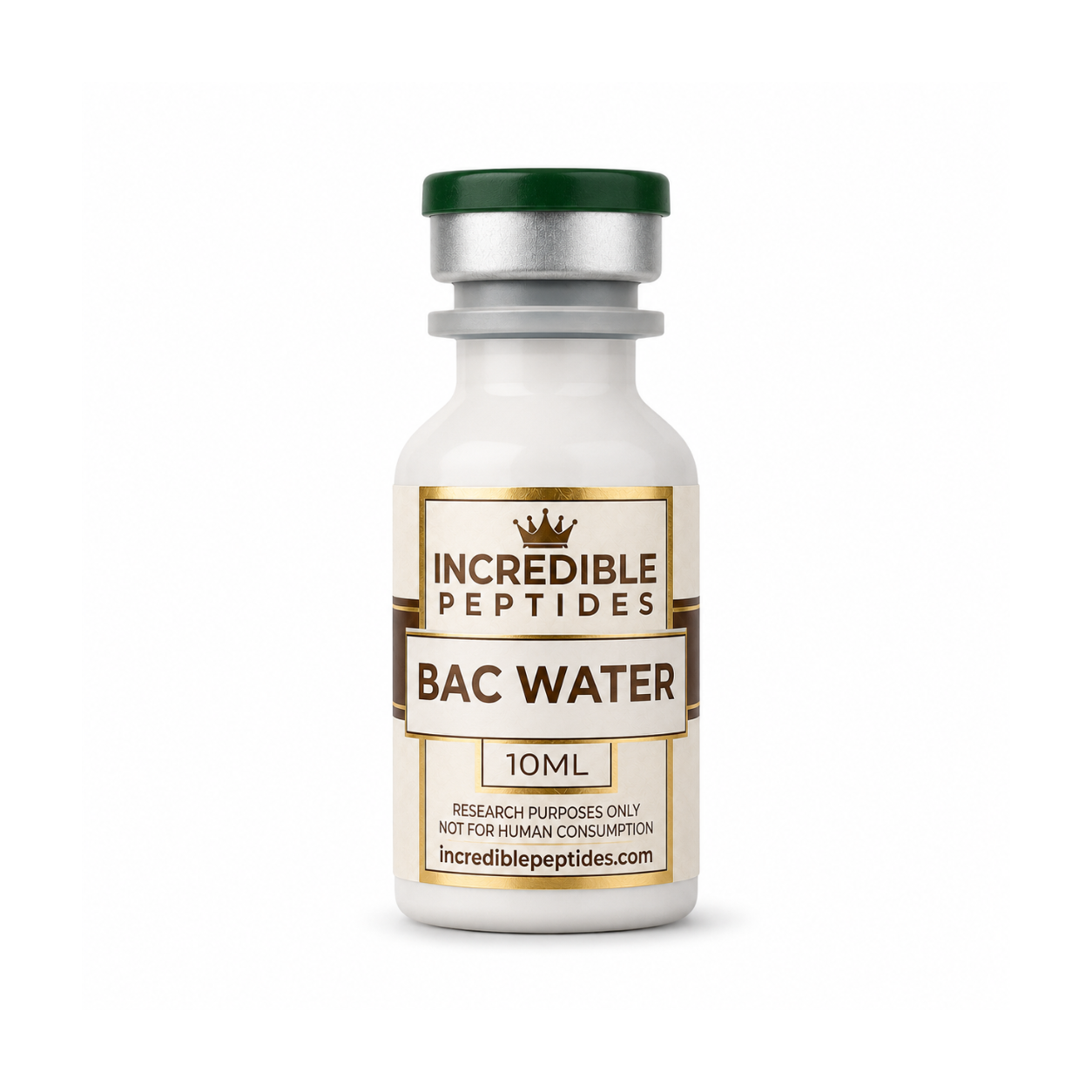
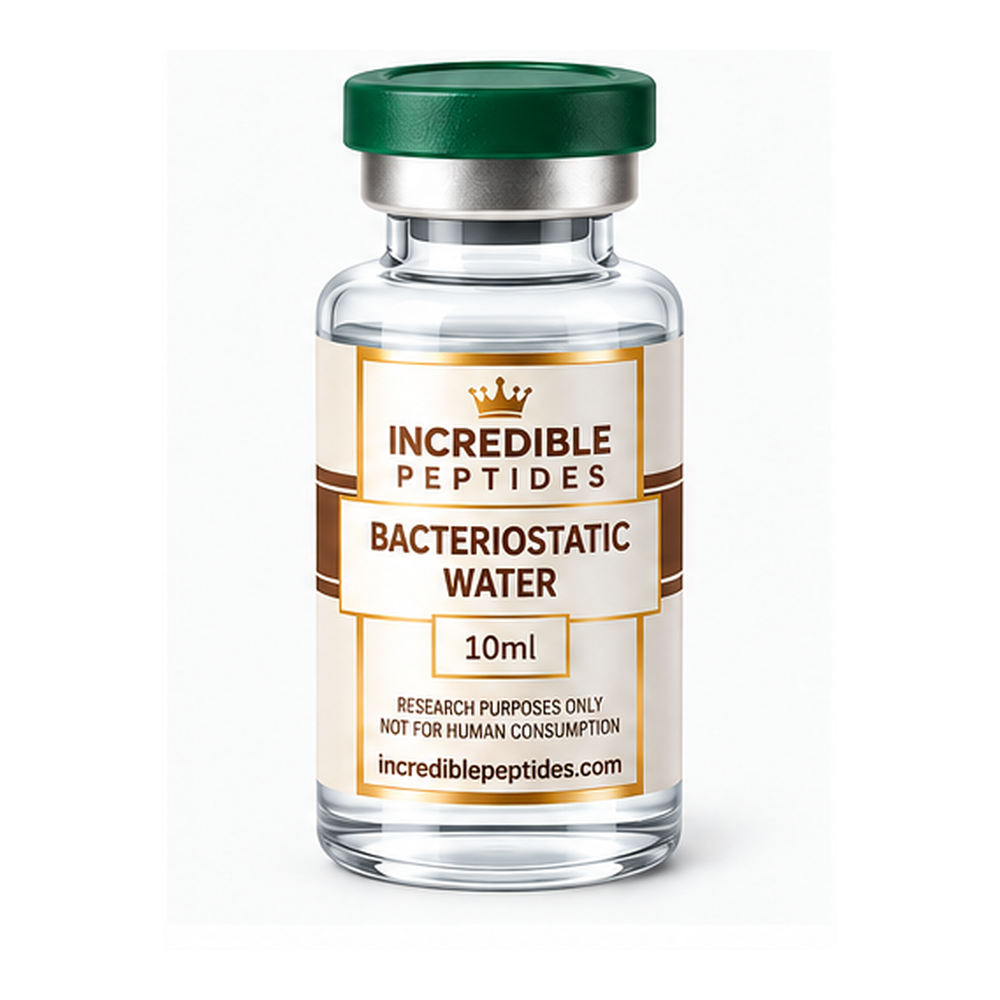
Refrigerated working solutions raise a separate issue. Some laboratories keep a short-term working solution at 2–8 °C rather than freezing and thawing it repeatedly. When that solution must be sampled several times, a preserved diluent such as bacteriostatic water in a 10 ml multi-withdrawal vial, which is sterile water containing benzyl alcohol as an antimicrobial preservative, is sometimes chosen to limit microbial growth between withdrawals. The preservative does nothing to slow chemical degradation, however, and benzyl alcohol can interfere with some cell-based and biophysical assays, so its compatibility with the intended experiment should be checked first.
Freeze-Thaw Cycles
Freezing a peptide solution is not a gentle process. As ice forms, water is removed from the liquid phase, and the remaining solution becomes progressively more concentrated in peptide, salts and buffer. Some buffer components crystallize selectively during freezing; sodium phosphate is the classic example, where precipitation of one salt form can shift the pH of the unfrozen fraction substantially. The large ice-liquid interface that develops during freezing can also promote unfolding and aggregation of susceptible sequences, and each thaw passes the sample back through the same concentrated state.
The effects of a single cycle may be negligible, but they can accumulate. Repeated cycles tend to increase aggregation and can cause loss of soluble peptide through precipitation or adsorption, particularly at low concentration. The standard laboratory response is simple: divide a freshly prepared stock solution into single-use aliquots sized for one experiment, freeze them promptly, and thaw each one only once. Rapid freezing in small volumes generally limits the time spent in the concentrated intermediate state. Thawed aliquots should be mixed gently, since vigorous shaking introduces air-liquid interfaces that add their own aggregation risk.
Shipping Temperature
Lyophilized peptides are commonly shipped at ambient temperature, sometimes with cold packs, because the dry solid tolerates short periods outside refrigeration far better than a solution would. Tolerating a few days in transit is not the same as being stable at room temperature indefinitely, and the actual temperature inside a parcel can exceed ambient conditions considerably during summer transport or when packages sit in vehicles.
On receipt, inspect the packaging, check that vials are intact and the lyophilized cake or powder looks consistent with what is expected, and move the material to its long-term storage condition without delay. Record the date and condition of arrival with the lot number. If a shipment has clearly been exposed to extreme heat, or the material looks collapsed, discolored or wet, the appropriate response is to compare it against its analytical documentation and contact the supplier rather than assume it is unaffected. Cold vials should be allowed to reach room temperature before opening, so that atmospheric moisture does not condense on the hygroscopic solid.
Practical Takeaways for Lab Storage
Store lyophilized material at -20 °C or below for long-term holding, keep solutions frozen in single-use aliquots, and treat refrigerator and bench time as short and deliberate. Use a stable, monitored freezer, avoid repeated freeze-thaw cycles, and record temperature excursions along with lot numbers. When planning a study that draws on several compounds from the lyophilized research peptides category, it helps to map freezer space and aliquot volumes before material arrives rather than afterward. Our practical guide on how to store peptides brings these steps together with labeling and inventory practice.
References
- ICH Q1A(R2). Stability Testing of New Drug Substances and Products. International Council for Harmonisation.
- Manning MC, Chou DK, Murphy BM, Payne RW, Katayama DS. Stability of protein pharmaceuticals: an update. Pharmaceutical Research, 2010.
- Wang W. Lyophilization and development of solid protein pharmaceuticals. International Journal of Pharmaceutics, 2000.
- ICH Q5C. Quality of Biotechnological Products: Stability Testing of Biotechnological/Biological Products. International Council for Harmonisation.
Research Product in This Article
Educational content for research use only. Not for human consumption. Nothing here is medical advice or a claim about safety or efficacy.