How to Store Research Peptides in the Lab
Practical lab guidance on storing lyophilized peptides and stock solutions, choosing diluents, and labeling and tracking material by lot.
 EMElena Marsh, PhDSenior Research Analyst, Analytical Chemistry~5 min read
 Stability
Peptide materials can lose quality in storage long before anyone notices. The usual causes are not dramatic: a vial opened while still cold, a stock solution thawed one time too many, a label that lost its lot number. Knowing how to store peptides in a research laboratory is largely a matter of controlling temperature, moisture, light and oxygen, and of keeping records good enough that the history of every container can be reconstructed.
This guide is written for lab managers and technicians. It covers storage of lyophilized material, handling of peptide stock solutions, choosing laboratory diluents including bacteriostatic water, and the labeling and inventory practices that hold everything together. It ends with a short checklist. All guidance here concerns in-vitro laboratory handling of research-use-only materials.
Lyophilized Material
Most research peptides are supplied as lyophilized (freeze-dried) solids, the form in which they are most stable. Removing water slows hydrolysis and deamidation, and a dry, cold solid has little molecular mobility for chemical reactions. For long-term storage, lyophilized research peptides are generally kept at -20 °C or below, in their sealed original containers, protected from light. Short periods at refrigerator temperature or during brief bench handling are usually tolerated, but sequence matters: peptides containing cysteine, methionine or tryptophan are more prone to oxidation, and those containing asparagine or glutamine are more prone to deamidation.
Moisture is the main threat once a vial has been opened. Freeze-dried powders are hygroscopic, and a cold vial opened in room air will collect condensation directly on the solid. Allow vials to reach room temperature before opening, ideally in a desiccator, weigh what is needed promptly, and reseal. If an inert gas supply is available, briefly flushing the headspace with nitrogen or argon before resealing reduces exposure to oxygen and water vapor. Our article on peptide moisture and light sensitivity explains the chemistry behind these precautions.
Peptide Stock Solutions
Once a peptide is in solution, every degradation pathway speeds up. Water enables hydrolysis and deamidation, dissolved oxygen supports oxidation, and dilute solutions lose material to container walls through adsorption. Solutions should therefore be prepared in quantities that match near-term experimental needs, rather than dissolving a whole vial and storing the remainder indefinitely.
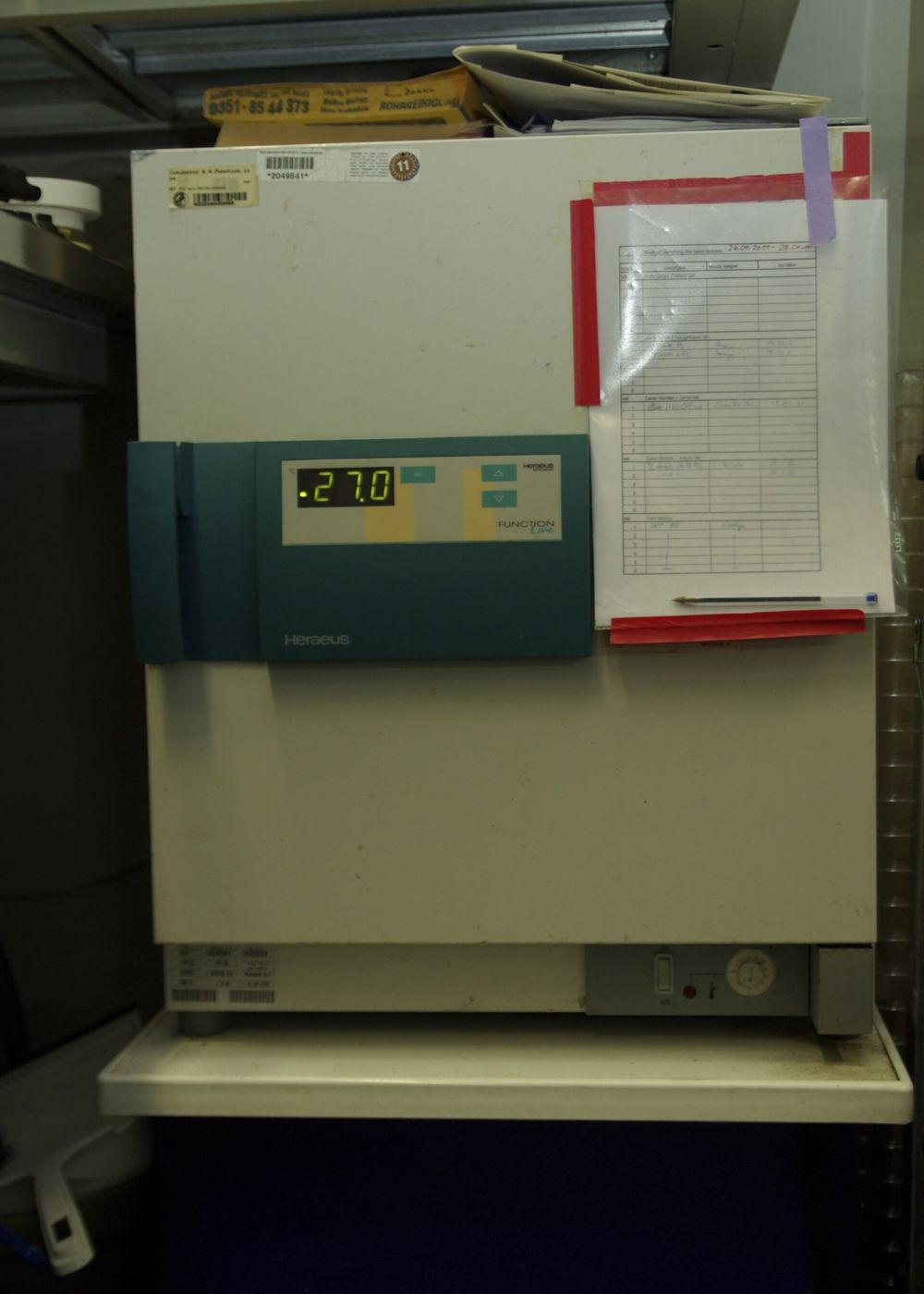
For storage beyond a few days, divide the stock into single-use aliquots in low-binding tubes, freeze them promptly, and thaw each aliquot only once. Repeated freeze-thaw cycles concentrate solutes in the unfrozen liquid, can shift pH in some buffer systems, and promote aggregation, as discussed in our guide to peptide storage temperature and stability. Keep frozen aliquots at -20 °C or, for longer holding, at -80 °C, in a freezer that is not frost-free, since automatic defrost cycles warm the compartment periodically. Many peptides are more stable in mildly acidic solution than at neutral or alkaline pH, but optimal conditions depend on sequence and should be confirmed from literature or supplier information where available.
Diluents and Bacteriostatic Water
The right solvent depends on a peptide’s charge, hydrophobicity and the needs of the downstream assay. Sterile, high-purity water is the default starting point. Basic peptides often dissolve more readily in dilute acetic acid, acidic peptides in dilute ammonium bicarbonate or another mildly basic solution, and very hydrophobic sequences may need a small proportion of an organic solvent such as DMSO or acetonitrile before dilution into buffer. DMSO is worth avoiding for cysteine- or methionine-containing sequences where alternatives exist, because it can promote oxidation of those residues.
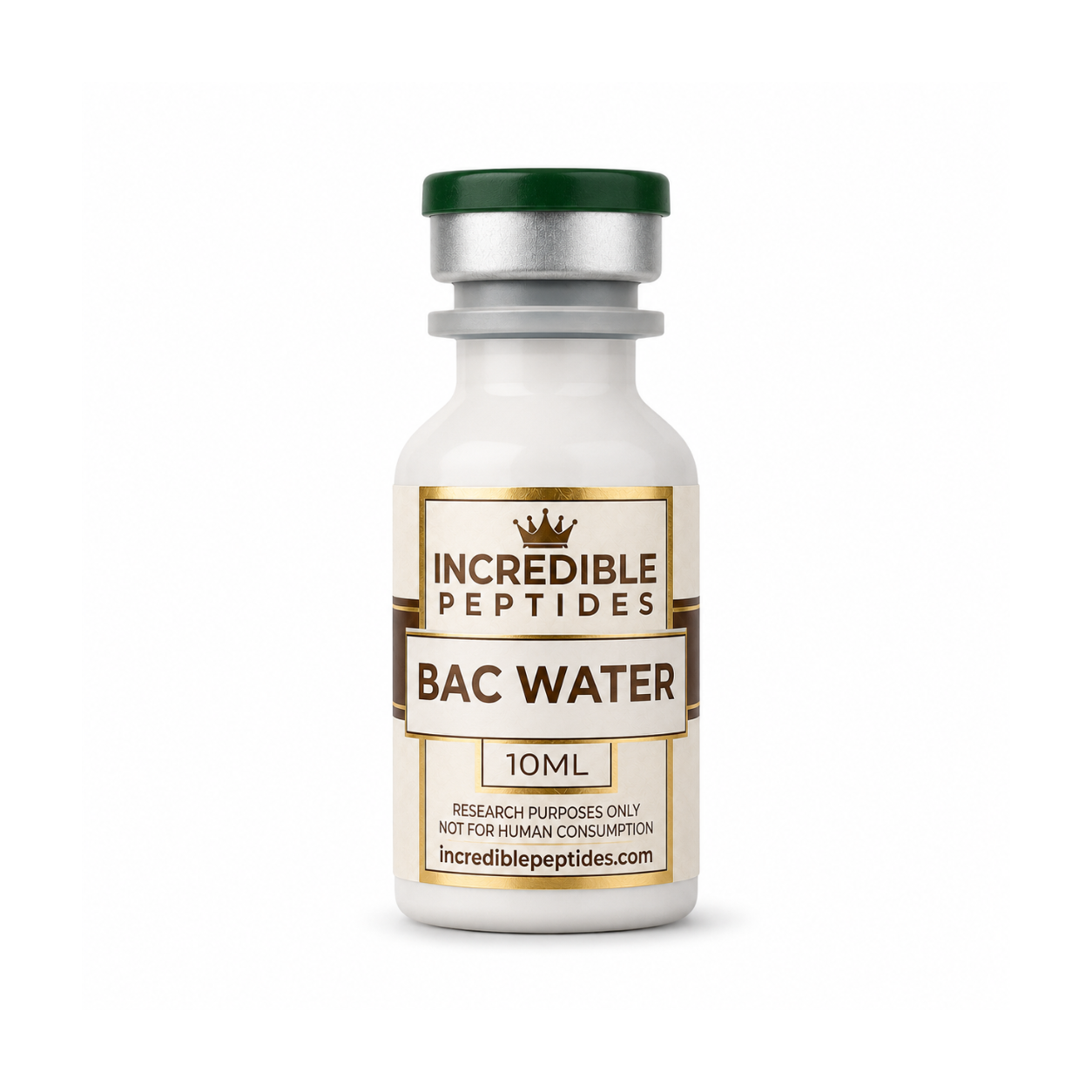
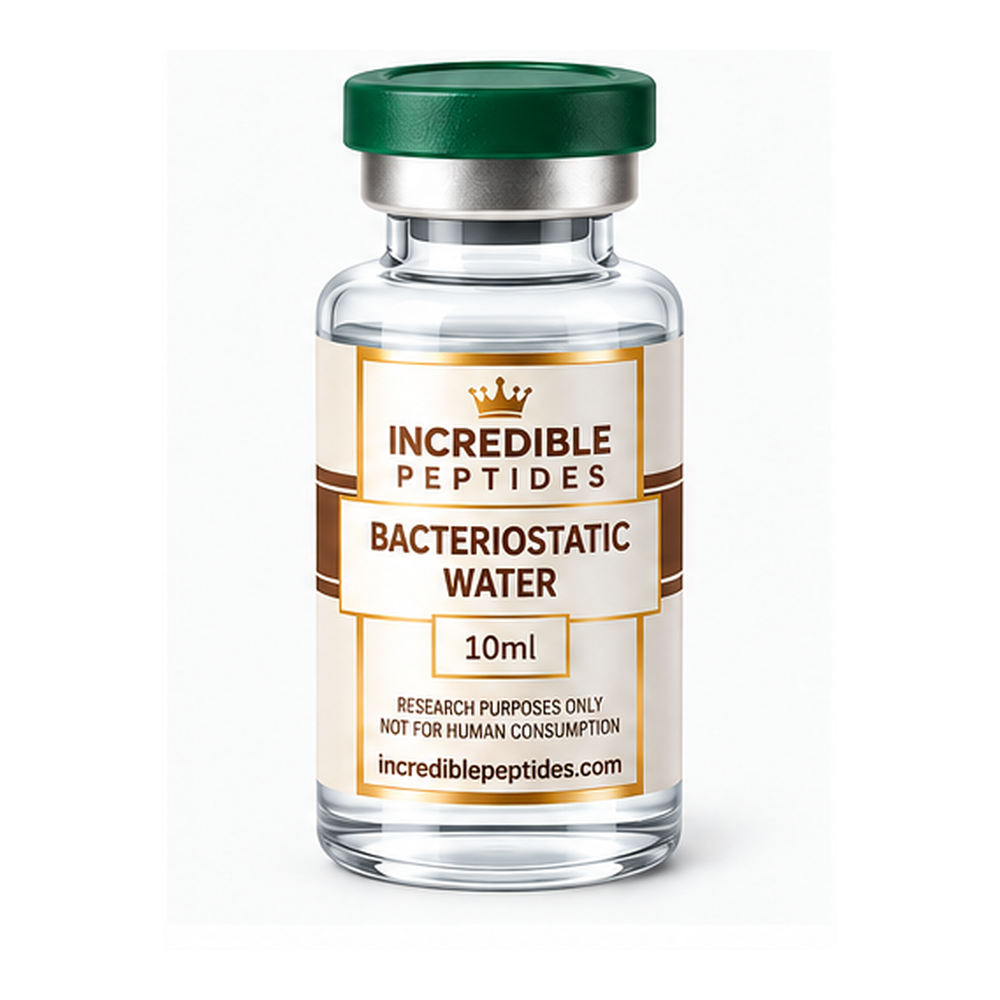
When a laboratory needs a working solution that will be sampled repeatedly from the same refrigerated container, a preserved diluent is sometimes chosen. Bacteriostatic water, supplied as a 10 ml vial, is sterile water containing benzyl alcohol, conventionally at 0.9%, as an antimicrobial preservative. The preservative suppresses microbial growth introduced during repeated withdrawals. It is important to be clear about its limits. Benzyl alcohol does not slow oxidation, deamidation or hydrolysis, so a solution in bacteriostatic water is not chemically more stable than one in plain sterile water. Benzyl alcohol can also affect some cell-based assays and has been reported to promote aggregation of certain proteins, so compatibility with the experiment should be confirmed before it is adopted as a standard diluent. Follow the labeled storage conditions for the diluent itself and your institution’s policy on discarding opened multi-use containers.
Labeling and Inventory
Good storage conditions are of little value if a container cannot be identified with certainty. Every primary vial and every derived solution should carry enough information to connect it back to its source. For solutions, that means at minimum the compound name, the parent lot number, concentration, solvent, preparation date, preparer’s initials and storage condition. Labels should be printed or written with solvent- and freezer-resistant materials, since handwritten marker on frosted tubes is a common point of failure.
An inventory system, whether a dedicated laboratory information management system or a well-maintained spreadsheet, should record receipt date, lot number, storage location, quantity remaining and the location of the certificate of analysis. Logging freezer temperatures and any excursions alongside this inventory allows storage history to be reconstructed if results change. General laboratory safety frameworks, including the National Research Council’s Prudent Practices in the Laboratory and the OSHA laboratory standard (29 CFR 1910.1450), also expect chemicals to be clearly labeled, stored by compatibility and tracked through to disposal.
Storage Checklist
- Store lyophilized peptides sealed, dark and at -20 °C or below for long-term holding.
- Warm vials to room temperature, preferably in a desiccator, before opening.
- Weigh promptly, reseal, and flush the headspace with inert gas where available.
- Prepare solutions in amounts matched to planned experiments, and aliquot for single use.
- Avoid repeated freeze-thaw cycles and frost-free freezers.
- Protect solids and solutions from light with amber containers or foil.
- Confirm diluent compatibility with the assay, and date any opened multi-use diluent vial such as a preserved bacteriostatic water diluent.
- Label every container with compound, lot, concentration, solvent and date.
- Record receipt, location, temperature logs and COA location in the lab inventory.
Making Storage Part of the Method
Storage and handling are part of experimental method, not a separate housekeeping task. A peptide that has been kept cold, dry and dark, dissolved in a suitable solvent, aliquoted sensibly and tracked by lot is far more likely to behave consistently from one experiment to the next. When results drift, a clear storage record is often the fastest way to rule handling in or out as the cause.
References
- ICH Q1A(R2). Stability Testing of New Drug Substances and Products. International Council for Harmonisation.
- National Research Council. Prudent Practices in the Laboratory: Handling and Management of Chemical Hazards. National Academies Press.
- US Code of Federal Regulations, Title 29, Part 1910.1450: Occupational exposure to hazardous chemicals in laboratories.
- Manning MC, Chou DK, Murphy BM, Payne RW, Katayama DS. Stability of protein pharmaceuticals: an update. Pharmaceutical Research, 2010.
Research Product in This Article
Educational content for research use only. Not for human consumption. Nothing here is medical advice or a claim about safety or efficacy.