
Tirzepatide (TIRZ-2): Structure and Dual GIP/GLP-1 Receptor Pharmacology
A 39-residue GIP-based peptide with two Aib residues and a C20 diacid: how tirzepatide engages GIP and GLP-1 receptors, and what in vitro work shows.
 DODaniel Okafor, MSResearch Analyst, Molecular Biology~5 min read
 CompoundsPhoto: Habin Zhang / Wikimedia Commons
Tirzepatide is a 39-residue synthetic peptide engineered to activate two receptors at once: the receptor for gastric inhibitory polypeptide (GIP) and the GLP-1 receptor. That dual activity, built into a single linear chain, makes the tirzepatide peptide a useful tool for studying how one ligand can engage two related class B1 G protein-coupled receptors with different strength and different signalling character. This profile covers its sequence, chemical modifications, in vitro receptor pharmacology and practical laboratory considerations.
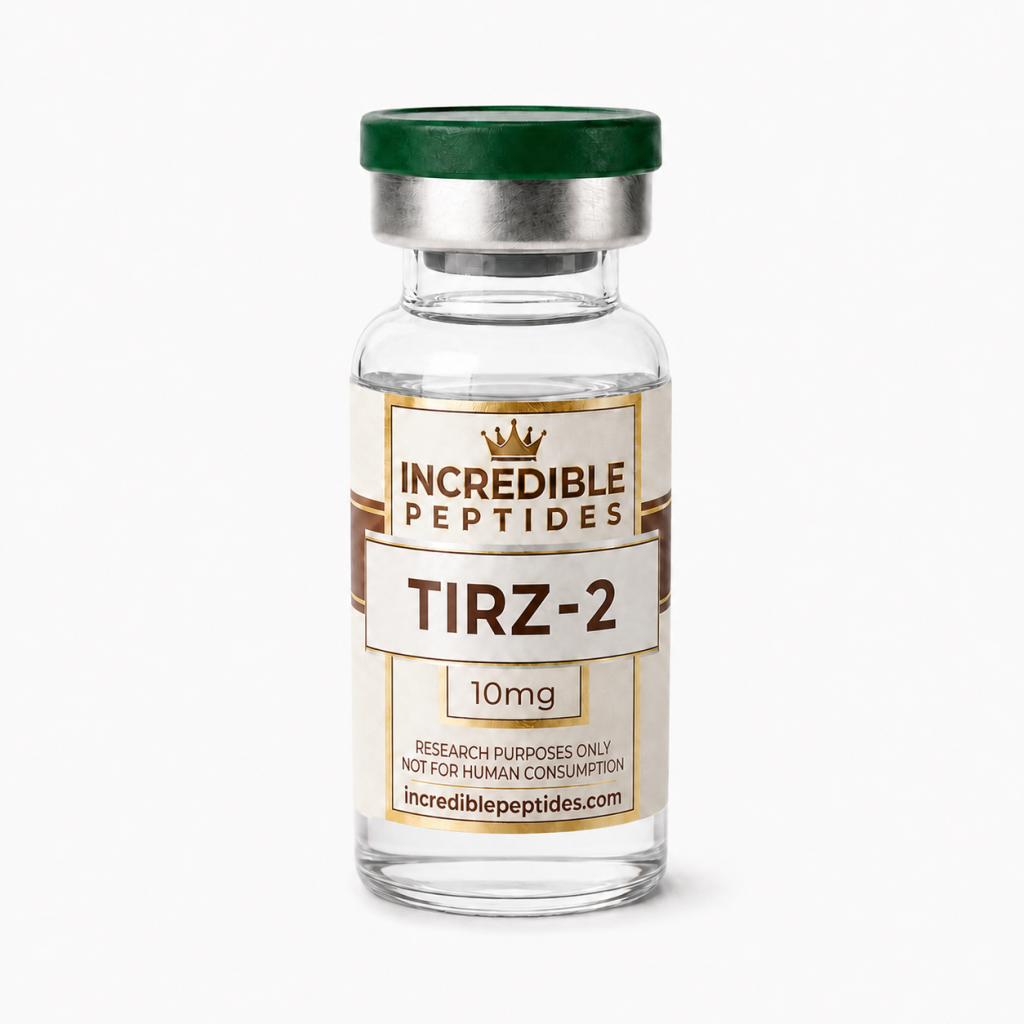
The compound is supplied for laboratory work as the TIRZ-2 tirzepatide research peptide. Its developmental code in the discovery literature is LY3298176.
Is tirzepatide a peptide?
Yes. Tirzepatide is a linear chain of 39 amino acid residues joined by peptide bonds, with a C-terminal amide. Two of those residues are α-aminoisobutyric acid (Aib), a non-coded amino acid, and one lysine side chain carries a fatty diacid attached through a hydrophilic linker. It is therefore best described as a lipidated peptide containing non-proteinogenic residues. Because of the Aib positions, the finished molecule cannot be made by ribosomal expression alone and is produced by chemical synthesis. Its molecular formula is commonly given as C225H348N48O68, for an average molecular weight of roughly 4.81 kDa.
Sequence architecture: a GIP-based backbone
In one-letter code, with its own 1 to 39 numbering, tirzepatide can be written as Y-Aib-EGTFTSDYSI-Aib-LDKIAQ-K(side chain)-AFVQWLIAGGPSSGAPPPS-NH2. Three design sources are visible in that sequence.
The N-terminal region follows native GIP closely. Tyr1 is the first residue of GIP itself, and the stretch through roughly position 17 shares most of its residues with the hormone. The middle segment incorporates residues that support GLP-1 receptor recognition. The C-terminal nine residues, PSSGAPPPS, come from exendin-4, the GLP-1 receptor agonist originally isolated from Gila monster venom, where this proline-rich tail packs against the helix in a compact “Trp-cage” fold.
| Feature | Position | Role |
|---|---|---|
| Aib | 2 | Protects the N-terminus from dipeptidyl peptidase-4 cleavage |
| Aib | 13 | Replaces Ala found in native GIP; constrains backbone conformation |
| Leu | 14 | Occupies the position of Met in native GIP, removing an oxidation-prone residue |
| Lys with linker and C20 diacid | 20 | Reversible binding to serum albumin |
| C-terminal amide | 39 | Ends the exendin-derived tail |
The side chain on Lys20 consists of a γ-glutamic acid and two short oligo(ethylene glycol) spacer units linking an eicosanedioic acid, a 20-carbon fatty diacid. As in other lipidated incretin-class peptides, the diacid’s free carboxylate supports albumin association, and the spacer keeps the lipid away from receptor-contact residues.
Imbalanced dual agonism
GIP and GLP-1 receptors share the class B1 architecture: a large extracellular domain that grips the peptide’s C-terminal helix and a transmembrane core that the peptide’s N-terminus enters to trigger activation. A single peptide can engage both because GIP and GLP-1 share a common N-terminal motif and helical structure.
The discovery paper reported that tirzepatide binds the GIP receptor with an affinity comparable to native GIP, while its affinity at the GLP-1 receptor is several-fold weaker than native GLP-1. Functional cAMP assays showed a similar pattern, with potency at the GIP receptor matching the native hormone and lower potency at the GLP-1 receptor. For this reason it is described as an imbalanced dual agonist that leans toward GIP receptor activity. Laboratories comparing selective, dual and triple agonists can source the related compounds from the research peptides catalogue, and our side-by-side retatrutide vs tirzepatide vs semaglutide comparison sets the three classes against each other.
Biased signalling at the GLP-1 receptor
Agonists do not have to activate every pathway downstream of a receptor equally. Follow-up work in recombinant cell systems found that, at the GLP-1 receptor, tirzepatide favours cAMP generation over β-arrestin recruitment when compared with native GLP-1. It recruited β-arrestin weakly and produced less agonist-driven receptor internalisation. At the GIP receptor its signalling profile resembled that of native GIP more closely. The combination of imbalance and bias is unusual and is one reason the compound attracts interest as a pharmacological probe.
Bias is a relative property. It is quantified against a reference agonist, usually the native hormone, using pathway-specific readouts such as cAMP biosensors and bioluminescence resonance energy transfer (BRET) assays for arrestin recruitment, and analysed with models such as the operational model of agonism. Receptor expression level, assay kinetics and the chosen reference ligand all influence the result, so bias values from different laboratories should not be compared without matching conditions. Our overview of cell signaling assays describes these readouts.
Cryo-electron microscopy structures of tirzepatide bound to each receptor with the Gs protein, reported in 2022, gave a structural basis for the dual activity and showed differences in how the peptide’s N-terminal region and lipid moiety engage each receptor.
Practical notes for in vitro work
Several variables deserve control. Serum albumin in assay buffer binds the C20 diacid and shifts apparent potency, so albumin type and concentration should be fixed and reported. Receptor orthologues from different species can respond differently to engineered peptides, which matters when interpreting rodent preclinical data alongside recombinant-receptor results. Cell lines expressing a single receptor, receptor-selective antagonists, or knockout backgrounds help separate the GIP receptor and GLP-1 receptor contributions to a combined response.
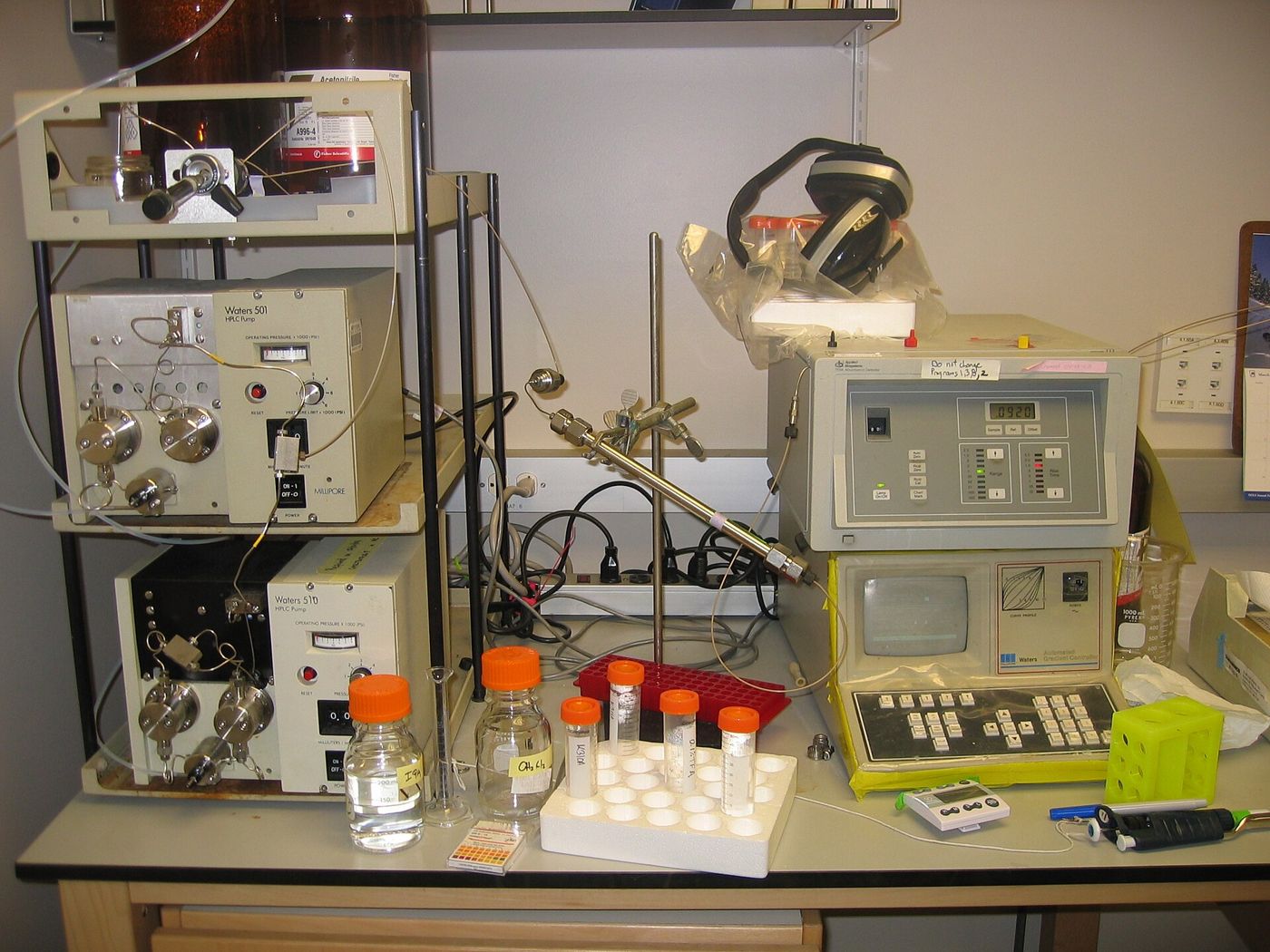
On the chemistry side, Aib couplings are sterically hindered and the proline-rich C-terminus can be slow to assemble, so synthetic material should be checked for deletion sequences and incompletely acylated species. Mass spectrometry confirms identity, while reversed-phase HPLC establishes purity; the lipid makes tirzepatide considerably more hydrophobic than unmodified GIP or GLP-1.
Where tirzepatide fits in a receptor study
Tirzepatide combines a GIP-derived sequence, an exendin-derived tail, two Aib residues and a C20 diacid side chain into a single dual agonist with GIP receptor-leaning potency and cAMP-biased GLP-1 receptor signalling. Those properties make it a valuable comparator next to selective GLP-1 receptor agonists and triple agonists. When using tirzepatide (TIRZ-2) research material, confirm identity and purity on the lot certificate of analysis and run native-hormone reference curves in the same assay. It is intended for laboratory research use only and is not for human or veterinary use.
References
- Coskun T, Sloop KW, Loghin C, et al. Molecular Metabolism. 2018;18:3–14.
- Willard FS, Douros JD, Gabe MB, et al. Tirzepatide is an imbalanced and biased dual GIP and GLP-1 receptor agonist. JCI Insight. 2020;5(17):e140532.
- Sun B, Willard FS, Feng D, et al. Structural determinants of dual incretin receptor agonism by tirzepatide. Proceedings of the National Academy of Sciences USA. 2022;119(13):e2116506119.
- Baggio LL, Drucker DJ. Biology of incretins: GLP-1 and GIP. Gastroenterology. 2007;132(6):2131–2157.
- Eng J, Kleinman WA, Singh L, Singh G, Raufman JP. Isolation and characterization of exendin-4, an exendin-3 analogue, from Heloderma suspectum venom. Journal of Biological Chemistry. 1992;267(11):7402–7405.
Research Product in This Article
Educational content for research use only. Not for human consumption. Nothing here is medical advice or a claim about safety or efficacy.


 EM