Retatrutide vs Tirzepatide vs Semaglutide: Receptor Pharmacology Compared
Mono, dual and triple agonists side by side: which receptors each peptide activates, how the structures differ, and how to compare them fairly in cell assays.
 DODaniel Okafor, MSResearch Analyst, Molecular Biology~4 min read
 MechanismsPhoto: Habin Zhang / Wikimedia Commons
Retatrutide, tirzepatide and semaglutide are often mentioned together because all three are lipidated peptides that act on receptors of the incretin and glucagon family. At the receptor level, though, they are quite different tools. Semaglutide is a selective GLP-1 receptor agonist, tirzepatide is a dual agonist at the GIP and GLP-1 receptors, and retatrutide is a triple agonist that adds the glucagon receptor. For anyone comparing retatrutide vs tirzepatide, or tirzepatide vs semaglutide, in a laboratory, the useful questions are which receptors each one activates, how strongly, and how the structures produce those profiles.
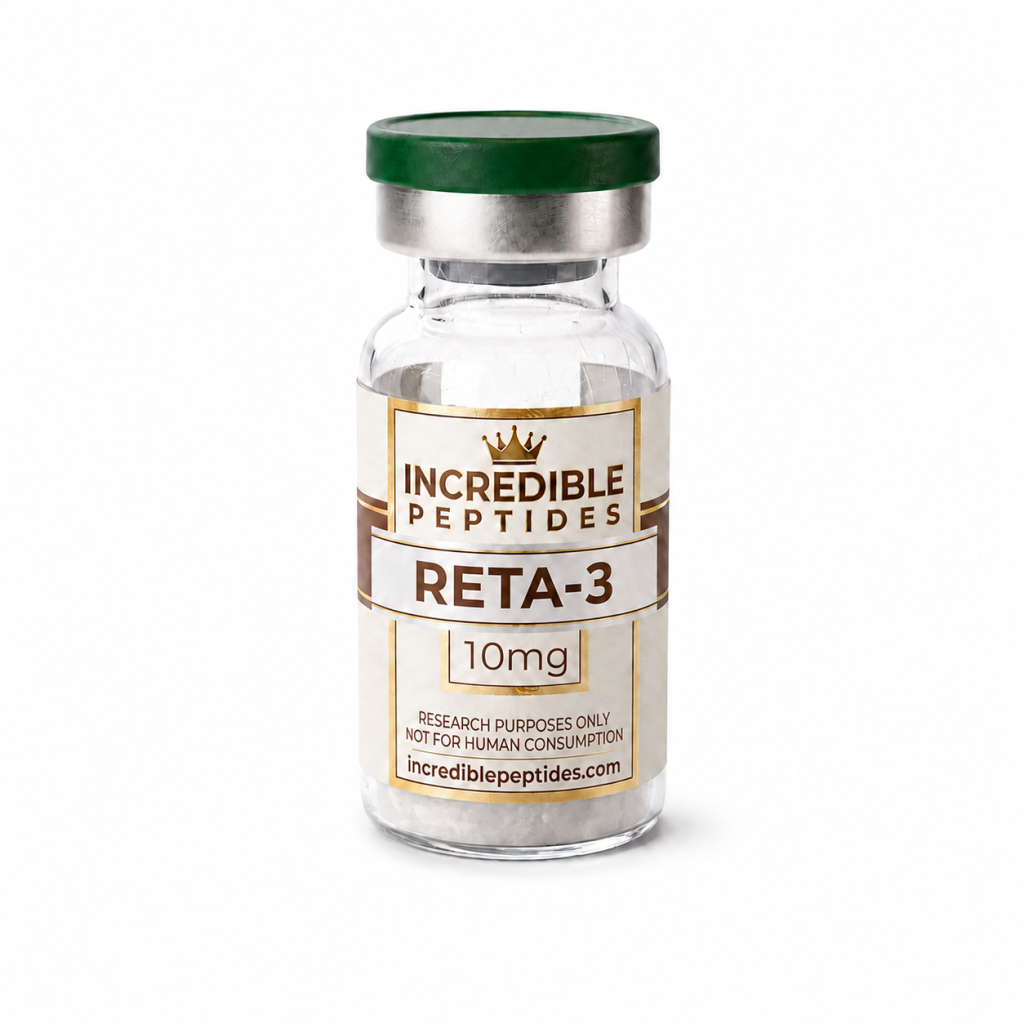
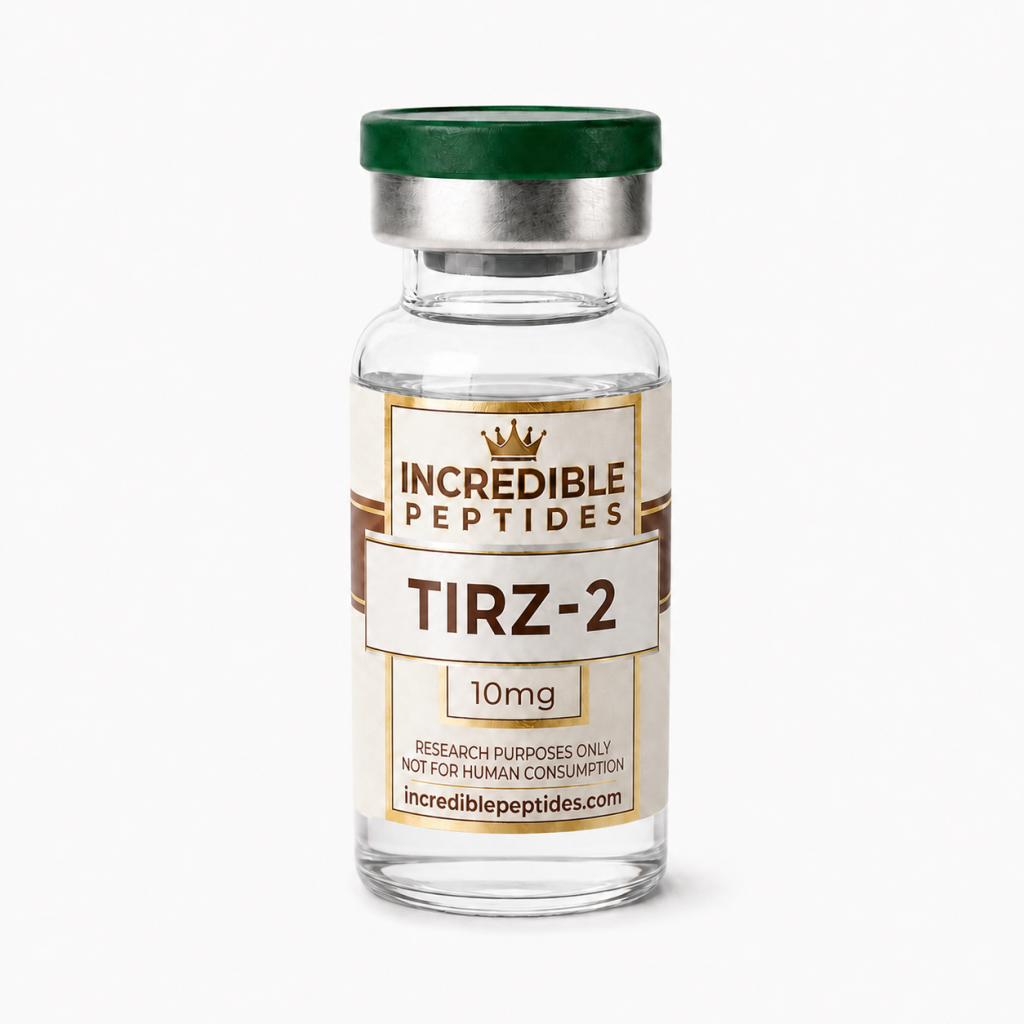
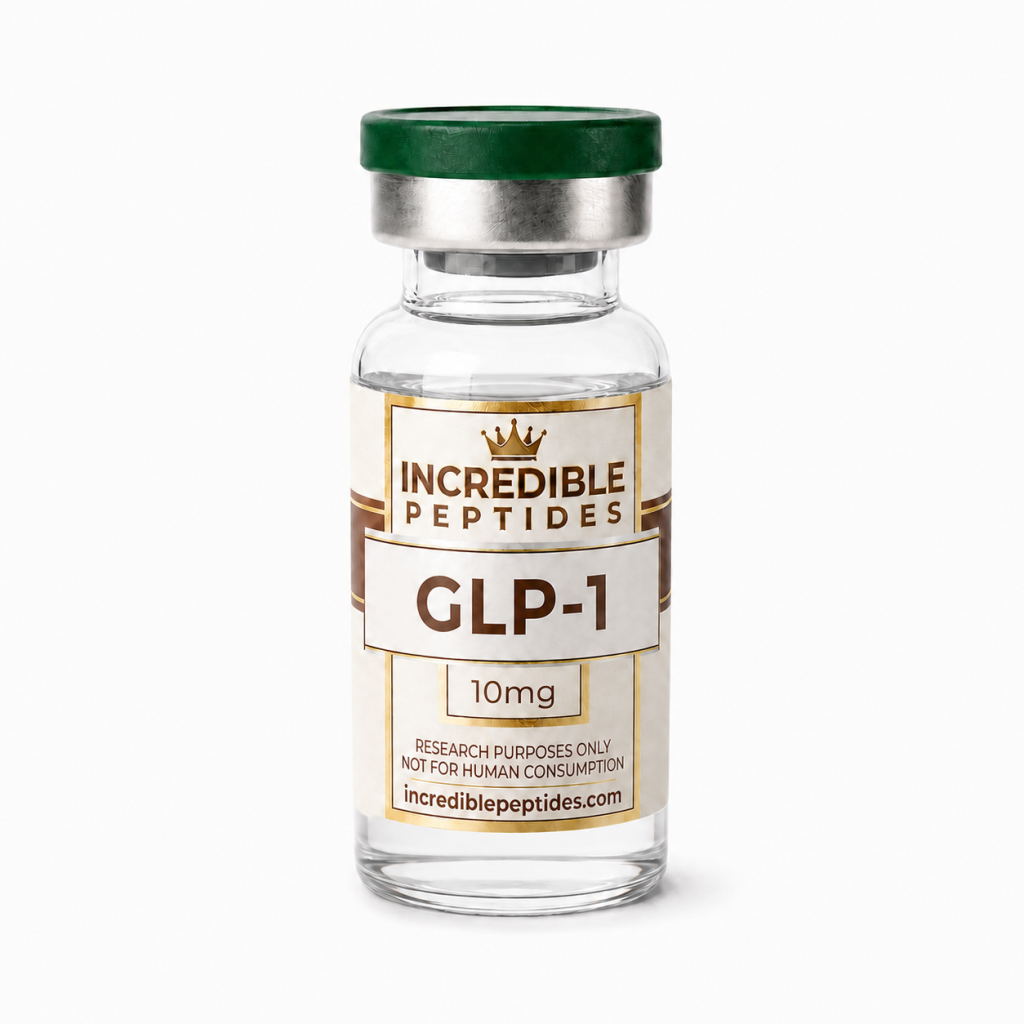
This article compares the three at the level of structure and receptor pharmacology, the way they are studied in cell-based assays. Incredible Peptides supplies RETA-3 (retatrutide), TIRZ-2 (tirzepatide) and a GLP-1 (semaglutide) research peptide for laboratory research use only; not for human or veterinary use.
The Receptor Family
GIP, GLP-1 and glucagon act through three class B1 G protein-coupled receptors: GIPR, GLP-1R and GCGR. All three couple mainly to Gs and raise intracellular cAMP, and all three use the same two-domain binding mode, in which the receptor’s extracellular domain captures the ligand’s C-terminal helix and the transmembrane core is activated by the ligand’s N-terminus. Because the hormones and receptors are related, a single engineered peptide can be tuned to activate one, two or all three. Our overview of the GLP-1 peptide and the peptide-receptor binding primer cover the background.
Three Design Strategies
Semaglutide: a selective GLP-1R agonist
Semaglutide is built on the GLP-1 sequence. An Aib residue near the N-terminus protects it from dipeptidyl peptidase-4, and a C18 fatty diacid attached through a linker to a lysine side chain gives strong albumin binding. Its activity is concentrated at GLP-1R, with little activity at GIPR or GCGR, so it is the natural single-receptor reference compound in comparative assays.
Tirzepatide: a dual GIPR/GLP-1R agonist
Tirzepatide is a 39-residue peptide whose sequence is based mainly on GIP, with substitutions that confer GLP-1R activity, Aib residues for protease resistance, and a C20 fatty diacid. In vitro studies describe it as imbalanced: closer to native GIP in potency at GIPR and weaker than native GLP-1 at GLP-1R. Studies have also reported signaling bias at GLP-1R, with cAMP generation favored over β-arrestin recruitment. Researchers working with the tirzepatide research peptide TIRZ-2 typically profile both receptors in parallel to see that balance directly.
Retatrutide: a GIPR/GLP-1R/GCGR triple agonist
Retatrutide (LY3437943) also starts from a GIP-like backbone and carries a fatty diacid, but its sequence is tuned to add glucagon receptor activity. That makes it the broadest of the three in receptor coverage. Its potency at each receptor relative to the native hormones has been reported in the primary literature, and the exact balance should be taken from there rather than from summaries. Our retatrutide peptide profile covers its structure in more detail.
Side-by-Side Summary
| Feature | Semaglutide | Tirzepatide | Retatrutide |
|---|---|---|---|
| Receptor profile | GLP-1R | GIPR + GLP-1R | GIPR + GLP-1R + GCGR |
| Backbone origin | GLP-1 | Mainly GIP | Mainly GIP |
| DPP-4 protection | Aib substitution | Aib substitutions | Aib and other non-natural residues |
| Lipidation | C18 fatty diacid | C20 fatty diacid | Fatty diacid |
| Main assay readout | cAMP at GLP-1R | cAMP at GIPR and GLP-1R | cAMP at all three receptors |
Comparing Them Fairly in the Lab
Potency comparisons between these peptides are only meaningful when the assays match. Use one cell line per receptor with comparable expression levels, include the native hormone for each receptor as a reference agonist on every plate, and report EC50 and maximal response relative to that reference. Receptor density can make partial agonists look like full agonists, so systems with very high expression exaggerate potency differences. Our guides to cAMP and other cell signaling assays and to EC50, IC50 and affinity explain these points in more depth.
Albumin is the other big variable. All three peptides are lipidated to bind albumin, so adding serum albumin to the assay buffer lowers the free concentration and shifts curves to the right, by different amounts for each compound. Comparisons should state the albumin content and ideally be run both with and without it. Species also matters, because rodent and other receptor orthologues can rank the compounds differently from one another.
Beyond cAMP
cAMP accumulation captures only part of receptor activity. β-arrestin recruitment, receptor internalization and recycling, and downstream kinase readouts such as phosphorylated ERK can separate compounds that look similar on cAMP alone. The reported cAMP bias of tirzepatide at GLP-1R is one example of why multi-readout profiling is now standard for these peptides. For a triple agonist the profile has to be built at each receptor separately.
Analytical Considerations
Lipidated incretin-class peptides are larger and more hydrophobic than most research peptides. They elute late in reversed-phase HPLC, can show broadened peaks if they aggregate, and should be confirmed by intact mass including the lipid side chain. Low-binding plastics and fresh stock solutions reduce losses to surfaces. Checking identity and purity on the lot certificate before a comparative study avoids attributing an impurity’s effect to the parent peptide.
Choosing a Comparator Set
For most receptor-pharmacology questions, the three compounds work best as a set: semaglutide as the single-receptor reference, tirzepatide as the dual agonist, and the retatrutide research peptide as the triple agonist, each profiled against the native hormones under matched conditions. Studied that way, the comparison shows how sequence changes, lipidation and receptor selectivity combine in one peptide family.
References
- Lau J, et al. Journal of Medicinal Chemistry, 2015 (discovery and structure of semaglutide).
- Coskun T, et al. Molecular Metabolism, 2018 (in vitro and preclinical pharmacology of LY3298176, tirzepatide).
- Willard FS, et al. JCI Insight, 2020 (tirzepatide as an imbalanced and biased dual GIP and GLP-1 receptor agonist).
- Coskun T, et al. Cell Metabolism, 2022 (characterization of LY3437943, retatrutide).
- Hollenstein K, et al. Insights into the structure of class B GPCRs. Trends in Pharmacological Sciences, 2014.
Research Products in This Article
Educational content for research use only. Not for human consumption. Nothing here is medical advice or a claim about safety or efficacy.