
KPV Peptide: The α-MSH C-Terminal Tripeptide
Lys-Pro-Val is the C-terminal tripeptide of α-MSH. A research profile covering its structure, PepT1 transport, in vitro signaling work and analytics.
 DODaniel Okafor, MSResearch Analyst, Molecular Biology~5 min read
 Compounds
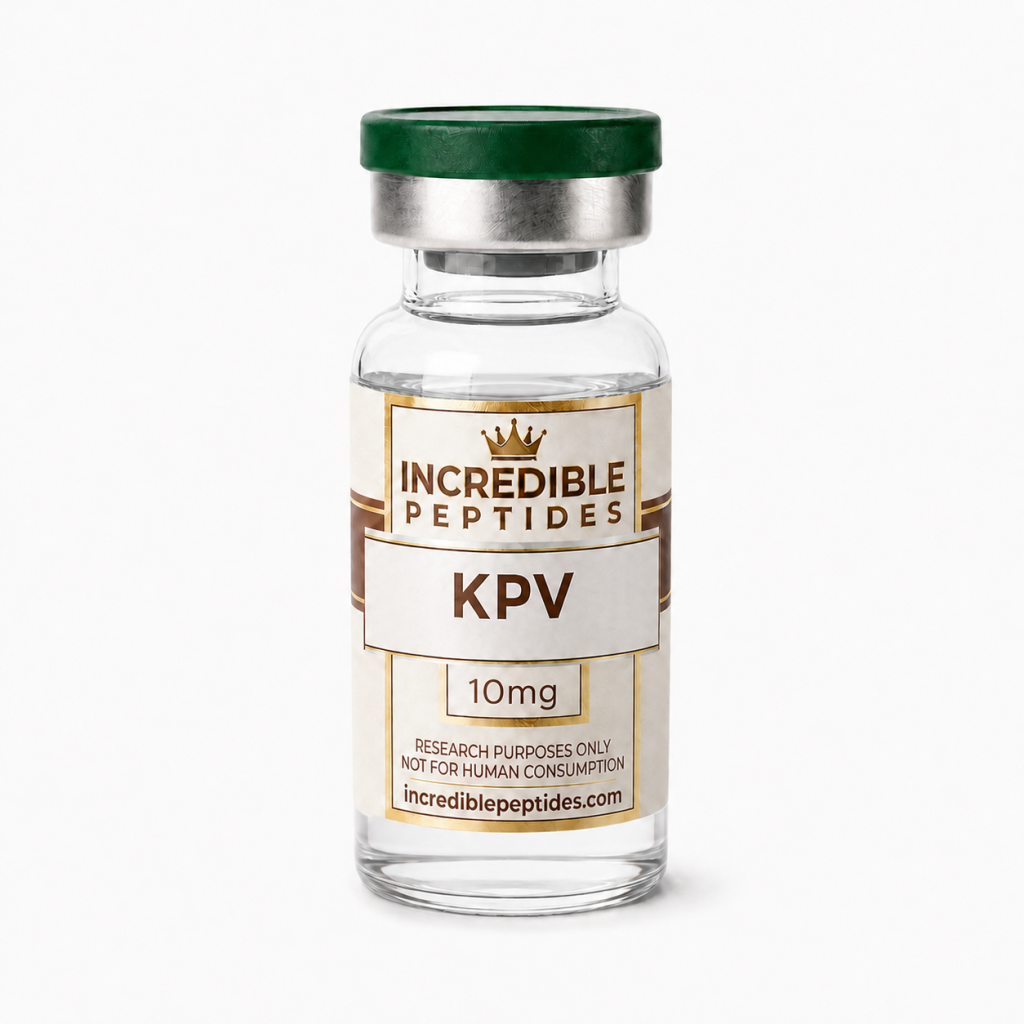
The KPV peptide is the tripeptide Lys-Pro-Val, the C-terminal sequence of α-melanocyte-stimulating hormone (α-MSH). Interest in it began with a simple observation from melanocortin research: some of the anti-inflammatory activity attributed to α-MSH in experimental systems appeared to survive when the hormone was cut down to its last three residues. Since then KPV has become a subject of in vitro work on inflammatory signaling and of transport studies involving the intestinal peptide transporter PepT1.
This profile covers the structure of KPV and its relationship to the melanocortin peptides, the main in vitro and animal-model findings, and the analytical and stability points that matter in the laboratory. KPV is supplied for laboratory research use only and is not for human or veterinary use.
Structure and Identity
KPV consists of L-lysine, L-proline and L-valine. With a free C-terminal acid it has the formula C16H30N4O4 and an average molar mass of about 342.4 g/mol. In α-MSH itself the C-terminal valine is amidated, so KPV appears in the literature both as the free acid and as the amide, Lys-Pro-Val-NH2, which is about 1 Da lighter. Researchers ordering KPV research peptide should check which C-terminal form the certificate of analysis reports, because the two are different compounds for the purposes of identity testing and comparison with published work.
The molecule is small, basic and polar. The lysine side-chain amine and the N-terminal amine are both protonated at neutral pH, while the proline ring introduces a fixed kink and removes the backbone N–H at that position. Lacking any aromatic residue, KPV absorbs UV light only weakly, mainly through its peptide bonds.
Relationship to the Melanocortin Peptides
α-MSH is a 13-residue peptide, Ac-Ser-Tyr-Ser-Met-Glu-His-Phe-Arg-Trp-Gly-Lys-Pro-Val-NH2, produced by enzymatic processing of pro-opiomelanocortin (POMC). The same precursor gives rise to ACTH and β-endorphin, and α-MSH corresponds to the first 13 residues of ACTH with N-terminal acetylation and C-terminal amidation. The melanocortins act on a family of five G protein-coupled receptors, MC1R through MC5R, which differ in tissue distribution and ligand selectivity.
Receptor activation by α-MSH depends heavily on the central His-Phe-Arg-Trp sequence (residues 6–9), the pharmacophore retained in synthetic melanocortin analogues. KPV corresponds to residues 11–13 and lacks that core entirely. Work from Lipton, Catania and colleagues in the late 1980s and 1990s nevertheless reported that the C-terminal fragment retained some anti-inflammatory activity in animal models. Whether KPV acts through melanocortin receptors at all is still debated; some studies report effects in cells with little MC1R expression, which has encouraged the view that its main mechanism is receptor-independent and intracellular. Our Melanotan II profile covers the receptor pharmacology of the His-Phe-Arg-Trp core for comparison.
In Vitro Research: Inflammatory Signaling
Most mechanistic work on KPV has been done in cultured cells. Studies in intestinal epithelial cell lines and immune cells have reported that KPV reduces activation of the transcription factor NF-κB after an inflammatory stimulus such as tumour necrosis factor-α or bacterial lipopolysaccharide, with corresponding reductions in the expression of pro-inflammatory cytokines. Effects on MAP kinase signaling have also been described. These findings are in vitro, obtained at defined concentrations and stimulus conditions, and they establish a pathway of interest rather than an outcome in an intact organism.
For laboratories planning similar work with KPV, the Lys-Pro-Val tripeptide, the usual controls apply: a vehicle control, an unstimulated control, and ideally a scrambled or inactive tripeptide of the same composition to show that the response depends on sequence. Readouts such as NF-κB reporter assays, IκBα degradation by western blot and cytokine measurement by ELISA are standard. Our article on cell signaling assays describes how these are set up and interpreted.
PepT1 Transport and Animal-Model Findings
A notable feature of KPV is that it is a substrate for PepT1 (SLC15A1), the proton-coupled di- and tripeptide transporter of the intestinal epithelium. Dalmasso and colleagues reported in 2008 that KPV is taken up into cultured intestinal epithelial cells through PepT1, and that its effect on inflammatory signaling in those cells depended on transporter-mediated entry. This offers a plausible explanation for receptor-independent activity: the tripeptide reaches the cytoplasm intact and acts on intracellular signaling.
The same report, and work by Kannengiesser and colleagues published in the same year, examined KPV in mouse models of chemically induced colitis and described reductions in inflammatory markers. These are preclinical animal findings from a limited number of groups and model systems. They are useful for framing mechanistic questions but should not be extrapolated beyond the models in which they were obtained.
Analytical and Stability Considerations
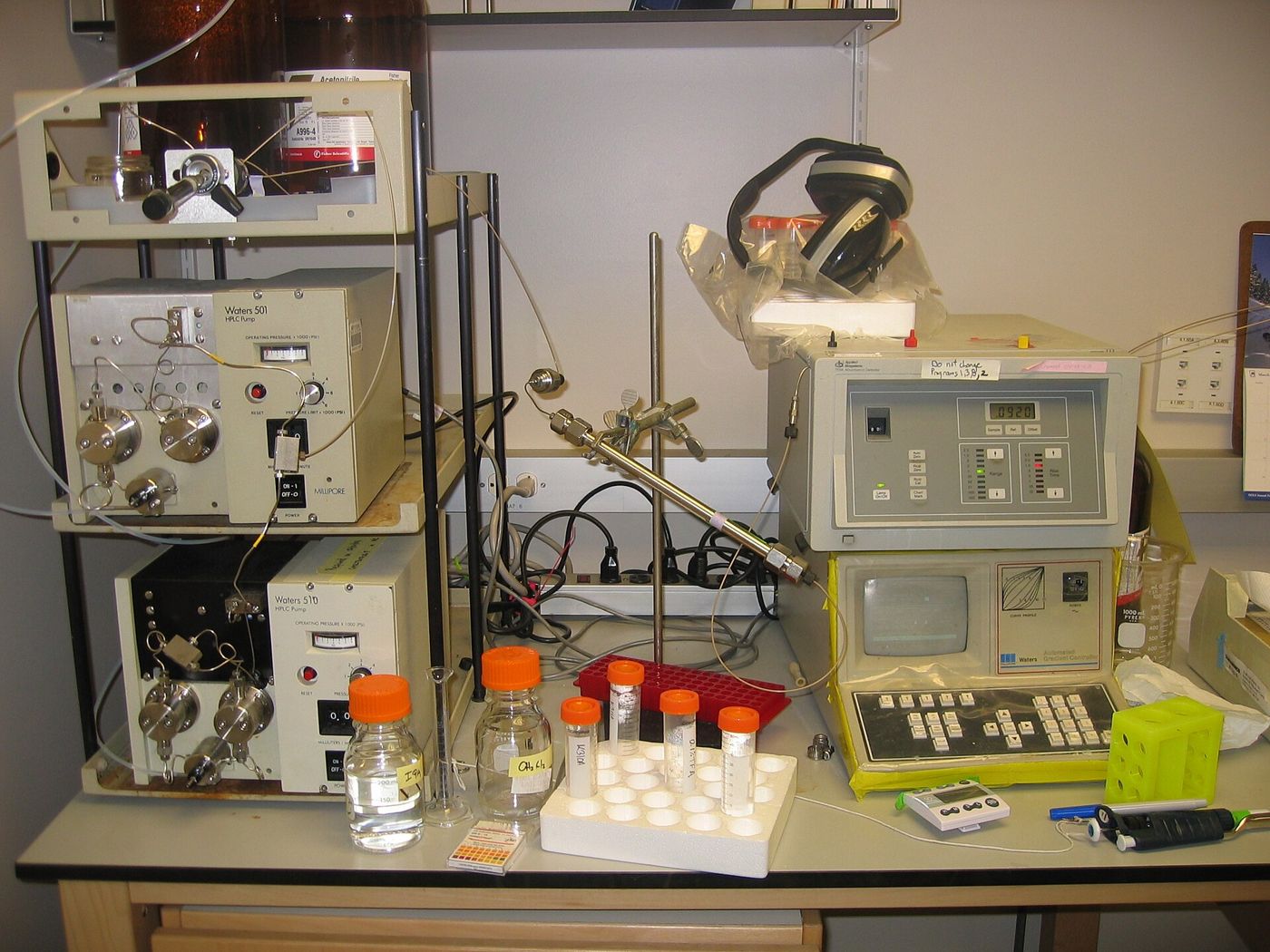
KPV is poorly retained on conventional C18 reversed-phase columns and tends to elute early, near salts and other polar species, so ion-pairing conditions or hydrophilic interaction chromatography may give better separation. Detection at 205–214 nm is necessary given the absence of aromatic residues. Mass spectrometry provides the clearest identity confirmation: the protonated free acid appears at m/z 343.23 and the amide at m/z 342.25.
The Lys-Pro sequence has two chemical consequences worth knowing. The peptide bond preceding proline can adopt both cis and trans conformations, which interconvert slowly enough to broaden or split HPLC peaks under some conditions. More importantly for stability, peptides with proline in the second position and a free N-terminal amine can cyclise to form a diketopiperazine, in this case releasing valine. Dry, cold storage of the lyophilized solid and prompt use of any solution reduce that risk.
KPV in Multi-Component Blends
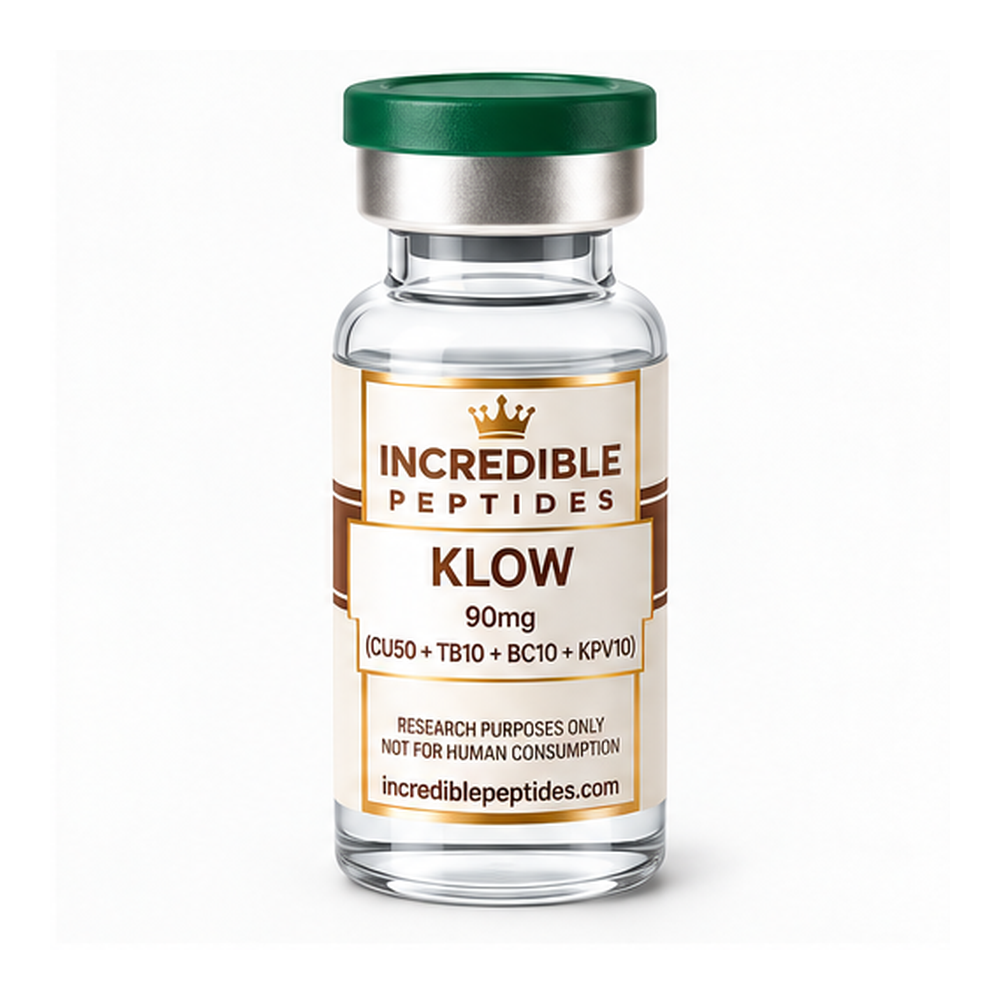
KPV also appears in research blends. Products sold under the KLOW name are commonly described as a GHK-Cu, BPC-157 and TB-500 blend with KPV added, although the exact composition should always be confirmed on the listing and lot certificate of analysis. Researchers considering the KLOW research blend should be aware that KPV and GHK are both small polar tripeptides with very similar masses, which makes chromatographic separation and mass-spectrometric identity testing of such blends more demanding. The KLOW peptide blend profile discusses those analytical issues in detail.
Summary
KPV is a structurally simple tripeptide with an unusual research profile: it derives from a receptor-active hormone but appears to act largely without the receptor pharmacophore, and its best-characterised activity involves PepT1-mediated uptake and intracellular NF-κB signaling in cultured cells, supplemented by preclinical rodent studies. Its small size, weak UV absorbance, two possible C-terminal forms and diketopiperazine liability make careful analytical documentation essential. KPV is for laboratory research use only and is not for human or veterinary use.
References
- Catania A, Gatti S, Colombo G, Lipton JM. Targeting melanocortin receptors as a novel strategy to control inflammation. Pharmacological Reviews, 2004.
- Cone RD. Studies on the physiological functions of the melanocortin system. Endocrine Reviews, 2006.
- Dalmasso G, Charrier-Hisamuddin L, Nguyen HTT, et al. PepT1-mediated tripeptide KPV uptake reduces intestinal inflammation. Gastroenterology, 2008.
- Kannengiesser K, Maaser C, Heidemann J, et al. Melanocortin-derived tripeptide KPV has anti-inflammatory potential in murine models of inflammatory bowel disease. Inflammatory Bowel Diseases, 2008.
Research Products in This Article
Educational content for research use only. Not for human consumption. Nothing here is medical advice or a claim about safety or efficacy.
 EM