
GLOW Peptide Blend: Composition and Research Considerations
GLOW-type blends are commonly described as GHK-Cu, BPC-157 and TB-500 in one vial. Here is what each component is and how such blends should be tested.
 DODaniel Okafor, MSResearch Analyst, Molecular Biology~5 min read
 Compounds
The term “GLOW peptide” refers not to a single molecule but to a multi-component research blend. GLOW-type blends are commonly described in the research-peptide market as combining three compounds in one lyophilized vial: the copper tripeptide GHK-Cu, the synthetic pentadecapeptide BPC-157 and TB-500, a short peptide derived from thymosin β4. Exact compositions and ratios vary between suppliers, and a product name is not a specification.
This article explains what each commonly described component is chemically, why combining them creates analytical challenges, and what documentation a laboratory should expect before using a GLOW blend in an experiment. It is written for researchers and technical buyers evaluating blend formats. GLOW, like every compound discussed here, is for laboratory research use only and is not for human or veterinary use.
What a GLOW Blend Is Said to Contain
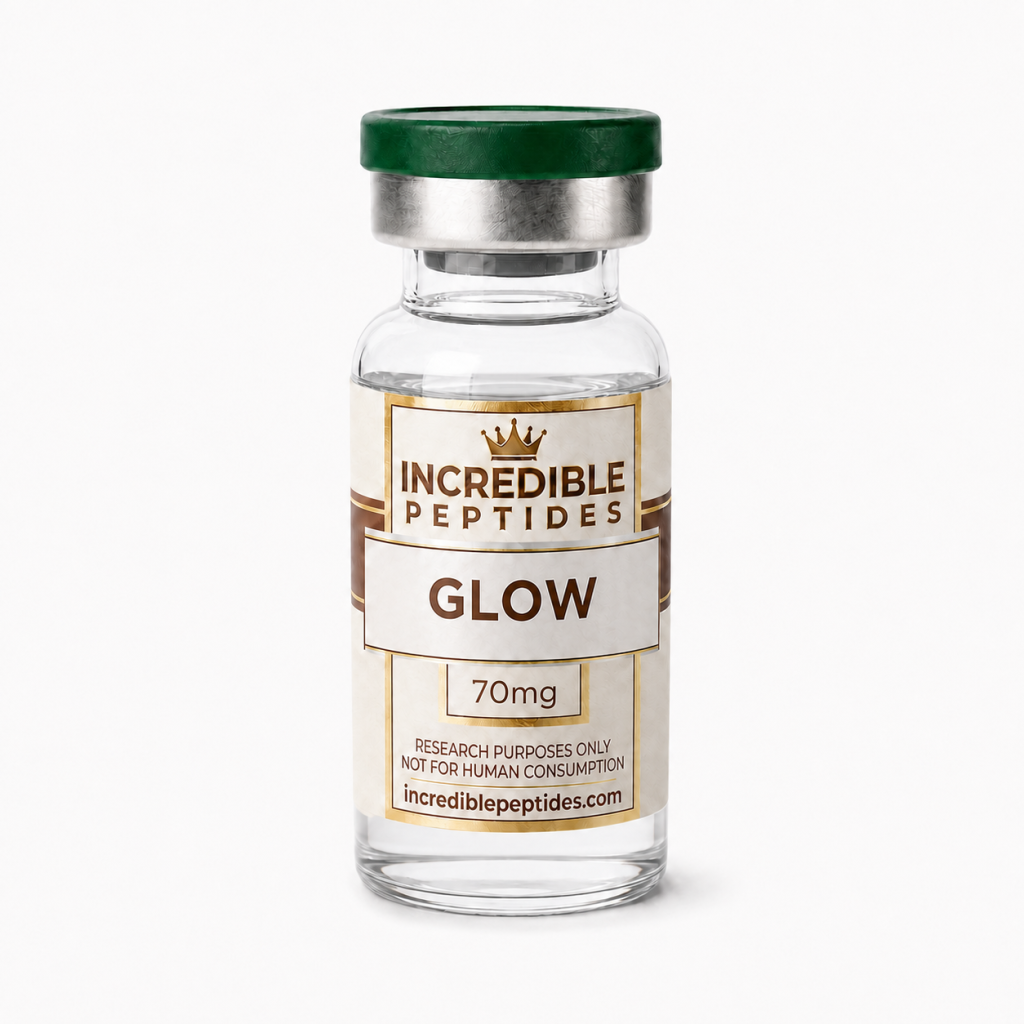
Supplier descriptions of GLOW-type products typically list GHK-Cu, BPC-157 and TB-500, with GHK-Cu usually the largest share by mass. These are market conventions rather than a pharmacopeial definition. For any specific vial, the listing for the GLOW 70 mg research blend is where confirmation starts, and the lot certificate of analysis (COA) should then show that each declared component was identified and quantified. If neither document states the composition and ratio, a researcher cannot assume them, and the material should be regarded as undefined until the supplier provides that information.
The ratio matters as much as the identity. The three components differ several-fold in molar mass, so a blend in which one component dominates by mass will have a quite different molar ratio. Most cell-based and binding experiments depend on molar concentrations, which means a mass-based label must be converted component by component before any comparison with single-compound work is meaningful.
| Commonly described component | Chemical identity | Approximate molar mass | Analytical note |
|---|---|---|---|
| GHK-Cu | Cu(II) complex of Gly-His-Lys | ~340 g/mol (free peptide) | Complex dissociates under acidic HPLC conditions |
| BPC-157 | Synthetic 15-residue peptide, GEPPPGKPADDAGLV | ~1,420 g/mol | Proline-rich, net acidic |
| TB-500 | Usually Ac-LKKTETQ (thymosin β4 residues 17–23); sometimes full-length thymosin β4 | ~889 g/mol (fragment); ~4,960 g/mol (full length) | Identity must be confirmed by mass spectrometry |
The Components in Brief
GHK-Cu
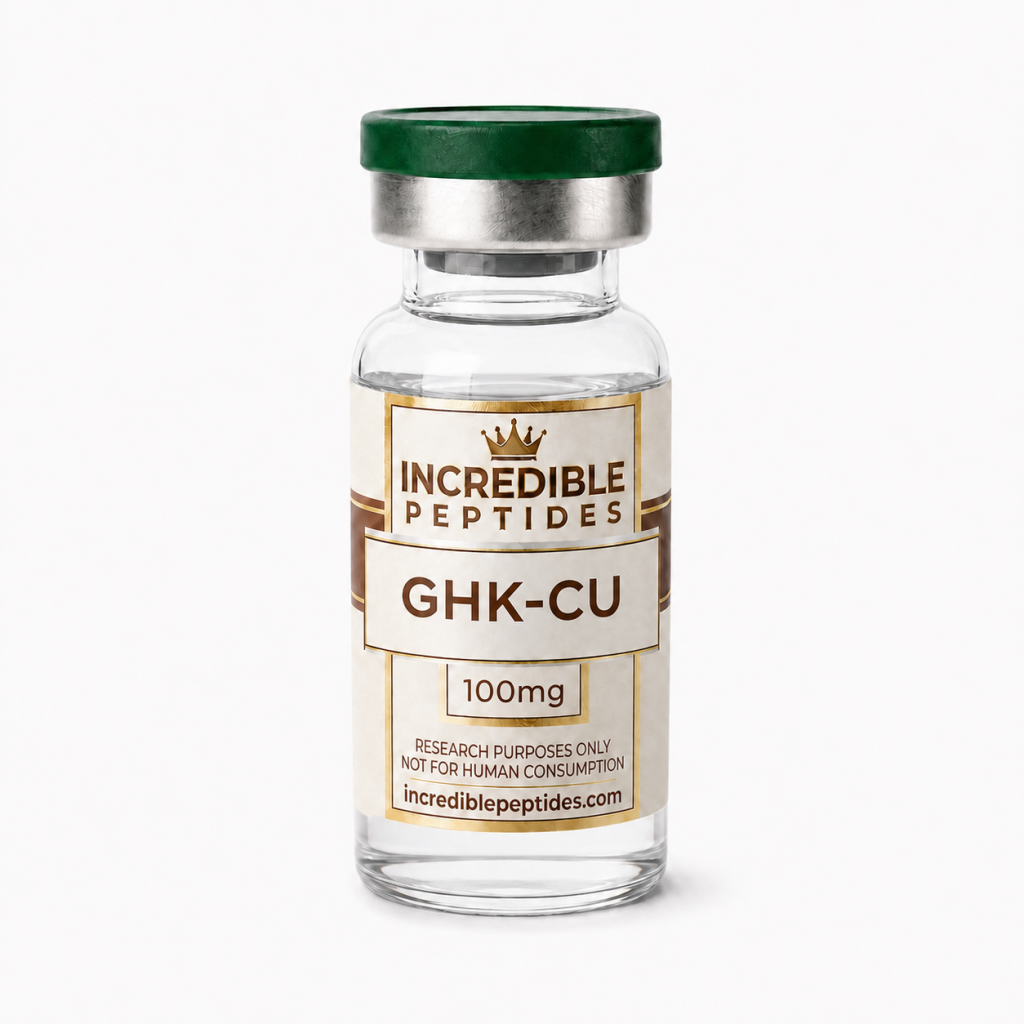
GHK is a tripeptide isolated from human plasma by Pickart and Thaler in 1973 that binds copper(II) through its N-terminal amine, a deprotonated backbone amide nitrogen and the histidine imidazole. Its research literature is largely in vitro, centred on fibroblast cultures and gene-expression analyses. Researchers who want to study the copper complex in isolation, or to run single-component controls alongside a blend, can use single-compound GHK-Cu. Its coordination chemistry is covered in our GHK-Cu compound profile.
BPC-157
BPC-157 is a synthetic 15-residue peptide whose sequence corresponds to part of a larger protein described from gastric juice. The great majority of published work on it comes from rodent and other animal models and is therefore preclinical, much of it from a limited number of research groups. Its proline-rich backbone gives it notable resistance to some proteases in vitro, a point often raised in discussions of its stability.
TB-500
Thymosin β4 is a 43-residue, N-terminally acetylated peptide that sequesters monomeric G-actin in cells. Its actin-binding activity has been associated with the LKKTET motif near residue 17. “TB-500” is used in the research market for a synthetic fragment built around that motif, most often Ac-LKKTETQ, but some suppliers apply the name to full-length thymosin β4. That ambiguity is a strong reason to check the molecular mass reported on a COA rather than relying on the name.
Analytical Challenges of a Three-Component Blend
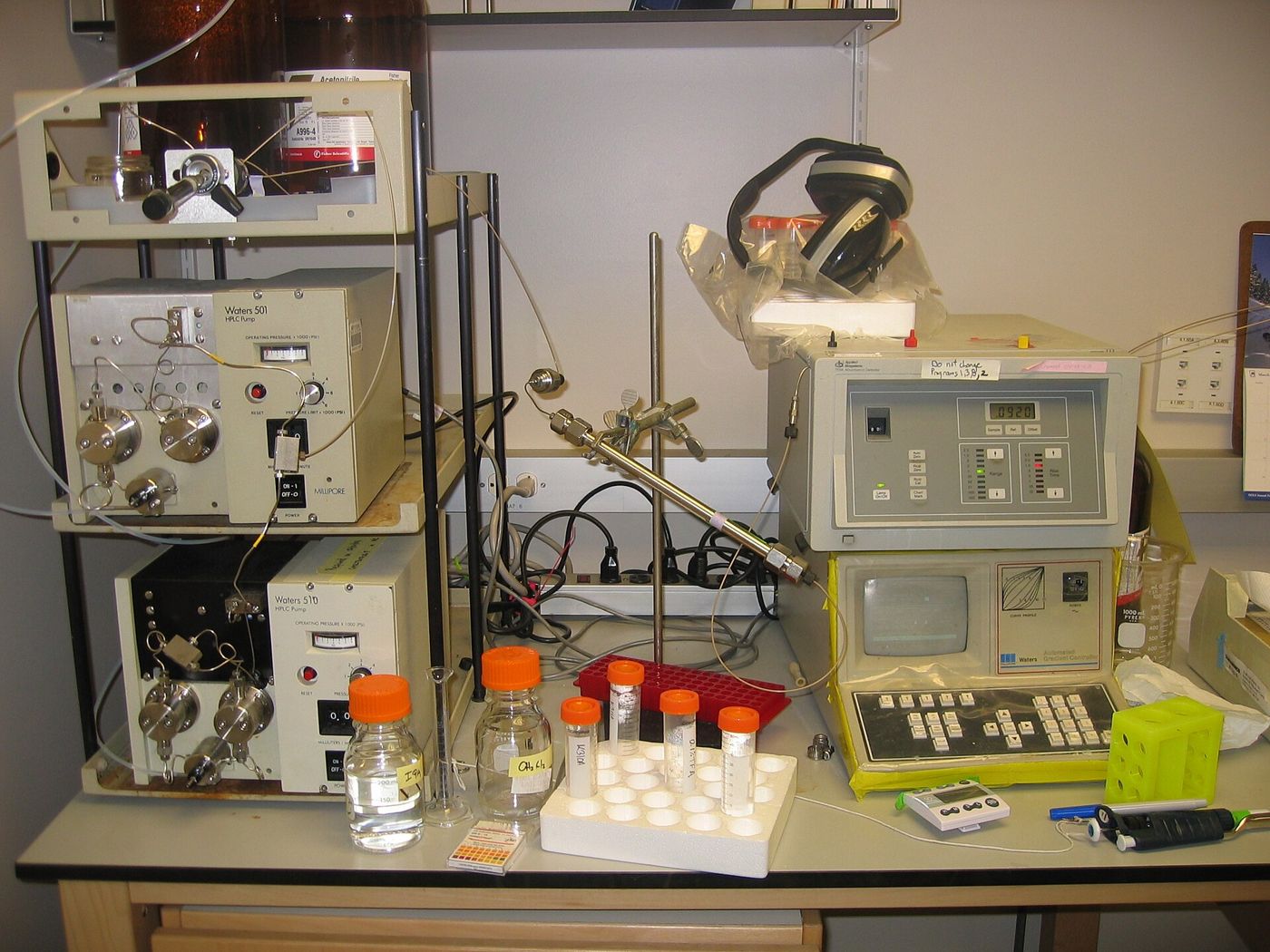
A single compound needs one identity test and one purity measurement. A three-component blend needs both for every component, and the techniques interact in ways that are easy to overlook. Reversed-phase HPLC with UV detection will ideally show three main peaks, but they sit at very different retention times: the small, polar GHK elutes early and is weakly retained, while BPC-157 and the TB-500 peptide elute later. Impurities from one component can co-elute with the main peak of another, so method development has to demonstrate resolution for all three.
Peak areas are not mass ratios. Each peptide has its own UV response at 214 nm, governed by its number of peptide bonds and aromatic or imidazole groups, so a chromatogram showing 70 percent of the area under one peak does not mean that component is 70 percent of the mass. Accurate quantitation of each component requires a reference standard for each and a validated method, along the lines described in ICH Q2(R2). A single “blend purity” figure, without a breakdown, says little about whether the declared ratio is correct.
Copper adds a further complication. Acidic mobile phases strip copper from GHK, so HPLC reports the free tripeptide and copper content has to be measured separately, for example by ICP-OES or ICP-MS. Neither BPC-157 nor the TB-500 sequences contain histidine or cysteine, the strongest copper-binding side chains, but free copper can still interact weakly with carboxylates and amines and can catalyse oxidation of susceptible residues such as methionine in full-length thymosin β4. Liquid chromatography coupled with mass spectrometry is the most direct way to confirm all three identities in one run. Our article on how multi-peptide blends are formulated and tested covers these principles more generally.
Documentation to Expect
A credible COA for a GLOW-type blend should identify each declared component by mass spectrometry, report the purity or amount of each by HPLC, and state the lot number, test dates and method. Ideally it also reports copper content and total peptide content, since lyophilized peptides contain water and counterions that do not appear in a chromatographic purity value. Before planning experiments with a GLOW-type research blend, it is worth reading the current listing and lot COA side by side and recording any discrepancy with the declared composition.
Designing Research Around a Blend
Blends make attribution difficult. If an assay responds to a three-component mixture, the result alone cannot say which component, or which interaction, produced it. Well-designed experiments therefore pair the blend with single-component controls at matched molar concentrations and with a vehicle control. For mechanistic questions single compounds are usually the better tool, while blends are more suited to formulation, stability and analytical studies in which the mixture itself is the subject. Whatever the design, GLOW is a laboratory research material only and is not for human or veterinary use.
References
- Pickart L, Thaler MM. Tripeptide in human serum which prolongs survival of normal liver cells and stimulates growth in neoplastic liver. Nature New Biology, 1973.
- Safer D, Elzinga M, Nachmias VT. Thymosin beta 4 and Fx, an actin-sequestering peptide, are indistinguishable. Journal of Biological Chemistry, 1991.
- ICH Q2(R2). Validation of Analytical Procedures. International Council for Harmonisation.
- ICH Q6B. Specifications: Test Procedures and Acceptance Criteria for Biotechnological/Biological Products. International Council for Harmonisation.
Research Products in This Article
Educational content for research use only. Not for human consumption. Nothing here is medical advice or a claim about safety or efficacy.
 EM