Purity vs. Identity Testing: What’s the Difference?
Why a peptide sample can be pure but the wrong molecule, or the right molecule at low purity, and which analytical tests address each question.
 EMElena Marsh, PhDSenior Research Analyst, Analytical Chemistry~5 min read
 Analytical QCPhoto: Kreecher / Wikimedia Commons
A certificate of analysis for a synthetic peptide usually carries two headline results: a purity figure and an identity confirmation. They are often read as though they were one measurement, but purity vs identity testing addresses two separate questions. Identity asks whether the sample contains the intended molecule. Purity asks how much of the sample is that molecule rather than something closely related to it. A material can pass one test and fail the other, and a document that reports only one leaves a genuine gap.
This article sets out the distinction, the laboratory methods used for each attribute, the misreadings that come up most often, and a short checklist for reviewing both results on supplier documentation.
Two different questions
Consider two hypothetical lots. In the first, a synthesis error introduced the wrong amino acid at one position, but the resulting peptide purified cleanly, so HPLC shows a single dominant peak with a high area-percent value. The sample is pure, but it is the wrong molecule. In the second, the sequence is correct, but incomplete coupling left a substantial population of deletion sequences. Mass spectrometry finds the expected mass as a major species, yet the chromatogram shows a cluster of impurity peaks. That sample has the correct identity at low purity.
Neither lot would suit a careful experiment, and neither problem would be caught by the other lot’s passing test. This is the practical reason analytical specifications list identity and purity as distinct attributes. ICH Q6B, the international guideline on specifications for biotechnological and biological products, treats identity, purity and impurities, potency and quantity as separate elements, each needing methods suited to the question. Research-use peptides fall outside that guideline’s scope, but its structure is a useful model for reading any two-part peptide quality testing program.
Tests for identity
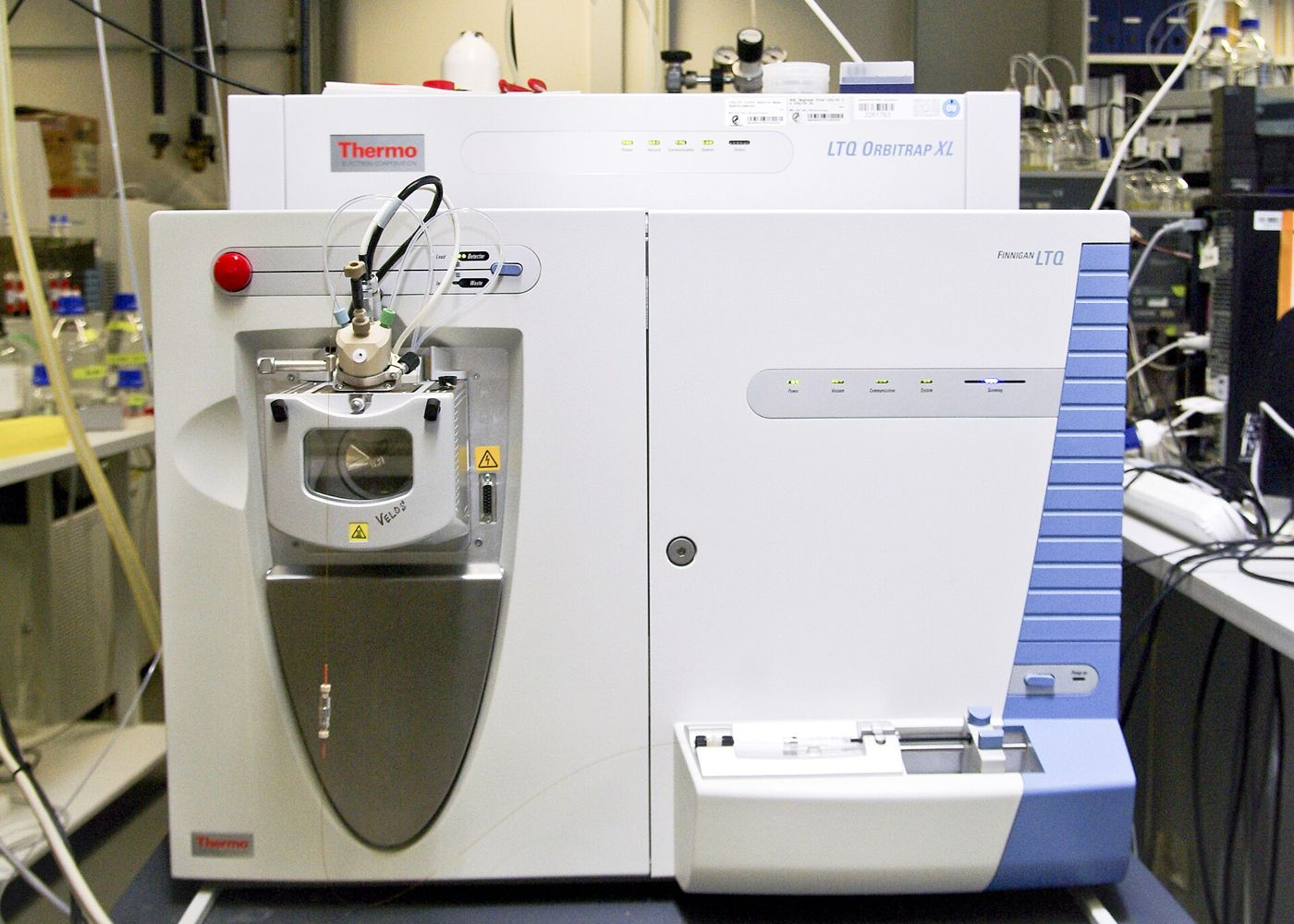
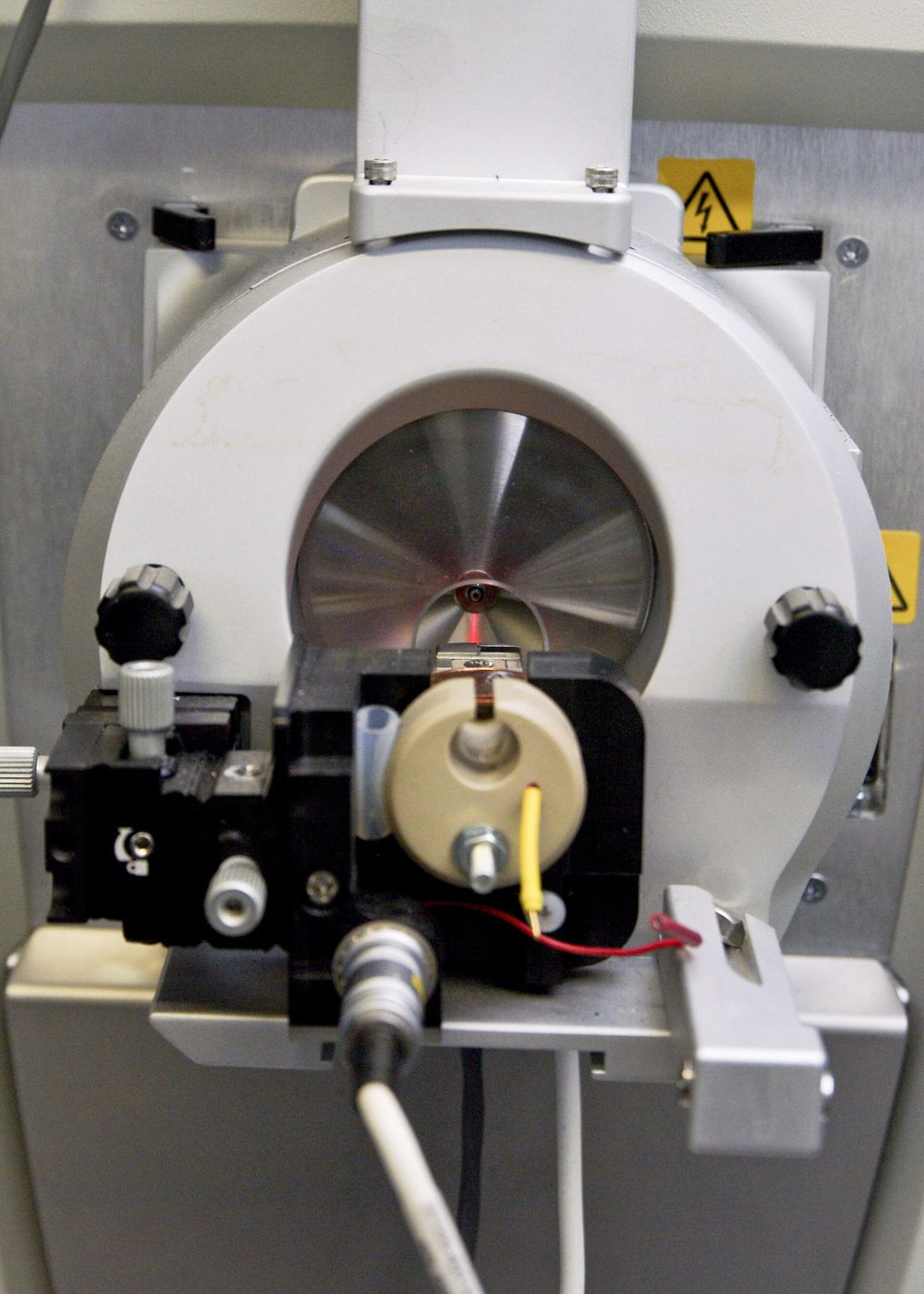
An identity test must be specific: able to distinguish the intended peptide from plausible alternatives. For synthetic peptides the primary tool is mass spectrometry, which measures the molecular mass of the sample and compares it with the value calculated from the sequence. Electrospray ionization (ESI) and MALDI are the usual ionization methods, as described in mass spectrometry for peptide identity testing.
Mass alone has limits. Isomeric substitutions such as leucine for isoleucine, scrambled sequences and single-residue epimers all share the parent mass. Additional methods narrow those gaps:
- Tandem mass spectrometry (MS/MS) fragments the peptide and reads residue order from the fragment ions.
- Amino acid analysis hydrolyzes the peptide and quantifies its component residues, confirming composition though not order.
- Co-elution with a reference standard shows that the sample behaves identically to an authenticated material under the same chromatographic conditions.
- Edman sequencing, now less common, reads the sequence one residue at a time from a free N-terminus.
Retention time by itself is weak identity evidence, because many different peptides can elute at similar times under a given gradient.
Tests for purity
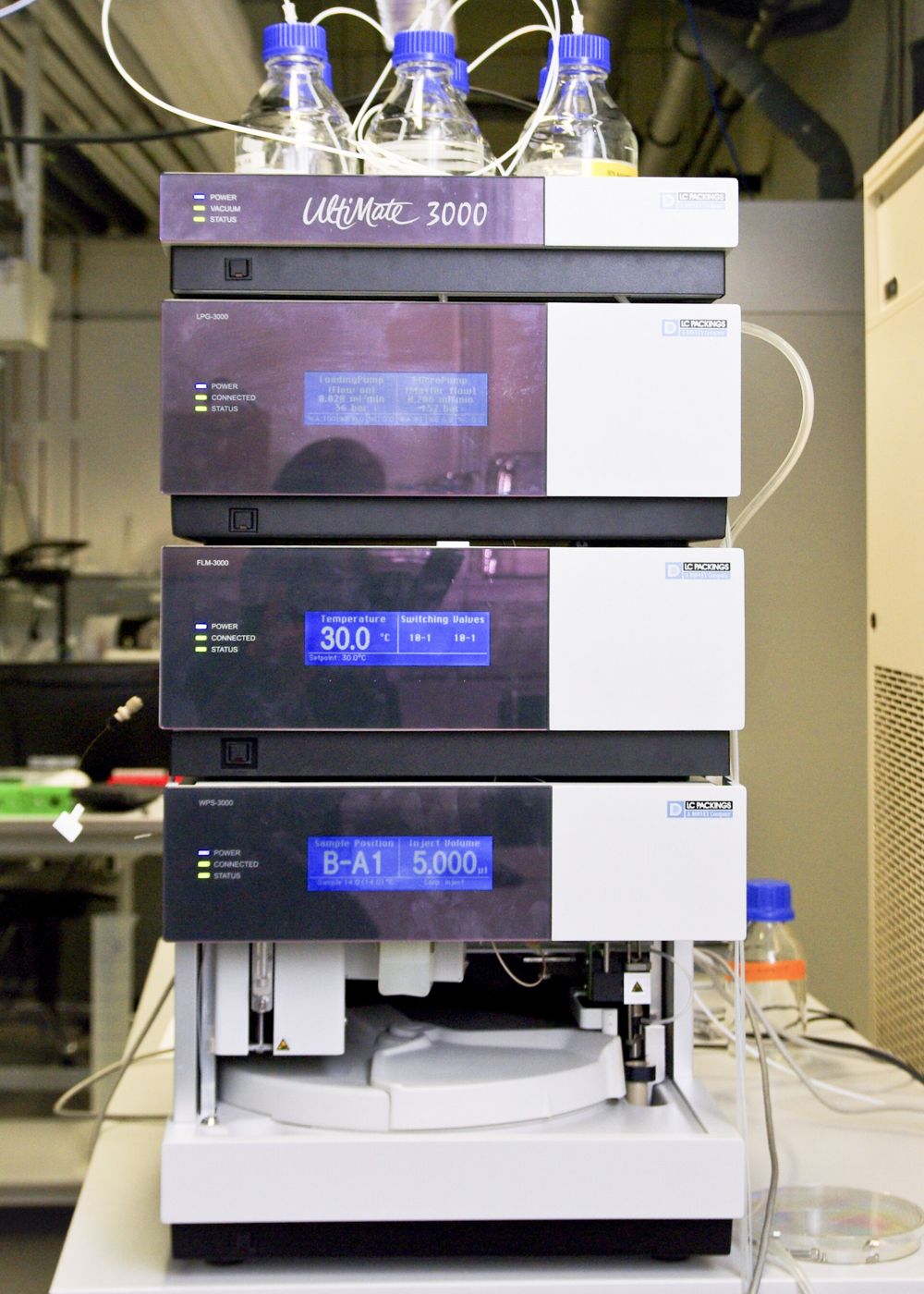
Purity testing estimates how much of the sample is the target compound relative to everything else the method can detect. For peptides, reversed-phase HPLC with UV detection at roughly 210 to 220 nm is the standard approach, and purity is reported as area percent: the main peak’s share of the total integrated peak area. The method is explained step by step in our guide to peptide HPLC.
The impurities HPLC detects are usually peptide-related: truncated or deletion sequences from solid-phase synthesis, sequences still carrying protecting groups, oxidized or deamidated forms, and diastereomers. Some co-elute with the main peak under one set of conditions and separate under another, which is why more rigorous characterization uses orthogonal conditions such as a different column chemistry or mobile-phase pH. LC-MS adds a mass to each peak, turning an anonymous impurity profile into a partly assigned one.
HPLC purity does not capture everything in the vial. Water, counter-ions such as trifluoroacetate or acetate, and inorganic salts are invisible to UV area percent and are measured separately, through net peptide content, Karl Fischer water determination or counter-ion analysis. The same principles hold across sequence lengths and chemistries, from a short tripeptide to the longer, modified sequences listed in a research peptide catalog; what changes is how demanding the separation and mass analysis become.
Common misreadings
High purity means the right compound
A purity result of 99% says one component dominates the chromatogram. It says nothing about which component. Without an identity result, purity is a statement about homogeneity only.
Correct mass means high purity
Mass spectrometry is not quantitative in the way chromatography is. Ionization efficiency varies between species, so a strong signal at the expected mass can coexist with substantial impurities that ionize poorly or appear at masses the report does not mention.
A listed molecular weight is an identity result
Many documents print a molecular weight calculated from the sequence. That is a theoretical value, not a measurement. Identity is demonstrated only by an observed mass compared with the theoretical one.
Purity equals peptide content
Area-percent purity and net peptide content measure different things. A highly pure lyophilized peptide still contains water and counter-ions, so the weight of actual peptide is lower than the gross powder weight.
Purity figures are comparable across sources
Purity depends on column, gradient, detection wavelength and integration settings. Two values obtained by different methods can differ without either being wrong.
Checklist for reviewing purity and identity results
When evaluating documentation for a research peptide lot, the following questions cover both attributes.
- Is identity reported as an observed mass alongside the theoretical mass, with the method named?
- Is it clear whether the masses are monoisotopic or average values?
- Is purity reported with the method and detection wavelength stated?
- Does the lot number on the certificate match the vial?
- Is the testing laboratory identified, with a test date?
- Is net peptide content reported, if your work depends on accurate concentrations?
A certificate that answers all six gives a reader enough to judge the material independently. The broader process of reading each field is covered in how to read a peptide certificate of analysis.
Why both results belong together
Purity and identity are complementary because each method is blind where the other is informative. Chromatography separates and quantifies but does not identify; mass spectrometry identifies but does not reliably quantify. Reported together, with the methods stated, they give a defensible account of what a research material is and how much of it is the intended compound. That pairing is also the logic behind our peptide purity testing documentation, which explains how identity and purity are addressed.
References
- International Council for Harmonisation. ICH Q6B: Specifications: Test Procedures and Acceptance Criteria for Biotechnological/Biological Products. 1999.
- International Council for Harmonisation. ICH Q2(R2): Validation of Analytical Procedures.
- United States Pharmacopeia. General Chapter <621> Chromatography.
- Harris DC. Quantitative Chemical Analysis. W. H. Freeman.
- Gross JH. Mass Spectrometry: A Textbook. Springer.
Educational content for research use only. Not for human consumption. Nothing here is medical advice or a claim about safety or efficacy.