Peptides vs. Proteins: Key Differences Explained
Where the line between peptides and proteins sits, and why size changes how a molecule is made, tested and stored.
 DODaniel Okafor, MSResearch Analyst, Molecular Biology~5 min read
 FundamentalsPhoto: Masur / Wikimedia Commons, CC BY-SA 3.0
The distinction between peptides and proteins sounds simple: peptides are small and proteins are large. In practice the boundary is a matter of convention, and the more useful question is how size changes a molecule’s behaviour. Comparing peptides vs proteins means looking at chain length, but also at folding, at how each is manufactured, at the analytical methods needed to confirm identity and purity, and at the care each needs in storage.
This article sets out those differences for students and general science readers. It draws on two examples from opposite ends of the spectrum, a three-residue thiol peptide and a 70-residue growth-factor polypeptide, to show where the line blurs and why it matters in the laboratory.
Size and Structure
Peptides and proteins are both polymers of amino acids joined by amide bonds, each with a defined N-terminus and C-terminus; our explainer on peptide bonds and amino acid sequences covers that chemistry. The differences begin with length. Textbooks commonly describe peptides as chains of up to about 50 amino acids and proteins as longer chains, though authors vary, and some reserve the word protein for molecules that fold into a stable, functional three-dimensional structure regardless of exact length. Regulators have drawn their own line: the US Food and Drug Administration defines a protein, for biologics purposes, as an alpha amino acid polymer with a specific defined sequence of more than 40 amino acids, so shorter chains fall outside that definition.
Small peptides can also depart from textbook backbone rules. Glutathione, the tripeptide γ-L-glutamyl-L-cysteinylglycine, is a good illustration. Its glutamate is joined to cysteine not through the usual α-carboxyl group but through the side-chain γ-carboxyl, forming an isopeptide or gamma linkage, while the cysteine–glycine bond is a conventional α-peptide bond. Glutathione is made in cells by two dedicated enzymes, glutamate-cysteine ligase and glutathione synthetase, rather than on the ribosome. The gamma linkage protects it from many peptidases that act on ordinary α-peptide bonds, and its breakdown is initiated instead by γ-glutamyl transpeptidase. The free thiol of its cysteine residue makes it redox-active, which is why it features so widely in oxidative-stress research.
Folding and Higher-Order Structure
Protein structure is usually described at four levels. Primary structure is the amino acid sequence. Secondary structure refers to local backbone patterns, chiefly α-helices and β-sheets stabilized by hydrogen bonds. Tertiary structure is the overall three-dimensional fold of a single chain, held together by hydrophobic packing, hydrogen bonds, salt bridges and, in many extracellular proteins, disulfide bonds. Quaternary structure describes the assembly of several chains into one functional unit.
Short peptides rarely hold a stable tertiary structure on their own. In aqueous solution most exist as an ensemble of rapidly interconverting conformations, although they may adopt a defined shape when bound to a receptor, a membrane or a metal ion. Proteins, by contrast, typically depend on a precise fold, and that fold can be lost through heat, extremes of pH, chemical denaturants or repeated freezing and thawing. Unfolded or partly folded chains can also aggregate, which makes aggregation a central quality concern for proteins and a minor one for most short peptides.
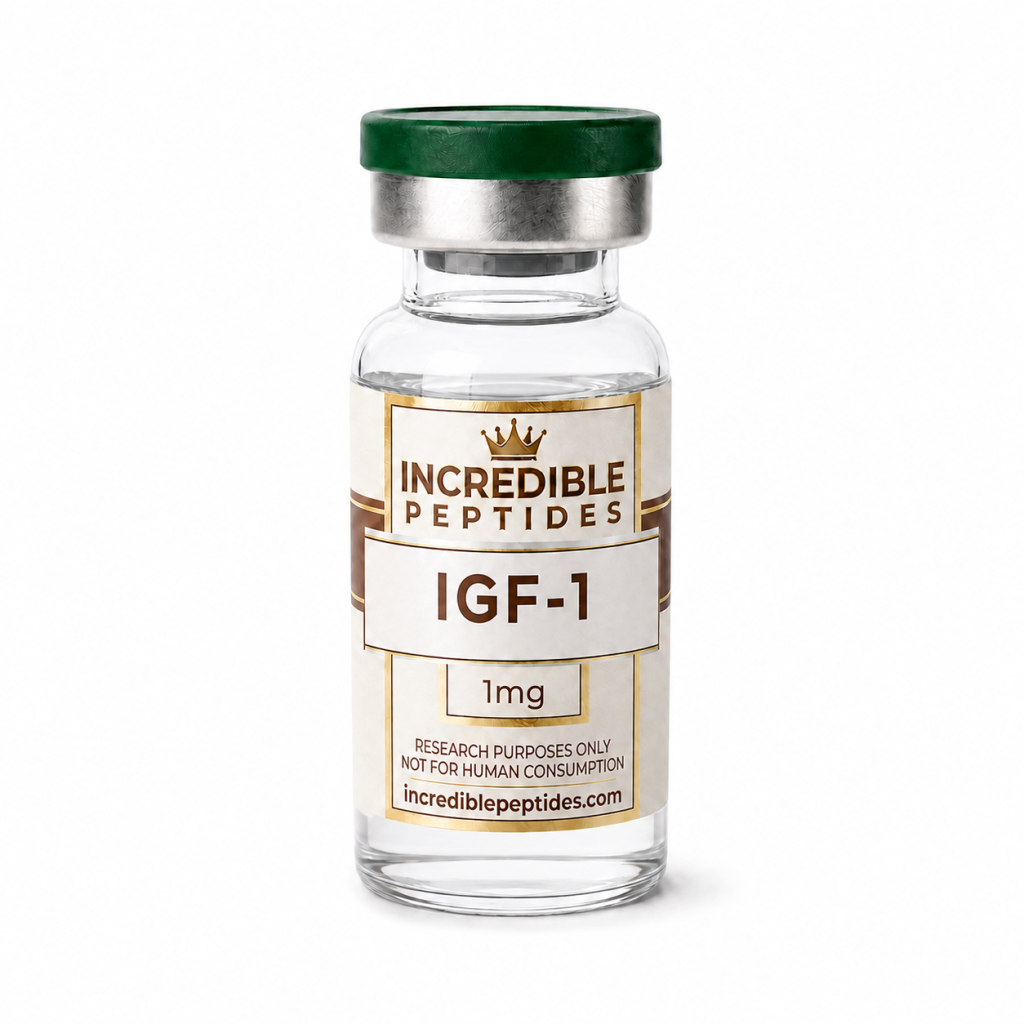
IGF-1 LR3, an 83-residue analogue of insulin-like growth factor 1 (IGF-1), sits above the conventional boundary and behaves very much like a protein. Native IGF-1 is a single-chain polypeptide of 70 amino acids; the LR3 analogue adds a 13-residue N-terminal extension and carries an arginine substitution at position 3. It retains the three intramolecular disulfide bonds of IGF-1 and folds into a compact structure related to that of proinsulin. Correct disulfide pairing is essential to its native conformation, and mispaired isomers can form during production. Under the FDA’s 40-residue definition IGF-1 LR3 counts as a protein, yet in everyday laboratory speech it is often called a peptide, which shows how loosely the terms are used.
Synthesis Versus Expression
Size largely dictates how a molecule is manufactured. Short and medium-length peptides are usually made by solid-phase peptide synthesis, the stepwise method introduced by Merrifield in 1963. Because no coupling step is perfectly quantitative, the proportion of full-length product declines as length increases, and the impurity profile becomes dominated by deletion and truncated sequences. Chemical synthesis does offer flexibility: non-natural amino acids, D-isomers, terminal caps and labels can be placed at defined positions.
Proteins are generally produced by recombinant expression. A gene is introduced into a host such as Escherichia coli, yeast or a mammalian cell line, which builds the chain on its own ribosomes; the protein must then be recovered, purified and, where necessary, refolded. IGF-1 and analogues such as IGF-1 LR3 are commonly produced this way, although chemical routes that ligate synthetic fragments can also reach proteins of this size. Expression brings process-related impurities that synthesis does not, including host-cell proteins, nucleic acids and, from bacterial hosts, endotoxin. Glutathione illustrates yet another route: as a small molecule it is often manufactured by fermentation or enzymatic processes rather than by stepwise synthesis.
Testing Differences
For a short synthetic peptide, the core analytical questions are identity and purity. Reversed-phase HPLC separates the target from closely related impurities, and mass spectrometry confirms the molecular mass; for a small molecule, a measured mass that matches the theoretical value is strong evidence of identity, especially when supported by fragmentation data. Our article on peptide mass spectrometry describes the technique in detail. Glutathione adds a specific consideration: its thiol oxidizes readily to the disulfide-linked dimer, glutathione disulfide (GSSG), so methods need to distinguish the reduced and oxidized forms.
Proteins require a broader toolkit, because a correct mass does not guarantee a correct structure. Typical methods include SDS-PAGE and size-exclusion chromatography to detect fragments and aggregates, peptide mapping after enzymatic digestion to confirm sequence coverage and disulfide connectivity, circular dichroism or other spectroscopic methods to assess folding, and functional or binding assays where activity matters. ICH guideline Q6B, written for biotechnological and biological products, describes how specifications for such molecules extend to physicochemical properties, biological activity, purity and impurities.
Summary Table
The table below condenses the main contrasts. These are generalizations, and individual molecules can fall on either side of each line.
| Property | Short peptides | Proteins |
|---|---|---|
| Typical length | 2 to roughly 50 residues | Roughly 50 residues or more |
| Higher-order structure | Usually flexible; may order on binding | Defined fold, often with disulfides or subunits |
| Usual production | Solid-phase chemical synthesis | Recombinant expression |
| Characteristic impurities | Deletion and truncated sequences, synthesis by-products | Aggregates, misfolded forms, host-cell proteins |
| Core identity testing | HPLC and mass spectrometry | Mass spectrometry plus peptide mapping, electrophoresis and structural assays |
| Main stability concerns | Hydrolysis, oxidation, deamidation | The same, plus unfolding and aggregation |
In storage, both classes are commonly supplied as lyophilized powders, because removing water slows hydrolysis and other degradation; our overview of peptide lyophilization explains the process. Proteins are generally the more sensitive of the two to freeze-thaw cycles and mechanical agitation, both of which can promote unfolding and aggregation.
Where the Boundary Leaves Researchers
Whether a given molecule is called a peptide or a protein matters less than recognizing which properties it actually has. A three-residue compound such as reduced glutathione (GSH) calls for controls on thiol oxidation and an awareness of its unusual gamma linkage, while an 83-residue chain like IGF-1 LR3 demands attention to disulfide pairing, folding and aggregation. Matching the analytical and handling approach to the molecule, rather than to the label attached to it, is what keeps experimental results reliable.
References
- Nelson DL, Cox MM. Lehninger Principles of Biochemistry. W. H. Freeman.
- Berg JM, Tymoczko JL, Gatto GJ, Stryer L. Biochemistry. W. H. Freeman.
- Merrifield RB. Solid phase peptide synthesis. I. The synthesis of a tetrapeptide. J. Am. Chem. Soc. 1963, 85, 2149.
- International Council for Harmonisation. ICH Q6B: Specifications: Test Procedures and Acceptance Criteria for Biotechnological/Biological Products.
- US Code of Federal Regulations, 21 CFR 600.3, definitions (including the definition of “protein”).
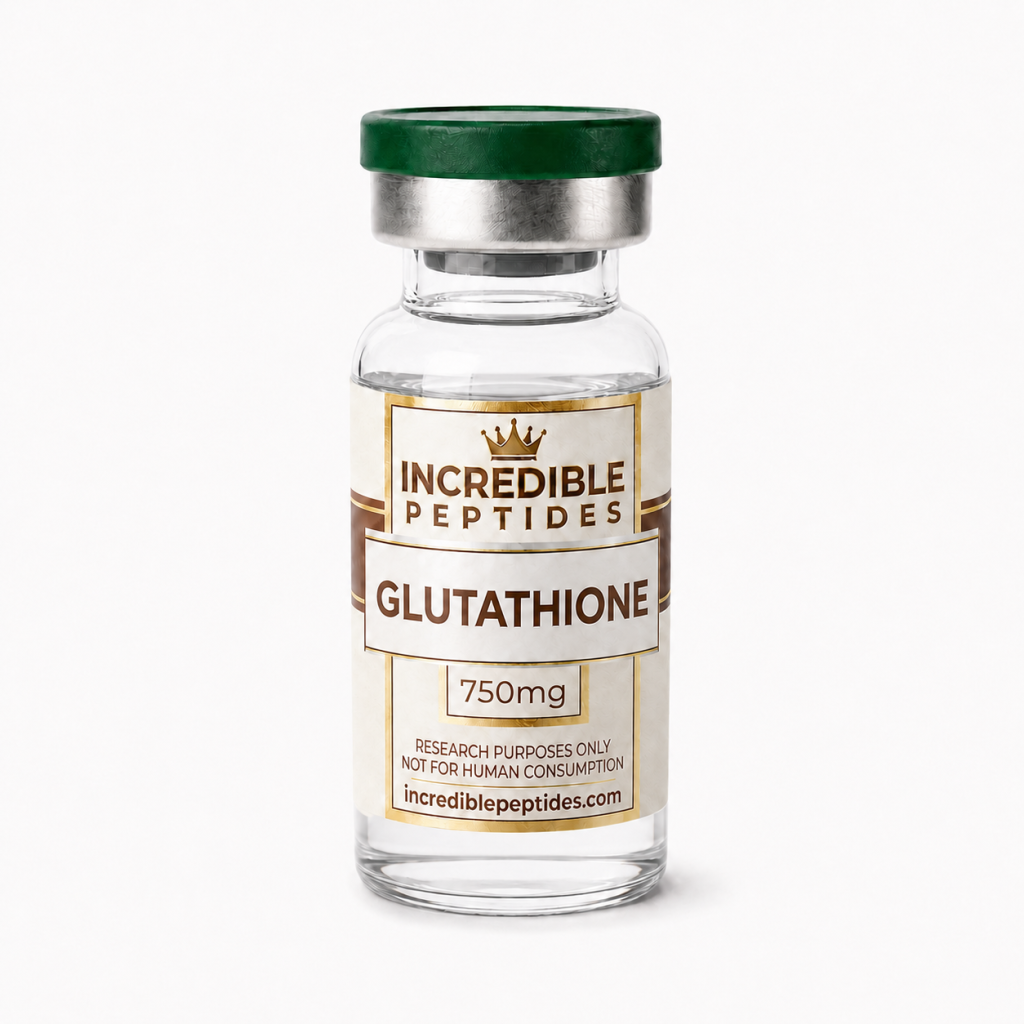
Research Products in This Article
Educational content for research use only. Not for human consumption. Nothing here is medical advice or a claim about safety or efficacy.