Structure-Activity Relationships (SAR) in Peptides
How changes to a peptide's sequence change its activity and stability, from alanine scanning to the albumin-binding DAC modification of CJC-1295.
 DODaniel Okafor, MSResearch Analyst, Molecular Biology~6 min read
 MechanismsPhoto: Lilly_M / Wikimedia Commons, CC BY-SA 3.0
A peptide’s sequence is a set of design decisions, and changing any one of them can alter binding, receptor activation, stability or all three. Peptide SAR, the study of structure-activity relationships, is the systematic process of making those changes one at a time and measuring what happens. It is how researchers find the residues that matter, discard the ones that do not, and engineer analogues that survive longer in biological systems than the native sequence.
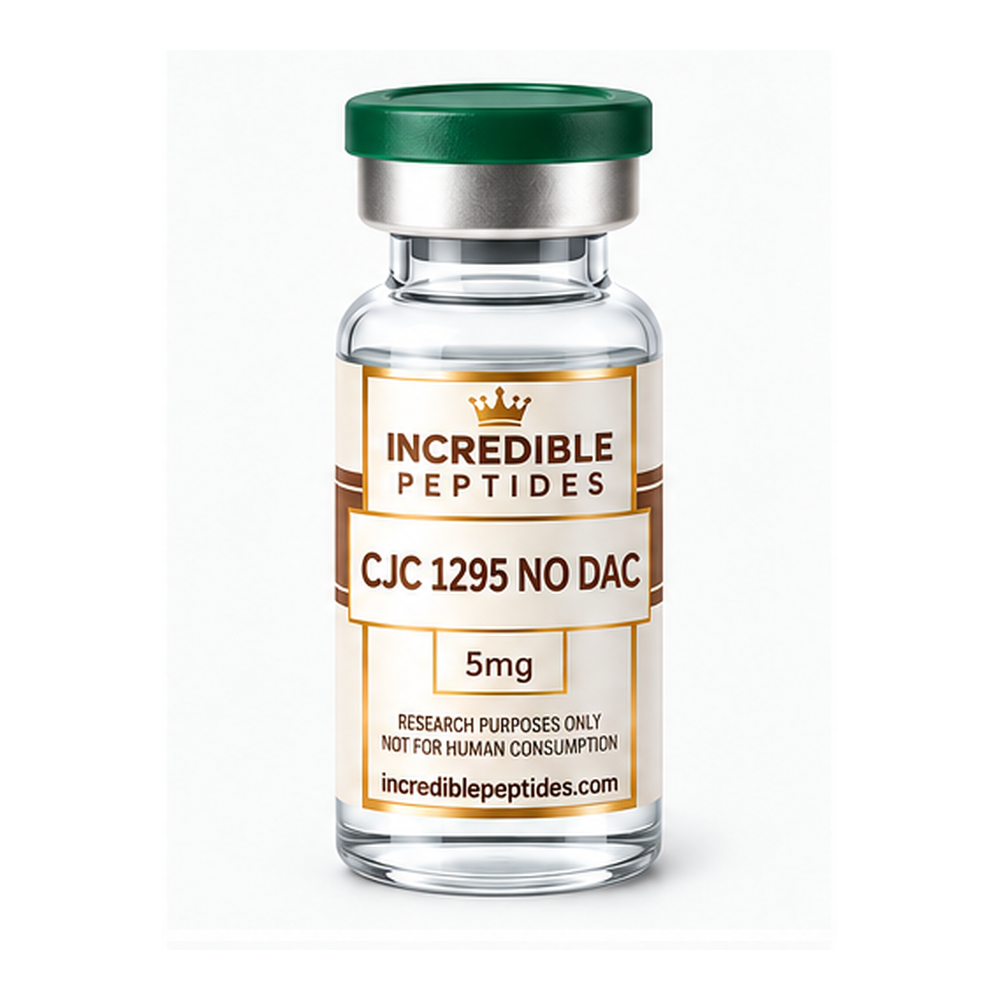
This article explains what SAR means in a peptide context, walks through alanine scanning, truncation and substitution strategies, and looks at lipidation and other modifications. The growth hormone-releasing hormone analogue CJC-1295, which exists as an unmodified tetrasubstituted GRF(1-29) peptide, CJC-1295 no DAC, and as a version carrying an albumin-binding modification, provides a clear worked example of how a single structural change reshapes a peptide’s behaviour.
What SAR means for peptides
Structure-activity relationship studies ask a simple question repeatedly: if this part of the molecule changes, how does activity change? For small molecules the variables are functional groups on a scaffold. For peptides they are the identity, stereochemistry and modification of each residue, the length of the chain, its termini, and any constraints such as cyclisation. Because peptides are linear polymers joined by peptide bonds, the sequence offers a natural coordinate system: each position can be varied independently and the results laid out residue by residue.
Activity in an SAR study is usually measured as binding affinity, functional potency (EC50), maximal efficacy, or a combination. Stability, typically half-life in plasma or in the presence of a specific protease, is often measured in parallel, since a highly potent peptide that is degraded within minutes is of limited use as a research tool. Good SAR work keeps the assay constant while the structure changes, so that differences can be attributed to the molecule rather than to the method.
Alanine scanning
Alanine scanning replaces each residue in turn with alanine. Alanine removes the side chain beyond the β-carbon while preserving backbone conformation reasonably well, so a large drop in activity after substitution points to a side chain that contributes to binding or activation. Glycine and proline positions are often handled separately, because replacing them can change backbone flexibility rather than side-chain contacts.
The output is a map of hot spots, typically a small subset of residues responsible for most of the binding energy. For class B GPCR ligands such as GHRH, glucagon or GLP-1, scans have generally shown that the N-terminal residues are critical for receptor activation, while residues along the C-terminal helix contribute more to affinity. A D-amino acid scan, which inverts stereochemistry at each position, is a useful companion: it can reveal positions where the native configuration is essential and others where a D-residue is tolerated and confers protease resistance.
Truncations and substitutions
Truncation asks how much of a peptide is needed. Native human GHRH is 44 residues long, but the N-terminal fragment GHRH(1-29) amide retains the receptor activity of the full peptide in vitro, which made it the starting point for most later GHRH analogues. Truncation from the N-terminus usually behaves differently: for many class B ligands, removing the first few residues preserves some binding but abolishes activation, which is a common route to antagonists.
Substitutions then address specific liabilities identified during SAR or stability work. The sequence of CJC-1295 no DAC, often referred to as modified GRF(1-29), carries four substitutions relative to GHRH(1-29) amide, each tied to a known weakness of the native fragment:
| Position | Change | Rationale |
|---|---|---|
| 2 | L-Ala to D-Ala | Protects the N-terminus from dipeptidyl peptidase-4 cleavage |
| 8 | Asn to Gln | Reduces asparagine deamidation and related rearrangement |
| 15 | Gly to Ala | Favours helical structure, associated with improved potency in earlier GRF analogue work |
| 27 | Met to Leu | Removes an oxidation-prone methionine |
None of these changes was arbitrary. Each targets either a degradation pathway (proteolysis, deamidation, oxidation) or a conformational preference, and each would have been checked to confirm that receptor activity was retained. This is SAR used for optimisation rather than discovery: the hot spots are known, and the task is to protect the molecule without disturbing them.
Lipidation and other modifications
Albumin binding and half-life extension
Many peptides are cleared quickly by renal filtration and proteolysis. Linking a peptide to serum albumin, a long-lived plasma protein, is one of the most effective strategies for slowing clearance. There are two broad approaches. Non-covalent albumin binding is achieved by attaching a fatty acid or fatty diacid, usually through a linker to a lysine side chain; the lipidated GLP-1 analogues are the best-known examples. Covalent attachment uses a reactive group that forms a bond with albumin itself.
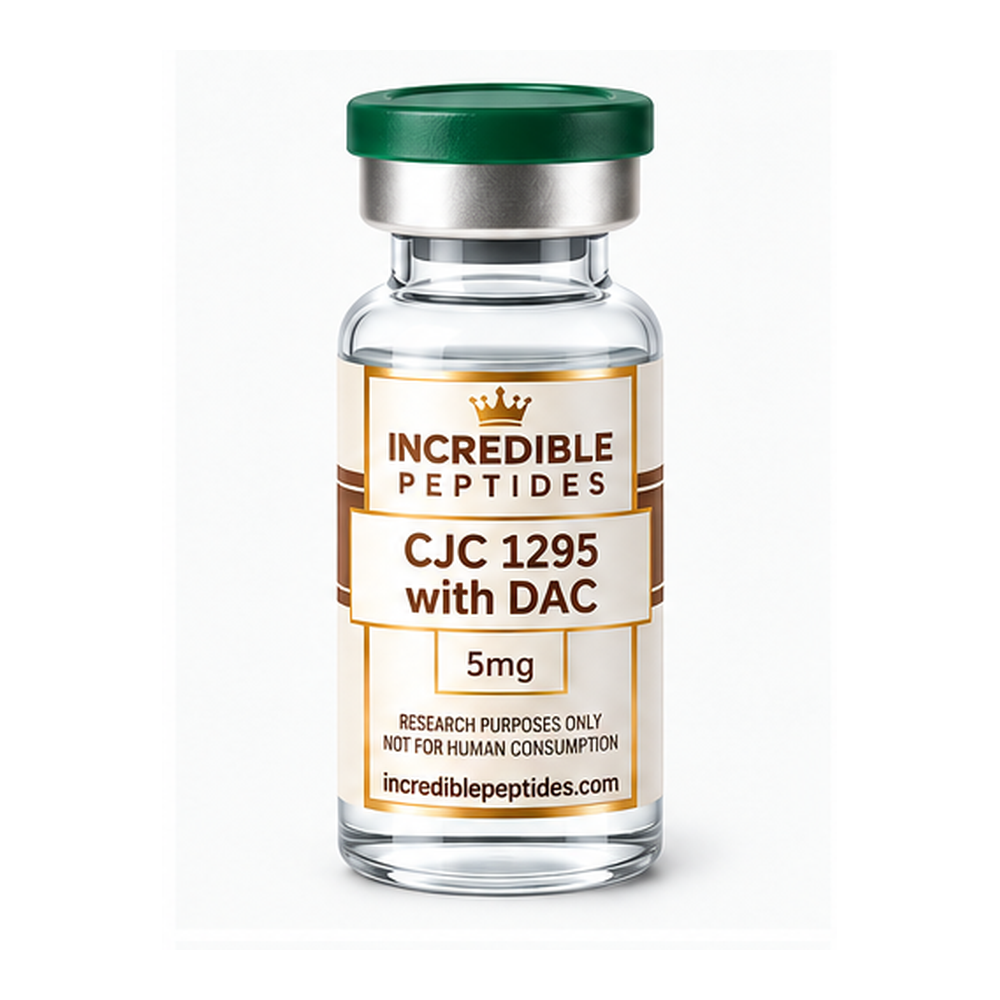
CJC-1295 with DAC illustrates the covalent route. The Drug Affinity Complex (DAC) is a lysine residue added at the C-terminus of the tetrasubstituted GRF(1-29) sequence and modified with a maleimidopropionic acid group. Maleimides react selectively with free thiols, and albumin carries a single free cysteine (Cys34). The design intent is that the peptide forms a covalent conjugate with circulating albumin, giving it the clearance characteristics of the carrier protein. In the published characterisation, which used rat models, the albumin-conjugated analogue showed a much longer duration of action than the unconjugated peptide, while retaining activity at the GHRH receptor. Placing the modification at the C-terminus is itself an SAR decision, since the N-terminal activation region must remain free to engage the receptor.
For laboratory work the two forms are not interchangeable. The maleimide is reactive, so the DAC-modified CJC-1295 analogue can conjugate to albumin or other thiol-containing proteins present in assay media, which changes its free concentration and apparent potency in vitro. Comparing the two forms in the same assay, with and without carrier protein, is a direct way to see how a single modification alters observed pharmacology.
Other common modifications
Beyond lipidation, peptide SAR routinely explores C-terminal amidation and N-terminal acetylation to block exopeptidases, non-natural residues such as α-aminoisobutyric acid (Aib) to stabilise helices and resist proteolysis, N-methylation of backbone amides, and cyclisation through disulfide, lactam or hydrocarbon staples. Each adds a constraint that can increase stability or affinity, and each can also disrupt a contact the receptor needs, which is why every change is tested rather than assumed.
Reading SAR tables
SAR results are usually reported in tables listing each analogue alongside affinity, potency, efficacy and sometimes stability. A few habits make them easier to read. Compare analogues to the parent peptide measured in the same experiment, not to literature values from other laboratories. Look at both potency and maximal effect, because a substitution that keeps EC50 constant but lowers Emax has converted a full agonist into a partial one. Check whether values are reported as means with variability and number of independent experiments, and whether differences of less than about threefold are being over-interpreted. Our guide to binding affinity explains how Kd, Ki, IC50 and EC50 should each be read.
Why careful SAR still matters
The CJC-1295 pair shows SAR at small scale: four substitutions to stabilise a fragment, then one appended residue that changes how the molecule behaves in plasma. When comparing CJC-1295 with DAC and its unmodified counterpart experimentally, it is worth confirming identity by mass spectrometry, since the DAC adds measurable mass and a reactive group that can degrade. The same principle applies to any analogue series. SAR conclusions are only as reliable as the material and the assay, and most published SAR data are in-vitro or animal findings that describe molecular behaviour within the model studied.
References
- Jetté, L. et al. hGRF1-29-albumin bioconjugates activate the GHRH receptor on the anterior pituitary in rats: identification of CJC-1295 as a long-lasting GRF analog. Endocrinology, 2005.
- Rang, H. P., Ritter, J. M., Flower, R. J. and Henderson, G. Rang and Dale’s Pharmacology. Elsevier.
- Kenakin, T. A Pharmacology Primer: Techniques for More Effective and Strategic Drug Discovery. Academic Press.
- IUPHAR/BPS Guide to Pharmacology. International Union of Basic and Clinical Pharmacology and British Pharmacological Society. Online database.
Research Products in This Article
Educational content for research use only. Not for human consumption. Nothing here is medical advice or a claim about safety or efficacy.