Growth Hormone Secretagogues: GHRH Analogues and Ghrelin Mimetics
How GHRH analogues and ghrelin receptor agonists differ in structure, receptor pharmacology and signaling, and how pituitary cell assays are used to study them.
 DODaniel Okafor, MSResearch Analyst, Molecular Biology~5 min read
 MechanismsPhoto: kaibara87 / Wikimedia Commons, CC BY 2.0
A growth hormone secretagogue is any compound that stimulates the release of growth hormone (GH) from somatotroph cells of the anterior pituitary. In research peptide chemistry the term covers two pharmacologically distinct families: analogues of growth hormone-releasing hormone (GHRH), which act on the GHRH receptor, and ghrelin mimetics, which act on the growth hormone secretagogue receptor type 1a (GHS-R1a). Online the two are often grouped loosely as “HGH peptides”, a label that hides the fact that they work through different receptors and signaling cascades.
This article compares the two pathways at the level of structure and receptor pharmacology, describes representative compounds in each class, and outlines the cell-based assays used to study them.
Two Receptors, Two Pathways
GH secretion from somatotrophs is controlled by several hypothalamic and peripheral signals. GHRH is the principal stimulatory hypothalamic peptide, somatostatin is the principal inhibitory one, and ghrelin, an acylated peptide identified in 1999, acts through a separate receptor to promote release. Synthetic secretagogues were developed along both stimulatory routes, and much of their pharmacology makes sense once the two receptors are kept distinct.
The GHRH Receptor Pathway
GHRH and its 1-29 fragment
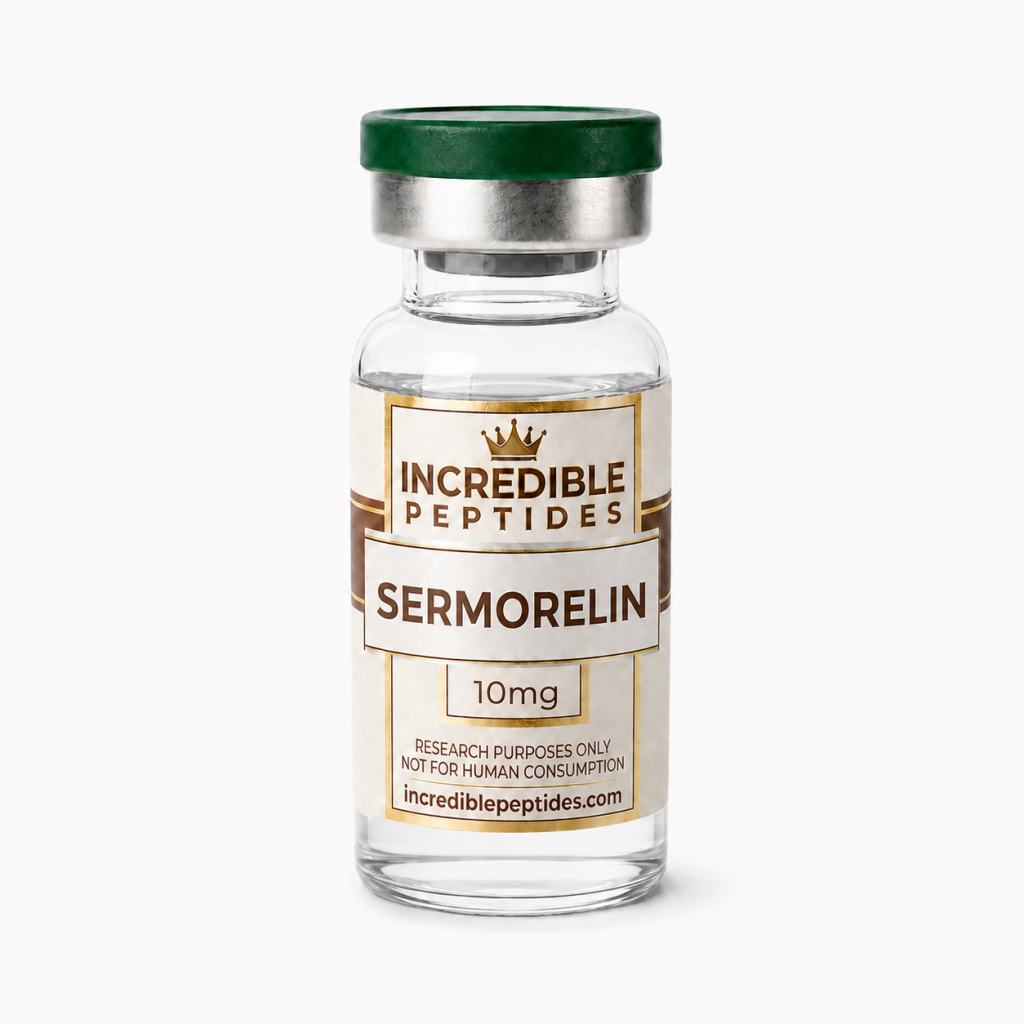
Native GHRH is a 44-residue peptide with a C-terminal amide. Structure-activity work in the 1980s showed that the N-terminal 29 residues, GHRH(1-29)-NH2, retain the receptor activity of the full sequence, which made the shorter fragment a practical tool for synthesis and study. That fragment is sermorelin. Researchers using sermorelin, the GHRH(1-29) amide, are therefore working with the minimal fully active portion of the native hormone. Our profile of sermorelin and the minimal active fragment covers its structure in more detail.
Stabilized analogues
Native GHRH and GHRH(1-29) are short-lived in biological matrices, in part because dipeptidyl peptidase-4 (DPP-4) cleaves the Tyr-Ala dipeptide from the N-terminus. Later analogues address this in different ways. Modified GRF(1-29), the compound commonly sold as CJC-1295 without DAC, carries four amino acid substitutions, including D-alanine at position 2, intended to resist enzymatic cleavage and improve stability. CJC-1295 with DAC adds a reactive maleimide-containing lysine derivative (the “drug affinity complex”) designed to bind covalently to albumin, extending persistence in animal models. Tesamorelin takes a third route: it is full-length GHRH(1-44) with a trans-3-hexenoyl group on the N-terminal tyrosine.
Signaling
The GHRH receptor is a class B G protein-coupled receptor. Agonist binding activates Gs, stimulating adenylyl cyclase and raising intracellular cAMP. Protein kinase A then promotes GH release and, through CREB and the pituitary transcription factor Pit-1, GH gene transcription. Calcium influx through voltage-gated channels also contributes to exocytosis.
The Ghrelin Receptor Pathway
From synthetic GHRPs to ghrelin
This pathway was discovered in reverse. Beginning in the late 1970s, Cyril Bowers and colleagues developed small synthetic peptides, derived from enkephalin analogues, that released GH through a mechanism distinct from GHRH. The best known is the hexapeptide GHRP-6 (His-D-Trp-Ala-Trp-D-Phe-Lys-NH2). Hexarelin, a close analogue carrying a 2-methyl-D-tryptophan at position 2, followed. In 1996 a team at Merck cloned the receptor these compounds act on, GHS-R1a, and in 1999 Kojima and colleagues identified its endogenous ligand, ghrelin, a 28-residue peptide with an octanoyl group on serine 3 that is required for receptor activation.
Ipamorelin and selectivity
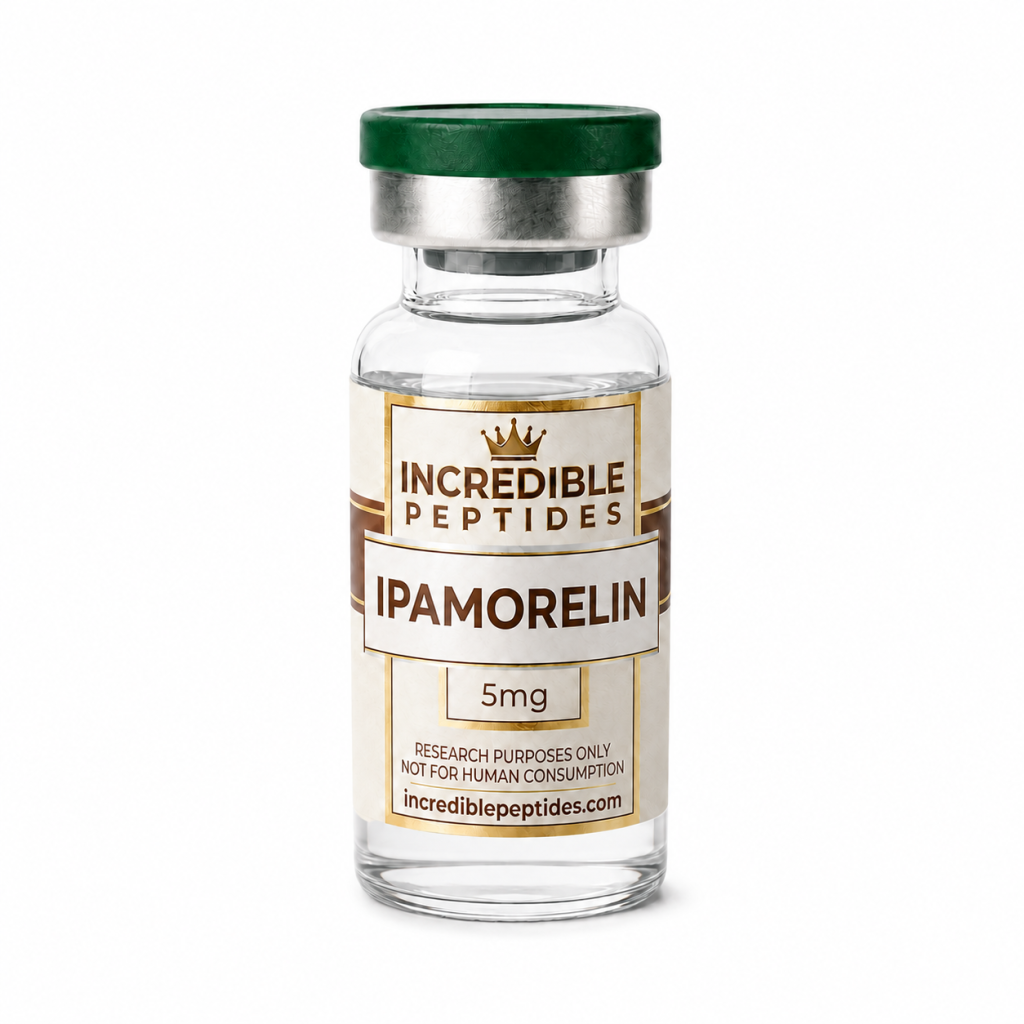
First-generation GHRPs such as GHRP-6 and hexarelin were found in preclinical models to raise ACTH and cortisol alongside GH. Ipamorelin, the pentapeptide Aib-His-D-2Nal-D-Phe-Lys-NH2, was described by Raun and colleagues in 1998 as the first selective GH secretagogue, because in their animal studies it released GH without comparable increases in ACTH or cortisol. Laboratories studying GHS-R1a pharmacology often use ipamorelin, the selective ghrelin receptor agonist pentapeptide, as a reference compound for exactly that reason. The selectivity data are preclinical, and selectivity is relative to the comparators and concentrations tested.
Signaling
GHS-R1a is a class A G protein-coupled receptor that couples mainly to Gq/11. Activation stimulates phospholipase C, generating inositol trisphosphate and diacylglycerol and releasing calcium from intracellular stores. The receptor is notable for high constitutive activity, signaling at a measurable level without any agonist present. A truncated splice variant, GHS-R1b, does not signal in the same way but has been reported to form heteromers with GHS-R1a.
Comparing the Two Classes
| Feature | GHRH analogues | Ghrelin receptor agonists |
|---|---|---|
| Receptor | GHRH receptor (class B GPCR) | GHS-R1a (class A GPCR) |
| Main G protein | Gs | Gq/11 |
| Key second messenger | cAMP | IP3 and intracellular Ca2+ |
| Endogenous ligand | GHRH (44 residues) | Acyl-ghrelin (28 residues) |
| Research examples | Sermorelin, CJC-1295, tesamorelin | Ipamorelin, GHRP-6, hexarelin |
Because the two receptors use different second messengers, combined stimulation has been reported to produce greater-than-additive GH release in pituitary preparations and animal models. That interaction is the scientific rationale for blends pairing a GHRH analogue with a ghrelin receptor agonist, discussed in our article on the CJC-1295 ipamorelin pairing.
Assays for Secretagogue Pharmacology
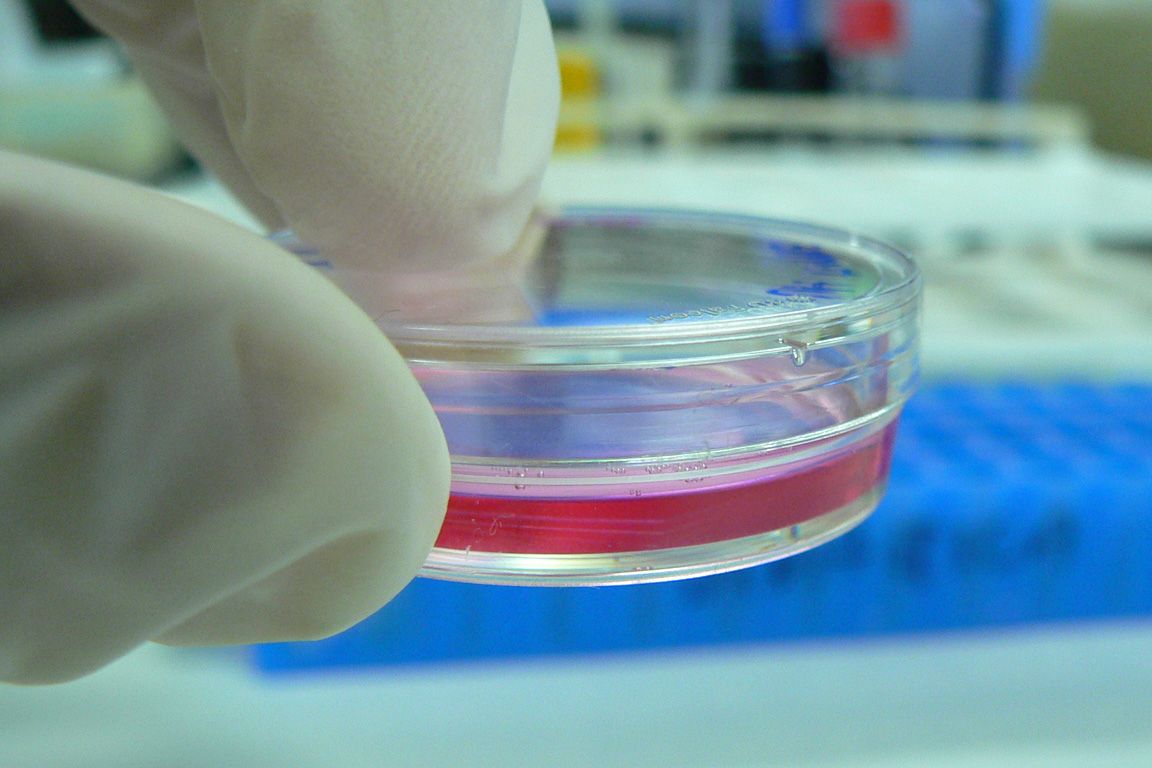
Primary anterior pituitary cells, usually from rats, remain the classic system. Cells are exposed to test peptides for a defined period and GH released into the medium is measured by immunoassay. This preparation preserves native receptor expression and the somatostatin interplay, but it varies from batch to batch and contains several cell types.
Recombinant cell lines offer cleaner receptor-level data. HEK293 or CHO cells expressing the GHRH receptor are typically read out by cAMP accumulation, while cells expressing GHS-R1a are read out by calcium flux or inositol monophosphate accumulation. Radioligand or fluorescent ligand binding assays add affinity measurements. Useful controls include somatostatin, receptor antagonists such as [D-Lys3]-GHRP-6 for GHS-R1a, vehicle-only wells and a well-characterized reference agonist. A characterized lot of sermorelin as a GHRH receptor reference agonist serves that purpose on the GHRH side, provided identity and purity are confirmed on the lot COA.
Interpreting Secretagogue Research
The key point is that “growth hormone secretagogue” names an outcome at the pituitary, not a single mechanism. GHRH analogues and ghrelin mimetics reach that outcome through different receptors, G proteins and second messengers, with different selectivity profiles. Experiments should state which pathway they probe, include controls that distinguish them and regard preclinical selectivity data as model-dependent. All compounds discussed are for laboratory research use only and are not for human or veterinary use.
References
- Howard AD, et al. A receptor in pituitary and hypothalamus that functions in growth hormone release. Science. 1996.
- Kojima M, Hosoda H, Date Y, Nakazato M, Matsuo H, Kangawa K. Ghrelin is a growth-hormone-releasing acylated peptide from stomach. Nature. 1999.
- Raun K, et al. Ipamorelin, the first selective growth hormone secretagogue. European Journal of Endocrinology. 1998.
- Mayo KE. Molecular cloning and expression of a pituitary-specific receptor for growth hormone-releasing hormone. Molecular Endocrinology. 1992.
Research Products in This Article
Educational content for research use only. Not for human consumption. Nothing here is medical advice or a claim about safety or efficacy.