BPC-157: What Researchers Know About This Synthetic Pentadecapeptide
The sequence, chemistry and origin of BPC-157, what its mostly preclinical literature does and does not show, and why independent replication matters.
 DODaniel Okafor, MSResearch Analyst, Molecular Biology~5 min read
 Compounds
The BPC-157 peptide is a synthetic pentadecapeptide, a chain of fifteen amino acids, that has attracted a large preclinical literature and a great deal of informal discussion. Separating the two matters. What is firmly established about BPC-157 is its sequence and chemistry; what is reported about its biology comes mostly from rodent and cell-culture studies, a large share of them from a single research group. That pattern does not make the findings wrong, but it does define how far they can be generalized.
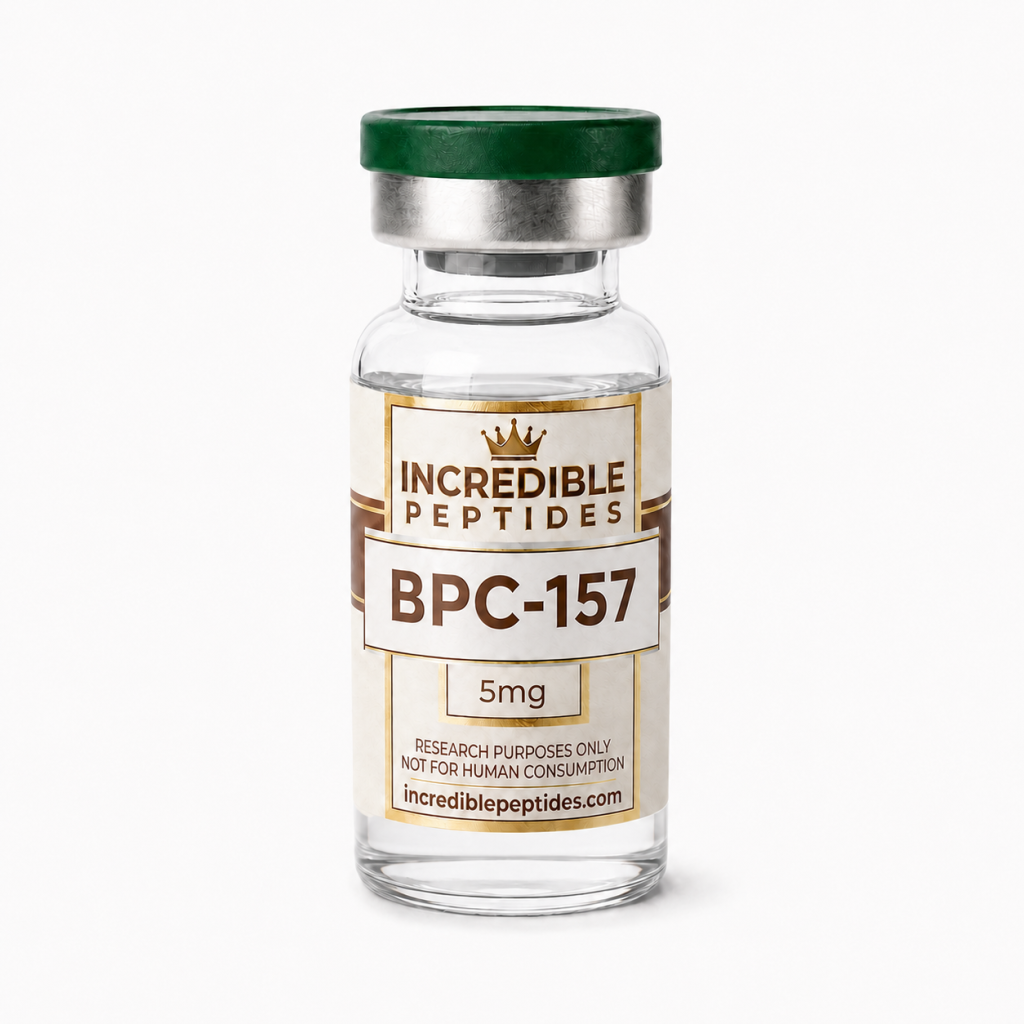
This profile sets out the sequence and physicochemical properties of BPC-157, its origin, the stability claims made for it, the shape of the published evidence and the open questions that independent work would need to address. It also covers the analytical checks that apply when a laboratory sources the BPC-157 research peptide.
Sequence and basic chemistry
BPC-157 has the sequence Gly-Glu-Pro-Pro-Pro-Gly-Lys-Pro-Ala-Asp-Asp-Ala-Gly-Leu-Val, written in one-letter code as GEPPPGKPADDAGLV. Its molecular formula is usually given as C62H98N16O22, corresponding to an average molecular weight of about 1419.5 Da for the free peptide with a free C-terminal acid. The material is typically supplied as a salt, most often acetate or trifluoroacetate, and some suppliers offer alternative salt forms, so the counter-ion stated on the certificate affects the relationship between gross powder mass and peptide content.
Several features of the sequence are worth noting. It contains one glutamate, two aspartates and a free C-terminal carboxylate against a single lysine and the N-terminal amine, so it carries a net negative charge near neutral pH and is readily water-soluble. Four of its fifteen residues are proline, including a Pro-Pro-Pro run near the N-terminus; proline-rich segments restrict backbone flexibility and are poor substrates for many proteases, which is relevant to the stability claims discussed below. The sequence has no cysteine, methionine or tryptophan, so disulfide scrambling and oxidation of sulfur-containing or indole side chains are not concerns. It also has no aromatic residues, which means it absorbs weakly at 280 nm; HPLC purity methods for BPC-157 rely on detection in the 210 to 220 nm range, where the peptide bond absorbs.
Origin of the compound
BPC-157 was introduced in the early 1990s by a research group at the University of Zagreb led by Predrag Sikirić. The name derives from “body protection compound”, a term the group applied to a larger protein fraction they reported isolating from gastric juice. BPC-157 was described as a partial sequence of that protein, chosen and synthesized as a stable, defined fragment. The parent protein itself has not been widely characterized in independent literature, so the compound is best regarded as a synthetic peptide defined by its sequence rather than as a well-mapped fragment of a known protein.
Stability claims
A recurring statement in the originating group’s papers is that BPC-157 is unusually stable, including in gastric juice, a harsh environment for most peptides. The sequence makes some resistance to proteolysis plausible, given the proline content. However, independent, quantitative stability data, such as half-lives in defined buffers or biological matrices measured by validated HPLC or LC-MS methods, are limited in the published literature.
For laboratory purposes, stability is better measured than assumed. Lyophilized peptide stored cold and dry is generally stable for extended periods, but once dissolved, peptides containing aspartate can undergo hydrolysis or isomerization over time, and microbial contamination can degrade any peptide solution. A simple in-house study, analysing a stock solution by HPLC at defined intervals under the intended storage conditions, gives a far more useful answer than general statements. Our article on peptide stability and degradation describes the main pathways.
What the published literature consists of
The BPC-157 literature is extensive in volume but narrow in origin. Most papers report rodent experiments, and a substantial proportion come from the Zagreb group and its collaborators. A smaller set of studies from other laboratories has examined the peptide in vitro. Work from a group in Taiwan, for example, reported effects on fibroblast migration and on signaling proteins including focal adhesion kinase and paxillin in cultured cells, and a later study from the same region examined VEGFR2-related signaling in endothelial cells. Interactions with the nitric oxide system are a recurring theme in the originating group’s preclinical papers.
Reading the evidence by type
In vitro findings show what a peptide can do to cells under defined conditions, usually at concentrations chosen by the investigators. Animal studies add pharmacokinetics and whole-organism context but are subject to strain, model and design choices, and their results do not transfer automatically to other species. Our guide to in vitro vs in vivo research explains these distinctions in more detail.
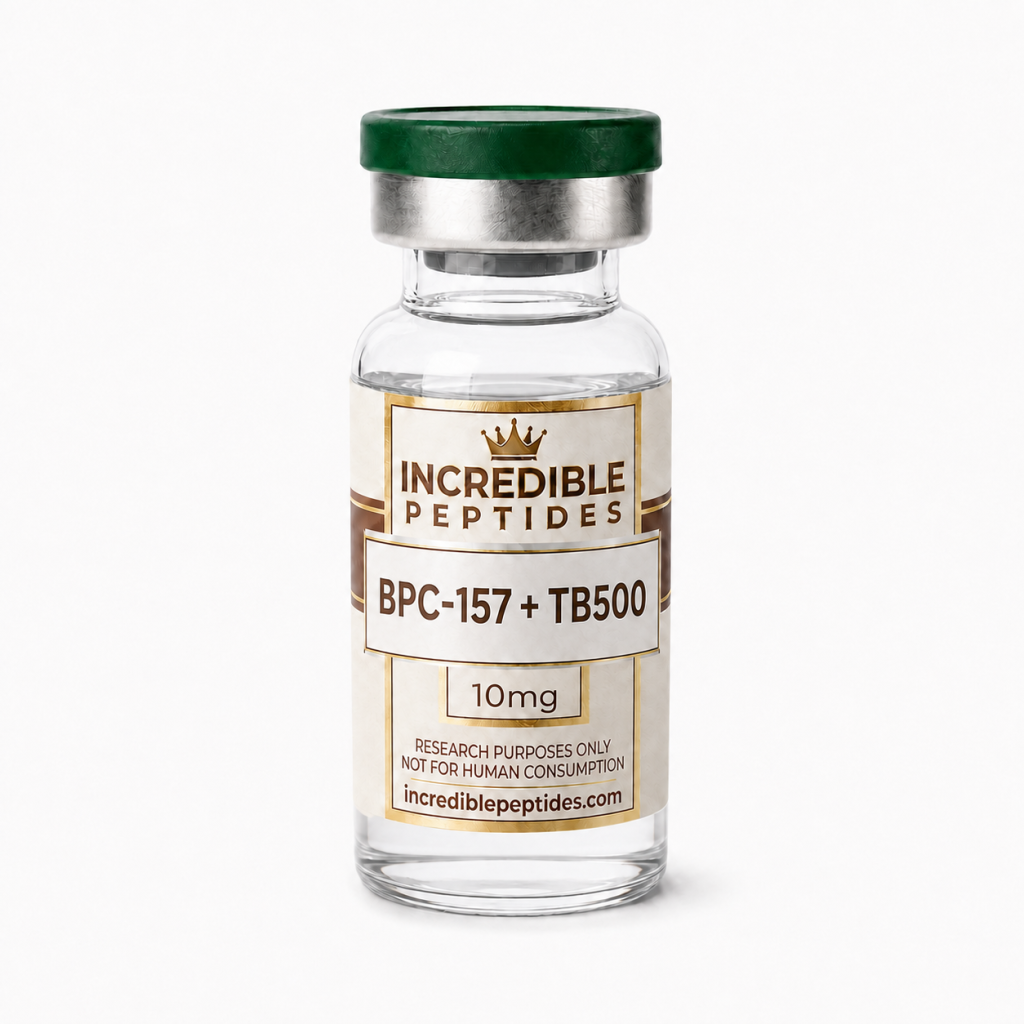
BPC-157 is also studied and sold in combined formats. A BPC-157 + TB500 research blend is commonly described as pairing it with a thymosin beta-4-related peptide; the composition should be confirmed on the listing and the lot certificate. The chemistry of that pairing is covered in our article on the so-called Wolverine peptide stack.
Open questions and the need for replication
Several basic questions remain unresolved. No specific receptor for BPC-157 has been identified, so proposed mechanisms are inferred from downstream signaling changes rather than from a defined binding event. Concentration-response relationships across independent laboratories are sparse, which makes it difficult to judge whether reported effects occur in a consistent range. Many papers describe the peptide’s source and purity only briefly, and few report identity confirmation by mass spectrometry for the material actually used.
The most valuable next steps are methodological: independent replication by unconnected laboratories, blinded outcome assessment, pre-specified analyses, appropriate vehicle and scrambled-sequence controls, and full analytical characterization of the test material. Until such work accumulates, the most defensible summary is that BPC-157 is a well-defined synthetic peptide with an interesting but narrowly sourced preclinical record.
Analytical checks for BPC-157
For a 15-residue peptide without modifications, identity and purity testing is straightforward. Mass spectrometry should show an observed mass consistent with about 1419.5 Da for the neutral peptide, typically seen as singly and doubly protonated ions. Reversed-phase HPLC with low-wavelength UV detection gives the purity figure, and common synthesis impurities include deletion sequences, which are easy to miss when the deleted residue is a proline within the Pro-Pro-Pro run because neighbouring species elute close together. When reviewing a BPC-157 lot certificate, check the observed mass, the HPLC chromatogram and the stated counter-ion together.
Where BPC-157 stands
BPC-157 is chemically simple and analytically tractable, with a fully defined sequence and no residues that pose unusual handling problems. Its biology is less settled: the literature is dominated by rodent and in vitro work from a small number of groups, there is no identified receptor, and independent replication is limited. Research material is supplied for laboratory research use only; not for human or veterinary use.
References
- Sikiric P, Petek M, Rucman R, et al. J Physiol Paris. 1993 (original description of the gastric juice peptide BPC).
- Chang CH, Tsai WC, Lin MS, et al. J Appl Physiol. 2011 (in vitro fibroblast migration and FAK-paxillin signaling).
- Hsieh MJ, Liu HT, Wang CN, et al. J Mol Med. 2017 (VEGFR2 signaling in endothelial cells).
- Sewald N, Jakubke H-D. Peptides: Chemistry and Biology. Wiley-VCH.
- ICH Q2(R2). Validation of Analytical Procedures. International Council for Harmonisation.
Research Products in This Article
Educational content for research use only. Not for human consumption. Nothing here is medical advice or a claim about safety or efficacy.