In Vitro vs. In Vivo Research: What Each Can Show
What cell-based and animal studies can and cannot show, why animal findings do not establish human effects, and how to describe preclinical results accurately.
 DODaniel Okafor, MSResearch Analyst, Molecular Biology~5 min read
 MethodsPhoto: Lilly_M / Wikimedia Commons, CC BY-SA 3.0
The distinction between in vitro vs in vivo research is one of the first things to establish when reading any biomedical paper, and it matters especially in the peptide literature, where a large share of published work has never progressed beyond cells and rodents. The two terms describe where an experiment takes place. They also set firm boundaries on what the results can support.
This article defines the main study types, sets out what each does well, explains why findings so often fail to carry over from one level to the next, and offers practical language for describing preclinical results without overstating them. The aim is not to rank one approach above the other but to make clear which questions each can legitimately answer, and which ones it cannot.
Definitions
In vitro, Latin for “in glass”, refers to experiments performed outside a living organism: purified proteins in a buffer, cultured cells in a dish, or tissue homogenates in a tube. In vivo, “within the living”, refers to experiments in an intact organism, which in preclinical research usually means mice or rats, sometimes zebrafish, rabbits, pigs or non-human primates. Two neighboring terms are worth knowing. Ex vivo work uses tissue removed from an organism and studied shortly afterward, such as an isolated organ bath or a freshly prepared tissue slice. In silico work is computational, for example docking a peptide into a modeled receptor structure.
In the peptide literature the phrase “in vivo study” almost always signals an animal experiment, and the species and model are not always prominent in the title or abstract. That ambiguity is a common source of overstatement. For anyone evaluating sequences among our research peptides, the first question to ask of any cited finding is which of these systems it came from.
Strengths of in vitro work
In vitro systems offer a degree of control that no organism can match. The concentration of the peptide is known, the environment is defined, and variables can be changed one at a time. This makes cell-free and cell-based assays the natural place to establish mechanism: whether a peptide binds a particular receptor, which signaling pathway responds, how potency changes when a single residue is substituted.
They are also efficient. Many conditions can be tested in parallel on a single plate, and experiments can be repeated within days. The ethical principles of replacement and reduction encourage researchers to answer every question that can be answered in vitro before moving to animals. The main weakness is the flip side of the control: a monolayer of immortalized cells bathed in a fixed peptide concentration lacks blood flow, tissue architecture, immune cells, metabolism and clearance, all of which shape what happens in a body.
Strengths of in vivo work
Animal studies capture integrated physiology. A peptide in a living animal is subject to proteolytic degradation, renal clearance, binding to plasma proteins and distribution into tissues, so the exposure at the site of interest may bear little resemblance to the concentration used in a culture well. Only an in vivo experiment can reveal those pharmacokinetic realities, along with effects that arise from interactions between organ systems and unexpected effects on tissues nobody thought to measure.
In vivo models also allow researchers to observe outcomes over time, such as tissue repair, behavior or survival, that have no direct cell-culture equivalent. Their cost is reduced control and a heavier ethical burden, which is why well-conducted animal studies are randomized, blinded where possible, justified in size, and reported according to standards such as ARRIVE 2.0.
Translation gaps
Translation is the process of carrying a finding from one level of evidence to the next, and it fails often. Between in vitro and in vivo, a peptide that is potent in a dish may never reach its target in an animal because it is degraded within minutes. Between one species and another, the gaps are wider still. Receptor sequences and expression patterns differ between species, as do metabolic enzymes, immune responses, body size and lifespan. Disease models are typically induced, for example by a surgical lesion or a chemical injury in young, genetically uniform animals, and rarely reproduce the slow, heterogeneous course of naturally occurring disease.
Promising animal results, including highly cited ones, frequently fail to replicate or to generalize beyond the model in which they were obtained. Methodological weaknesses in the animal studies themselves, such as small groups, lack of randomization or blinding, and selective publication of positive results, contribute alongside genuine biological differences.
An example of a predominantly preclinical literature
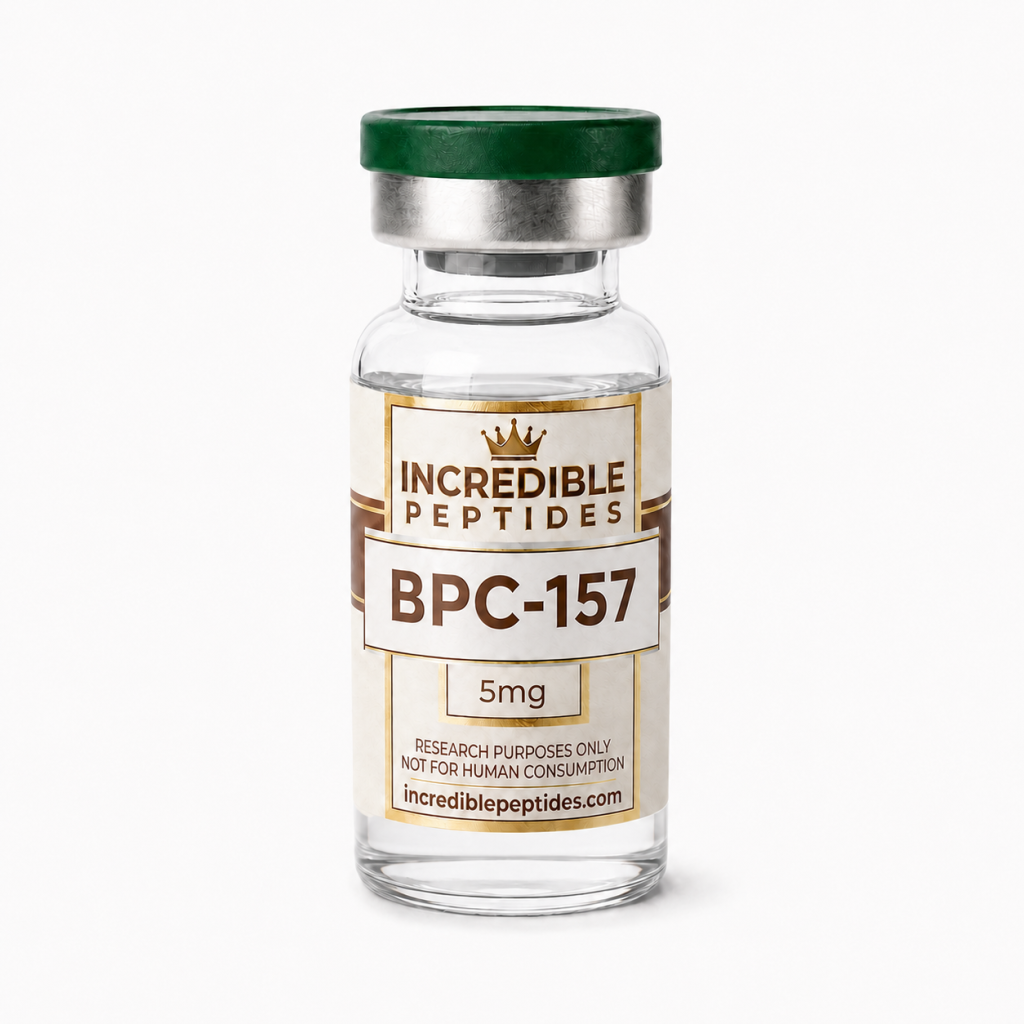
Some research peptides illustrate the gap clearly. BPC-157, a synthetic 15-residue research peptide whose sequence was derived from a protein fragment originally isolated from gastric juice, has a published literature made up predominantly of rodent studies and cell-culture experiments, a substantial proportion of it from a small number of research groups. It is supplied for laboratory research use only. Whatever its animal and in vitro papers report, that body of work describes preclinical observations limited to the models studied. Reading such a literature well means keeping the level of evidence attached to every finding.
How to describe findings accurately
Precise language is the simplest safeguard against overstatement. A result should be described in terms of the system that produced it: “in cultured fibroblasts, the peptide increased migration in a scratch assay” rather than a broad functional claim; “in a rat model of tendon transection” rather than a general statement about tendons. Species, model, concentration or exposure, and the outcome actually measured should travel with the claim.
Several further habits help. Label cell and animal results explicitly as preliminary or preclinical. Avoid converting a mechanistic observation into a functional claim, since activation of a pathway in a cell line is not the same as a change in tissue function. Note when results come from a single laboratory and have not been independently replicated. And keep negative or null results in view rather than citing only the experiments that support a hypothesis. Our guide on how to read a scientific paper expands on these points, and the broader landscape of assay types is covered in our overview of peptide research methods.
| Study type | Can reasonably show | Cannot show |
|---|---|---|
| Cell-free (biochemical) | Binding, enzyme inhibition, structure-activity trends | Cellular or organism-level responses |
| Cell-based in vitro | Pathway activation, cellular phenotype, potency in cells | Exposure, distribution or effects in a whole organism |
| Animal in vivo | Pharmacokinetics, tissue-level and systemic effects in that species | Effects in other species or models |
Keeping the level of evidence in view
In vitro and in vivo studies answer different questions, and both are indispensable. Cell-based work establishes mechanism with precision; animal work tests whether that mechanism survives contact with a whole organism. Neither, alone or together, demonstrates more than the models studied can show.
For laboratories working with research peptides, the practical lesson is straightforward: when citing or building on published work, record which system each finding came from, and frame new results with the same care.
References
- Percie du Sert N, et al. The ARRIVE guidelines 2.0: updated guidelines for reporting animal research. PLoS Biology. 2020.
- Russell WMS, Burch RL. The Principles of Humane Experimental Technique. Methuen; 1959.
- Freshney RI. Culture of Animal Cells: A Manual of Basic Technique and Specialized Applications. Wiley-Blackwell.
Research Product in This Article
Educational content for research use only. Not for human consumption. Nothing here is medical advice or a claim about safety or efficacy.