Semax: An ACTH(4-10) Analogue Peptide
Semax pairs the ACTH(4-7) segment with a Pro-Gly-Pro tail. Its structure, preclinical findings and methionine-related analytical checks explained.
 DODaniel Okafor, MSResearch Analyst, Molecular Biology~5 min read
 Compounds
Semax is a synthetic heptapeptide, Met-Glu-His-Phe-Pro-Gly-Pro, that combines the first four residues of the adrenocorticotropic hormone fragment ACTH(4-10) with a C-terminal Pro-Gly-Pro extension. It is usually described as an ACTH(4-10) analogue, but the design keeps only the ACTH(4-7) segment and replaces the rest with a proline-rich motif chosen for stability. For laboratory researchers, the semax peptide is of interest as an example of fragment-based peptide design and as the subject of rodent studies on neurotrophin gene expression.
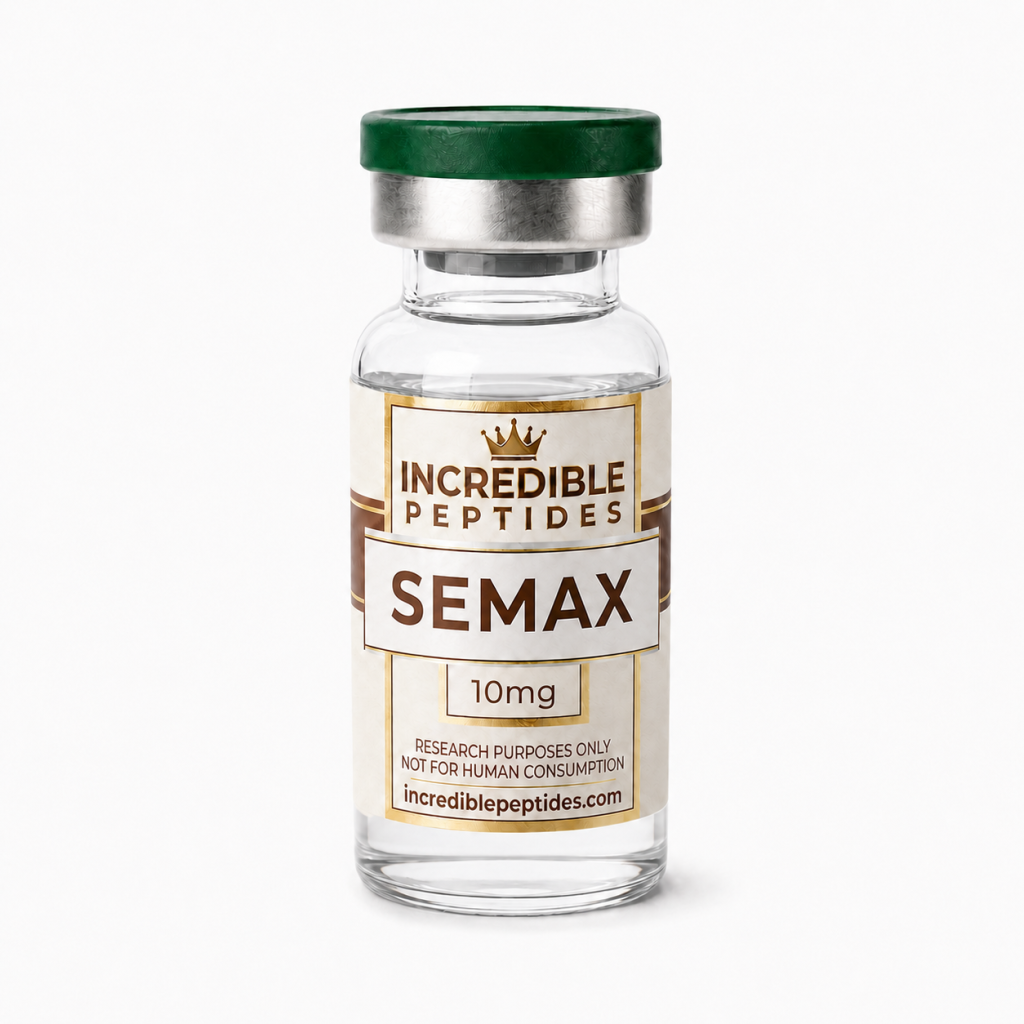
This profile covers the structure and chemistry of Semax, how it relates to ACTH and the melanocortin system, what preclinical work has reported, and the analytical checks that matter for this methionine-containing sequence. Material such as the Semax research peptide is supplied for laboratory research use only; not for human or veterinary use.
From ACTH to a short fragment
ACTH is a 39-residue peptide processed from pro-opiomelanocortin (POMC). Its N-terminal region contains the same His-Phe-Arg-Trp core that alpha-MSH uses to activate melanocortin receptors, and its full adrenal activity at the melanocortin-2 receptor (MC2R) depends on additional residues further along the chain, notably the basic Lys-Lys-Arg-Arg cluster at positions 15 to 18. Short fragments that lack this region do not activate MC2R and therefore lack corticotropic, or steroidogenic, activity.
From the 1960s onward, researchers studied fragments such as ACTH(4-10), Met-Glu-His-Phe-Arg-Trp-Gly, in rodent models precisely because they retained some central nervous system activity while being devoid of adrenal effects. These fragments, however, are short linear peptides that are rapidly degraded by peptidases, which limited their usefulness as research tools.
Structure and chemistry of Semax
Semax was developed in Russia at the Institute of Molecular Genetics of the Russian Academy of Sciences, within the same programme that produced Selank. Its sequence is H-Met-Glu-His-Phe-Pro-Gly-Pro-OH, with free termini and only L-amino acids. The molecular formula is C37H51N9O10S and the average molecular weight is approximately 813.9 g/mol.
Compared with ACTH(4-10), Semax keeps Met-Glu-His-Phe and drops Arg-Trp-Gly in favour of Pro-Gly-Pro. The result is a peptide with one acidic residue (Glu), one weakly basic residue (His) and a free N-terminal amine, giving it a modest net charge near neutral pH. Phenylalanine provides some UV absorbance, but without tryptophan or tyrosine the 280 nm signal is weak, so HPLC purity is measured at 210 to 220 nm.
The Pro-Gly-Pro tail
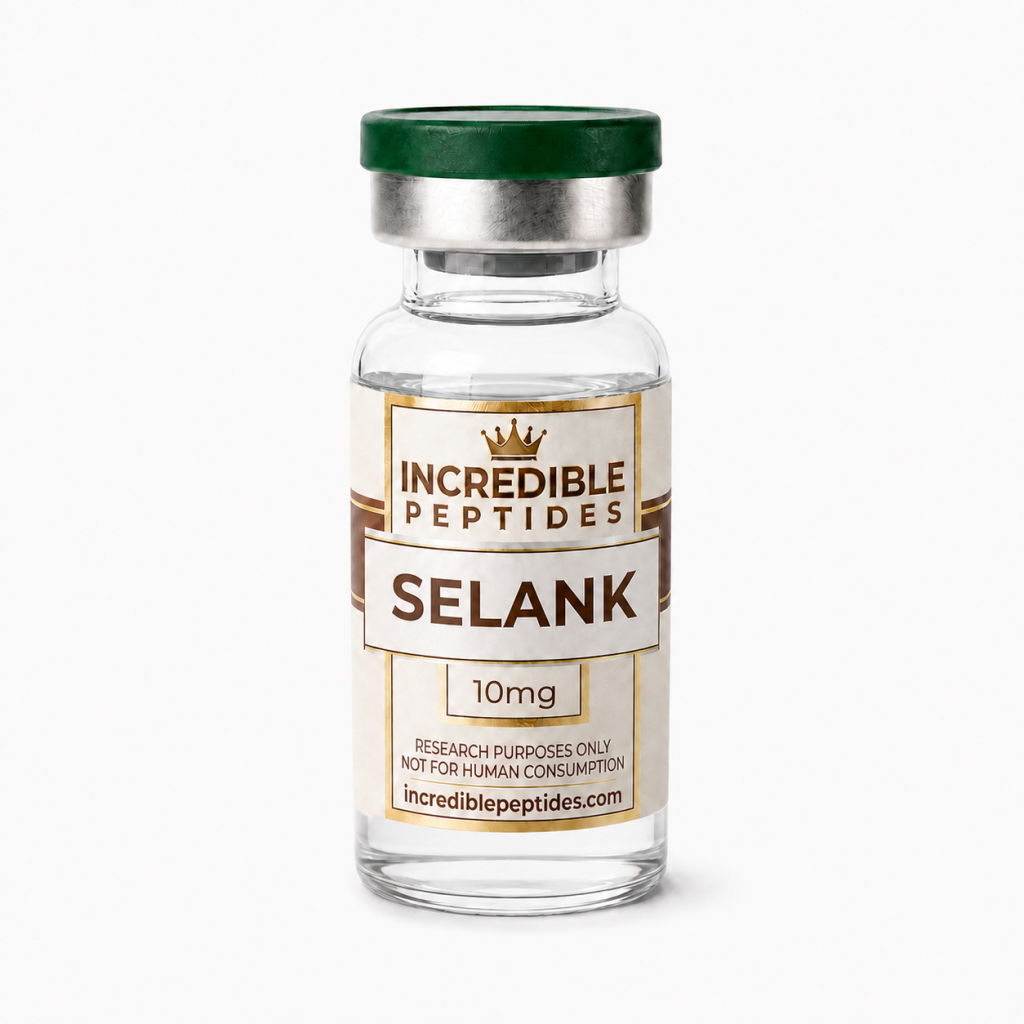
Pro-Gly-Pro is a glyproline motif. Proline residues constrain the backbone and are poorly accommodated by many common peptidases, so bonds near the C-terminal prolines are cleaved slowly. The tail was intended to lengthen the persistence of the active ACTH(4-7) segment in biological media. The same strategy was applied to tuftsin to produce Selank, which makes the Selank research peptide a logical comparator when studying how the glyproline extension behaves on different parent sequences. Our companion profile of Selank and its tuftsin origin covers that compound in detail.
Stabilised is not the same as inert. Studies in biological media have reported Semax fragments, including shorter His-Phe-Pro-Gly-Pro and Pro-Gly-Pro-containing species, so some reported activity may reflect metabolites. Experiments that depend on intact Semax should track it by LC-MS over the incubation period.
Relationship to melanocortin receptors
Because Semax derives from ACTH, a natural question is whether it acts at melanocortin receptors. The classical agonist pharmacophore for MC1R, MC3R, MC4R and MC5R is His-Phe-Arg-Trp, and Semax retains only His-Phe. Arginine and tryptophan are important for potent agonism in that family, so strong melanocortin agonist activity would not be expected from the sequence alone. Published data on direct melanocortin receptor activity of Semax are limited, and some reports have suggested weak or antagonist-like interactions; this area is not well settled. Researchers who need to test it should use cell lines expressing a single melanocortin receptor subtype with a cAMP readout and a full agonist such as NDP-MSH as reference, as described in our guide to cell signaling assays.
Preclinical findings
Neurotrophin expression in rodents
The most frequently cited line of preclinical work on Semax concerns brain-derived neurotrophic factor (BDNF) and its receptor TrkB. Studies in rats reported specific binding of labelled Semax to basal forebrain membrane preparations and increases in BDNF protein and in BDNF and TrkB mRNA in brain regions such as the hippocampus after Semax exposure. Related work examined expression of nerve growth factor and other genes in rat brain tissue over time.
These are animal-model and tissue findings, mostly from a small number of laboratories, and the binding site responsible has not been identified at the molecular level. Effect sizes, time courses and regional patterns vary between reports. They support Semax as a tool for studying neurotrophin gene regulation in rodents, not as evidence of any outcome outside that setting.
Enzyme interactions in vitro
Semax, along with Selank, has also been reported to inhibit enkephalin-degrading peptidase activity in serum preparations in vitro. As with any cell-free enzyme measurement, this shows a biochemical interaction under defined conditions rather than a mechanism in an intact organism.
Analytical and handling considerations
The N-terminal methionine is the main chemical liability. Methionine oxidises to methionine sulfoxide, adding 16 Da, under exposure to air, light, peroxide-containing solvents or trace metals. Mass spectrometry should therefore look specifically for an M+16 species alongside the expected parent mass of about 813.9 Da, and reversed-phase HPLC usually resolves the more polar sulfoxide as an earlier-eluting peak. Our article on peptide HPLC explains how to interpret those chromatograms.
Lyophilised Semax is best stored frozen, dry, protected from light and, ideally, under an inert atmosphere once opened. Solutions should be made in degassed buffer, aliquoted and frozen once. When obtaining a Semax (MEHFPGP heptapeptide) reference standard, confirm that the lot-specific certificate of analysis reports identity by mass spectrometry, HPLC purity and counter-ion content.
Semax as a research compound
Semax is a clear example of fragment-based design: keep a short segment of a larger hormone, discard the region responsible for its classical receptor activity, and add a protease-resistant tail. Its chemistry is simple and well defined, with methionine oxidation as the main analytical watch point. Its biology rests on rodent and in vitro studies of neurotrophin expression and enzyme interactions that would benefit from independent replication.
References
- Dolotov, O. V. et al. Semax, an analogue of adrenocorticotropin (4-10), binds specifically and increases levels of brain-derived neurotrophic factor protein in rat basal forebrain. Journal of Neurochemistry, 2006.
- Mountjoy, K. G., Robbins, L. S., Mortrud, M. T. and Cone, R. D. The cloning of a family of genes that encode the melanocortin receptors. Science, 1992.
- Vanhoof, G., Goossens, F., De Meester, I., Hendriks, D. and Scharpe, S. Proline motifs in peptides and their biological processing. FASEB Journal, 1995.
- Li, S., Schoneich, C. and Borchardt, R. T. Chemical instability of protein pharmaceuticals: mechanisms of oxidation and strategies for stabilization. Biotechnology and Bioengineering, 1995.
Research Products in This Article
Educational content for research use only. Not for human consumption. Nothing here is medical advice or a claim about safety or efficacy.