GHRP-6 and Hexarelin: First-Generation Ghrelin Receptor Agonists
GHRP-6 found its receptor before ghrelin was known. Its chemistry, hexarelin and GHRP-2, and why selective agonists like ipamorelin followed.
 DODaniel Okafor, MSResearch Analyst, Molecular Biology~4 min read
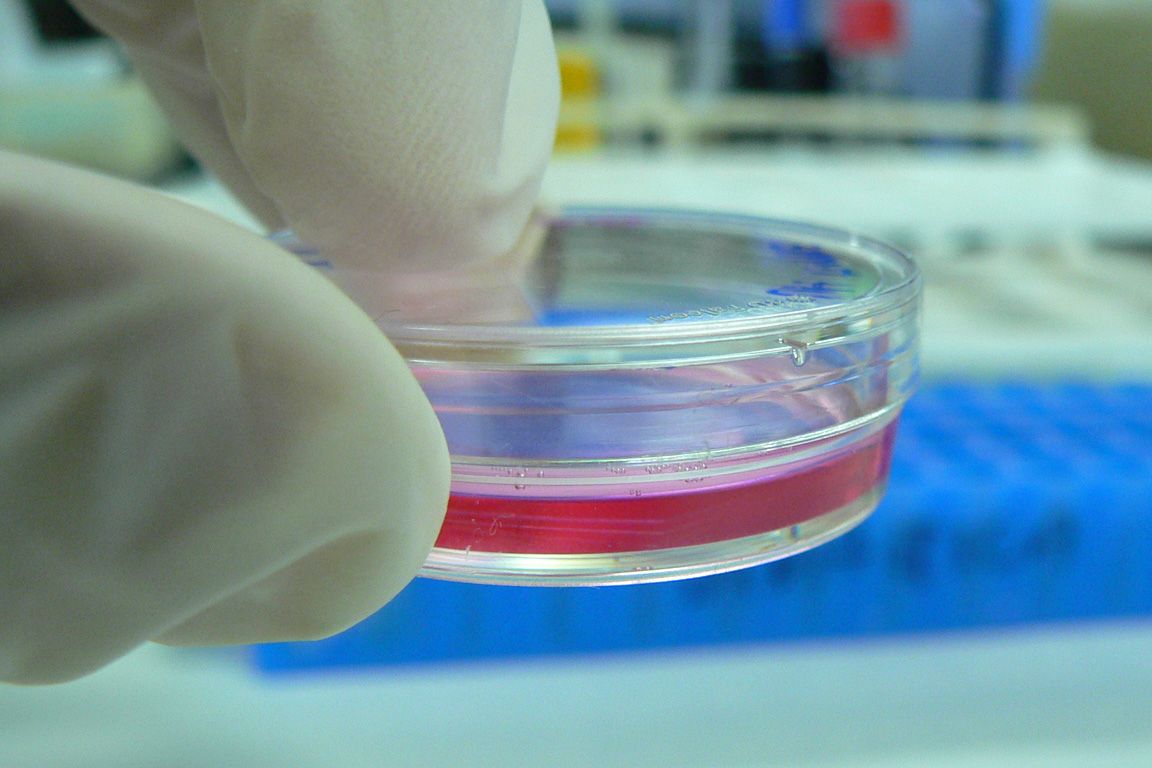 CompoundsPhoto: kaibara87 / Wikimedia Commons, CC BY 2.0
GHRP-6 is a synthetic hexapeptide that releases growth hormone from pituitary cells, and it holds an unusual place in endocrine pharmacology: it was discovered, optimized and used to clone its own receptor years before anyone knew the receptor’s natural ligand. GHRP-6, its close analog hexarelin and the related GHRP-2 are often grouped as first-generation growth hormone secretagogues. Their history explains a great deal about the ghrelin receptor, and their limitations explain why later compounds such as ipamorelin were developed.
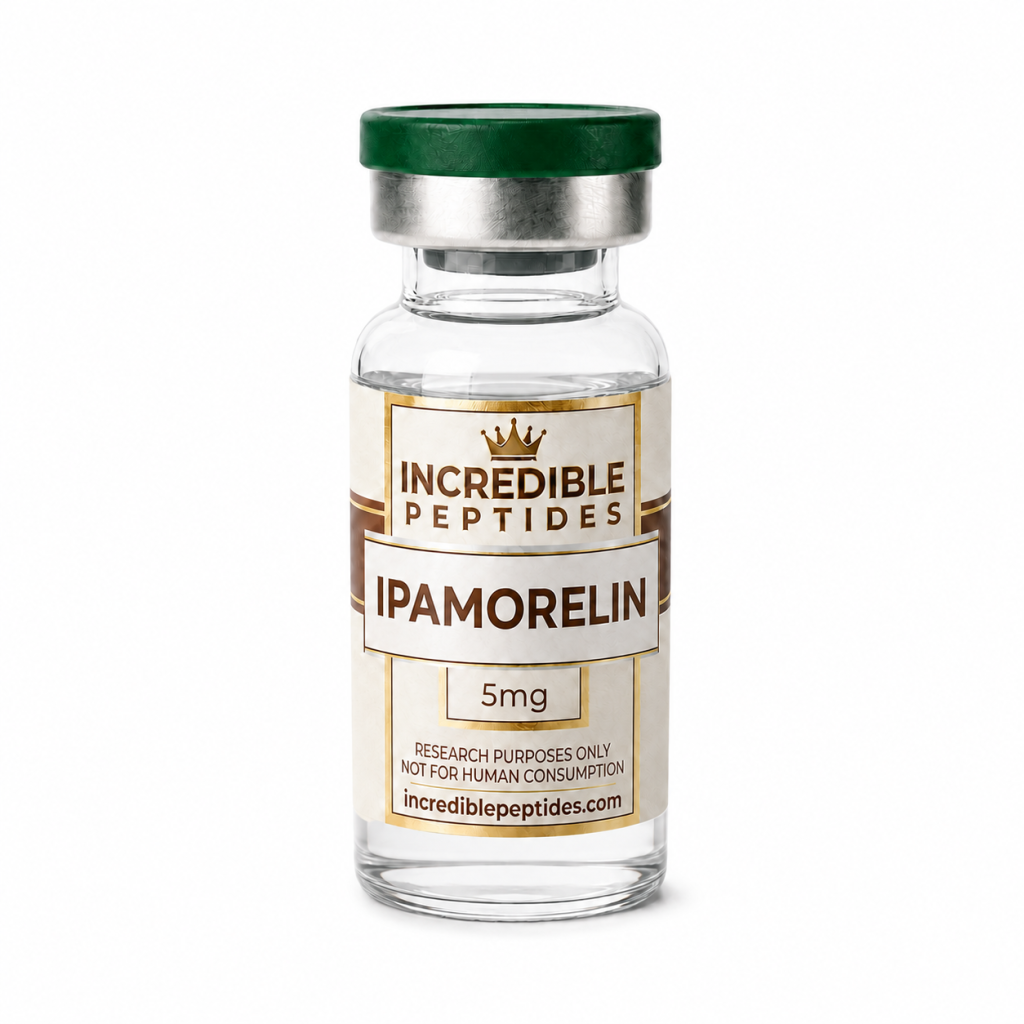
Incredible Peptides does not supply GHRP-6 or hexarelin. The closest catalog compound is ipamorelin, a pentapeptide ghrelin receptor agonist, which is used here as a point of comparison. The discussion is limited to chemistry, receptor pharmacology and preclinical findings.
Origins: from enkephalin analogs to GHRP-6
In the late 1970s, Cyril Bowers, working with the computational chemist Frank Momany, observed that certain synthetic analogs of met-enkephalin released growth hormone from rat pituitary tissue independently of any opioid activity. Successive rounds of modification, guided by conformational modeling and pituitary bioassays, led to the hexapeptide reported by Bowers and colleagues in 1984 and later known as GHRP-6:
His-D-Trp-Ala-Trp-D-Phe-Lys-NH2
Its formula is C46H56N12O6, with an average molecular weight of about 873 g/mol. Two features stand out. The D-tryptophan at position 2 and D-phenylalanine at position 5 were essential to activity and also slow proteolysis. The C-terminal amide removes a negative charge, a common feature of bioactive peptides. In the 1984 work, GHRP-6 acted directly on pituitary cells in vitro and through a mechanism distinct from growth hormone-releasing hormone (GHRH).
A receptor before its ligand
For more than a decade, the receptor for GHRP-6 was known only pharmacologically. Non-peptide mimetics were developed in parallel, and in 1996 Howard and colleagues at Merck used one of them to clone the receptor, now called the growth hormone secretagogue receptor type 1a (GHS-R1a). It is a class A G protein-coupled receptor that signals predominantly through Gq/11, activating phospholipase C, generating inositol trisphosphate and raising intracellular calcium. It also shows notably high constitutive activity in cell systems.
At the time of cloning, GHS-R1a was an orphan receptor. In 1999, Kojima and colleagues purified its endogenous ligand from rat stomach and named it ghrelin: a 28-residue peptide carrying an n-octanoyl group on serine 3, a modification required for receptor activation. The sequence of discovery, synthetic ligand first, receptor second and natural ligand last, is a textbook example of reverse pharmacology. Ghrelin shares no obvious sequence similarity with GHRP-6; both reach overlapping binding determinants in the receptor through different chemistry. For a broader view of the class, see our overview of growth hormone secretagogues.
Hexarelin and GHRP-2
Hexarelin, introduced by Deghenghi and colleagues in the early 1990s, differs from GHRP-6 at a single position: the D-tryptophan at position 2 is replaced by 2-methyl-D-tryptophan. The added methyl group increases metabolic stability and potency in the reported assays. GHRP-2 departs further, using D-alanine and D-β-naphthylalanine in its N-terminal positions. The later synthetic ipamorelin research peptide keeps the same design principles, D-aromatic residues and a C-terminal Lys amide, in a shorter pentapeptide built around Aib and D-2-naphthylalanine. The table summarizes the main compounds.
| Compound | Sequence or class | Primary receptor | Notes from preclinical work |
|---|---|---|---|
| GHRP-6 | His-D-Trp-Ala-Trp-D-Phe-Lys-NH2 | GHS-R1a | Prototype; also releases ACTH and prolactin in animal models |
| Hexarelin | His-D-2-Me-Trp-Ala-Trp-D-Phe-Lys-NH2 | GHS-R1a; also binds CD36 | Higher potency; desensitization reported on repeated exposure |
| GHRP-2 | D-Ala-D-β-Nal-Ala-Trp-D-Phe-Lys-NH2 | GHS-R1a | Potent; also affects ACTH and cortisol in animal studies |
| Ipamorelin | Aib-His-D-2-Nal-D-Phe-Lys-NH2 | GHS-R1a | Reported as selective for growth hormone release |
| Sermorelin | GHRH(1-29)-NH2 | GHRH receptor | Different receptor and signaling pathway |
The selectivity problem and ipamorelin
In animal studies, the first-generation compounds were not clean tools. GHRP-6 and GHRP-2 raised ACTH and cortisol and increased prolactin in addition to growth hormone, complicating interpretation of any downstream measurement. Hexarelin added another layer: Bodart and colleagues reported in 2002 that it binds CD36, a scavenger receptor on cardiac and endothelial cells, and mediates effects in rodent heart preparations through that site rather than through GHS-R1a. Investigators using hexarelin therefore need to consider two receptor populations.
Ipamorelin, described by Raun and colleagues in 1998 as the first selective growth hormone secretagogue, was developed in part to address this. In their swine and rat experiments, ipamorelin released growth hormone with a potency comparable to GHRP-6, without the ACTH and cortisol elevations seen with GHRP-6 and GHRP-2 at the concentrations tested. That selectivity makes ipamorelin a more interpretable GHS-R1a probe in many experimental designs. Further detail is in our profile of ipamorelin. Selectivity is always relative to the endpoints measured, however, and should be confirmed within each model.
Contrast with the GHRH pathway
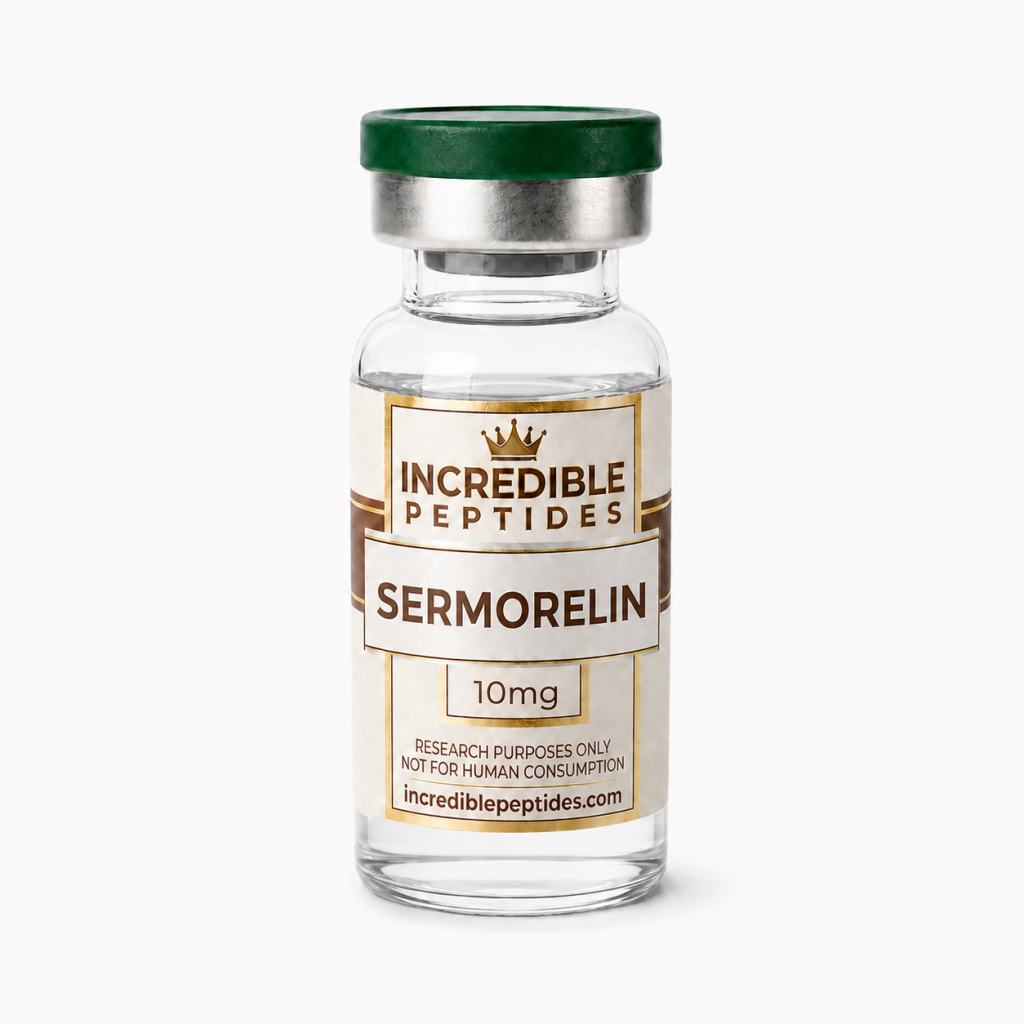
GHRP-6 and its relatives are often confused with GHRH analogs, but the pharmacology is distinct. GHRH acts at the GHRH receptor, a class B GPCR coupled mainly to Gs and cyclic AMP, whereas GHS-R1a signals primarily through Gq and calcium. In pituitary cell and animal preparations, combining a GHRH-receptor agonist with a GHS-R1a agonist has been reported to produce a greater-than-additive growth hormone response, consistent with convergent signaling from two receptor systems. For experiments that need to isolate the GHRH arm, a sermorelin research peptide, the 1-29 fragment of GHRH, provides a ligand acting at the other receptor entirely.
What GHRP-6 still teaches
GHRP-6 is now mainly of historical and pharmacological interest, but it shaped the field: it demonstrated that a small synthetic peptide could reveal an unknown receptor system, it enabled the cloning of GHS-R1a, and it set the stage for ghrelin’s discovery. Hexarelin’s CD36 binding and the endocrine cross-reactivity of the first-generation compounds are reminders that potency and selectivity are separate properties, and that the choice of agonist determines what an experiment can conclude.
References
- Bowers CY, Momany FA, Reynolds GA, Hong A. On the in vitro and in vivo activity of a new synthetic hexapeptide that acts on the pituitary to specifically release growth hormone. Endocrinology, 1984.
- Howard AD, Feighner SD, Cully DF, et al. A receptor in pituitary and hypothalamus that functions in growth hormone release. Science, 1996.
- Kojima M, Hosoda H, Date Y, et al. Ghrelin is a growth-hormone-releasing acylated peptide from stomach. Nature, 1999.
- Raun K, Hansen BS, Johansen NL, et al. Ipamorelin, the first selective growth hormone secretagogue. European Journal of Endocrinology, 1998.
- Bodart V, Febbraio M, Demers A, et al. CD36 mediates the cardiovascular action of growth hormone-releasing peptides in the heart. Circulation Research, 2002.
Research Products in This Article
Educational content for research use only. Not for human consumption. Nothing here is medical advice or a claim about safety or efficacy.