
MOTS-c: A Mitochondrial-Derived Peptide in Metabolic Research
A research profile of MOTS-c, the 16-residue mitochondrial-derived peptide: how it is encoded, what cell and rodent studies report, and how to test it.
 DODaniel Okafor, MSResearch Analyst, Molecular Biology~5 min read
 Compounds
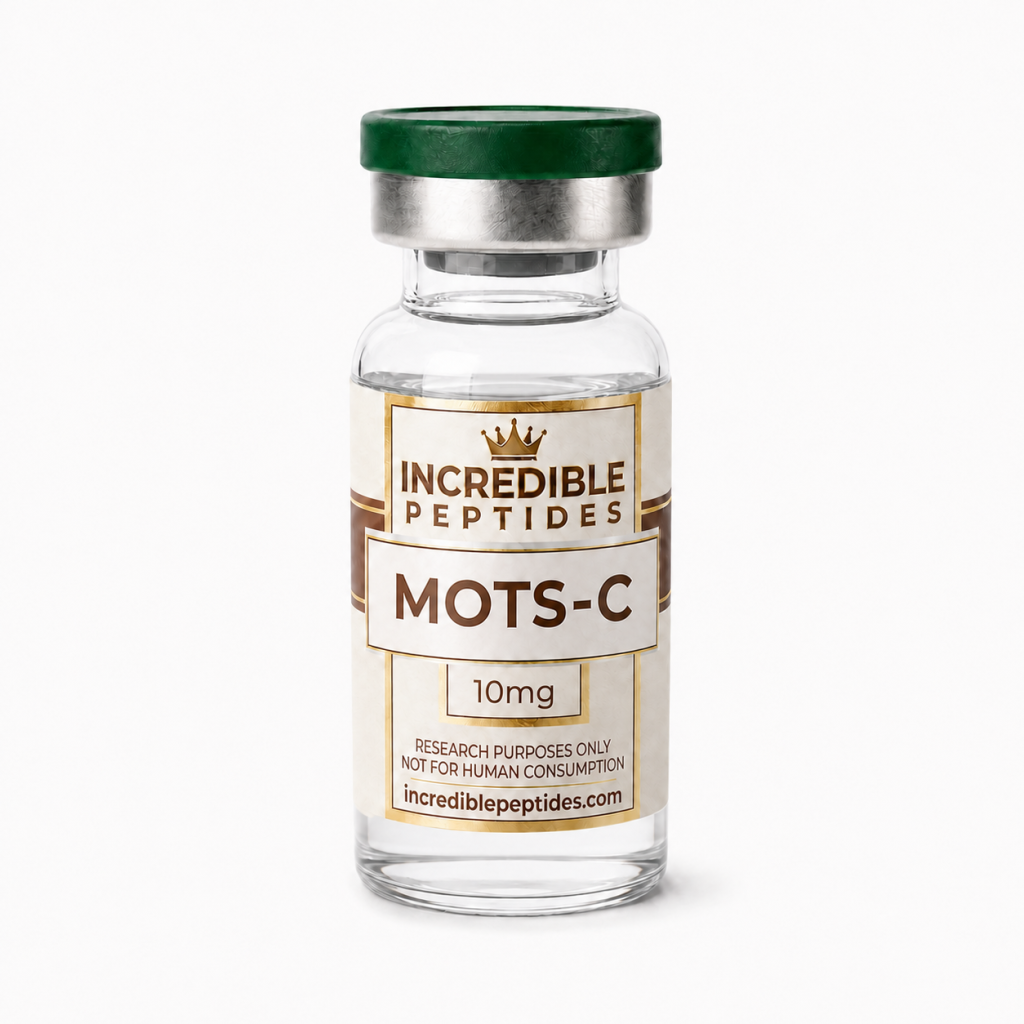
The MOTS-c peptide is a 16-residue peptide encoded not in the nuclear genome but within the mitochondrial DNA, in the region coding for 12S ribosomal RNA. Its name stands for mitochondrial open reading frame of the 12S rRNA type-c. First described in 2015, it belongs to a small group of mitochondrial-derived peptides that have changed how researchers think about communication between mitochondria and the rest of the cell, and it is now studied in cell-culture and rodent models of metabolic signaling.
This profile covers how MOTS-c is encoded, its sequence and chemistry, the AMPK and folate-cycle findings from cell and animal work, reports of its translocation to the nucleus, and the analytical points that matter when working with MOTS-c research peptide. MOTS-c is supplied for laboratory research use only and is not for human or veterinary use.
Mitochondrial-Derived Peptides
Mitochondria retain a small circular genome of about 16.6 kilobases that encodes 13 proteins of the respiratory chain together with the ribosomal and transfer RNAs needed to translate them. For a long time that was thought to be the full coding repertoire. The identification of humanin in 2001, a short peptide encoded within the 16S rRNA region, suggested otherwise, and further small open reading frames have since been proposed within the mitochondrial genome. Peptides of this kind are grouped together as mitochondrial-derived peptides, and MOTS-c is among the most studied of them.
Encoding, Sequence and Chemistry
MOTS-c is encoded by a short open reading frame inside the MT-RNR1 gene, which specifies 12S rRNA. Lee and colleagues reported in 2015 that the 16-residue product is detectable in cultured cells, rodent tissues and plasma, and they argued that the transcript is exported from the mitochondrion and translated in the cytoplasm using the standard genetic code. The site of translation remains a point of discussion, because the mitochondrial code differs from the standard code at several codons and the two readings of such a sequence need not agree.
The sequence is Met-Arg-Trp-Gln-Glu-Met-Gly-Tyr-Ile-Phe-Tyr-Pro-Arg-Lys-Leu-Arg (MRWQEMGYIFYPRKLR), with an average molar mass of about 2,174.6 g/mol for the free acid. Three arginines and a lysine make the peptide strongly basic, while tryptophan, two tyrosines and phenylalanine give it a hydrophobic, aromatic central stretch and a convenient UV chromophore. Laboratories sourcing MOTS-c should confirm on the certificate of analysis that the sequence and mass match this form, since orthologous sequences from other species are not identical and some studies use modified analogues.
AMPK and Folate-Cycle Research
The central mechanistic finding of the original report concerned the folate cycle and AMP-activated protein kinase (AMPK). In cultured cells, MOTS-c was reported to inhibit the folate cycle and the linked de novo purine biosynthesis pathway. One consequence was an accumulation of the purine-synthesis intermediate AICAR (5-aminoimidazole-4-carboxamide ribonucleotide, also called ZMP). The same species is formed inside cells from the widely used AMPK activator AICA-riboside, and the authors proposed that its accumulation explains the AMPK activation they observed after MOTS-c exposure.
AMPK is a heterotrimeric kinase that senses the cellular AMP-to-ATP ratio and coordinates energy-producing and energy-consuming pathways, which makes it a natural readout for studies of cellular energy status. The same 2015 work included rodent experiments, and later studies from several groups have examined MOTS-c in mouse models of metabolic signaling. All of these findings are preclinical, and the mechanism linking MOTS-c to the folate cycle at the molecular level has not been fully resolved; a direct protein target has not been firmly established.
When designing in vitro work with synthetic MOTS-c, appropriate controls include a scrambled-sequence peptide of the same composition, a vehicle control and, where AMPK is the readout, a reference activator such as AICA-riboside to calibrate the assay. Phosphorylation of AMPK at Thr172 and of its substrate acetyl-CoA carboxylase are the usual western blot readouts. The cell signaling assays guide discusses these readouts and their limitations.
Nuclear Translocation and Gene Expression
A second line of work, from Kim and colleagues in 2018, reported that MOTS-c translocates from the cytoplasm to the nucleus in cultured cells subjected to metabolic stress, including nutrient restriction and oxidative stress. In the nucleus it was reported to associate with chromatin and to influence the expression of nuclear genes, including genes carrying antioxidant response elements, in cooperation with the transcription factor NRF2. The study framed MOTS-c as a retrograde signal through which a mitochondrially encoded product could directly influence nuclear transcription.
The finding is conceptually important, but it rests on a limited number of studies and cell systems. Antibody specificity, the distinction between endogenous and added peptide, and the concentrations used are all factors to weigh when interpreting nuclear-localization data.
MOTS-c Compared With Other Mitochondria-Related Peptides
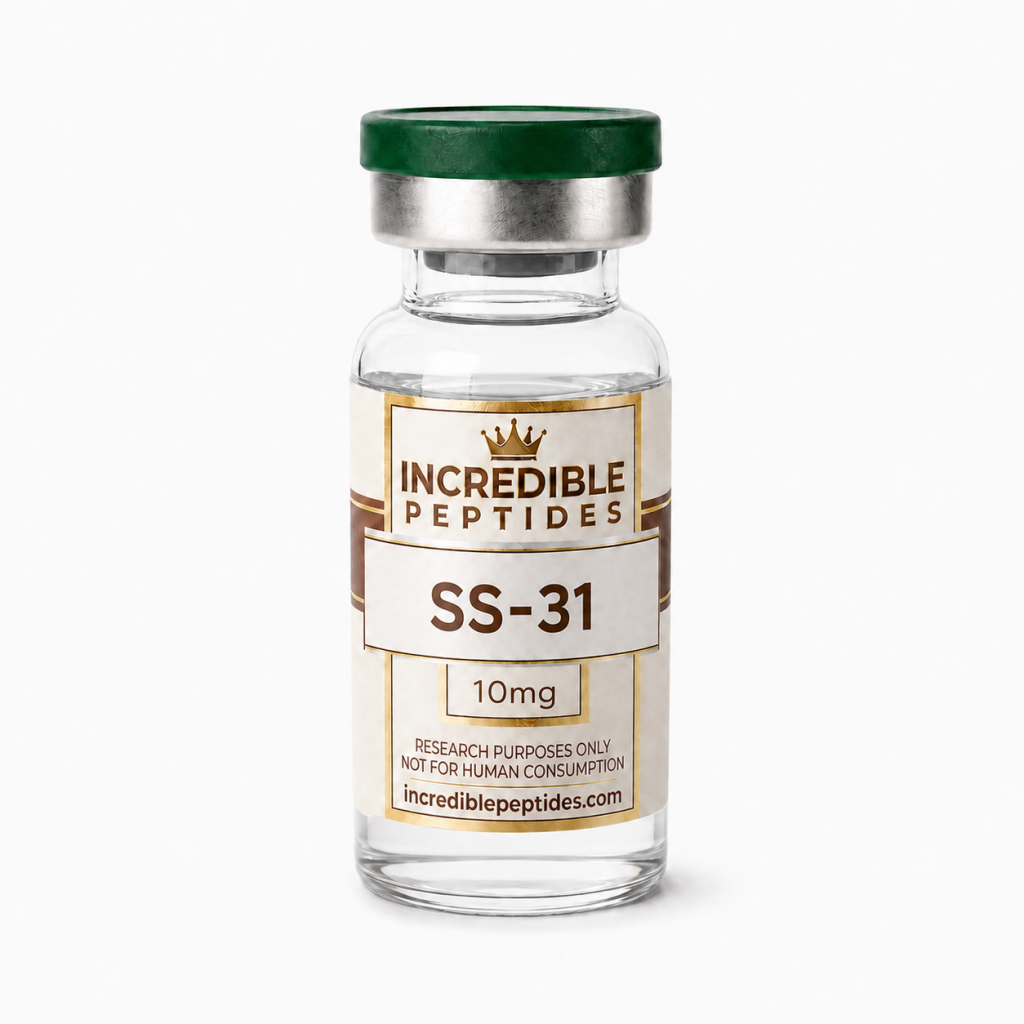
MOTS-c is sometimes discussed alongside other peptides that relate to mitochondria, but the relationship is one of topic rather than mechanism. MOTS-c is an endogenous, mitochondrially encoded peptide that appears to act largely outside the organelle, in the cytoplasm and nucleus. By contrast, SS-31, the synthetic mitochondria-targeted tetrapeptide D-Arg-Dmt-Lys-Phe-NH2, is a designed molecule that concentrates in the inner mitochondrial membrane, where it associates with the phospholipid cardiolipin. Comparing the two is useful for framing experiments on mitochondrial function, provided the distinction between a signaling peptide and a membrane-targeted small peptide is kept clear. The SS-31 profile covers its chemistry.
Analytical and Handling Notes
Two methionines and a tryptophan make MOTS-c susceptible to oxidation. Methionine sulfoxide adds 16 Da per oxidised residue and usually elutes slightly earlier than the parent peptide in reversed-phase HPLC, so a stability-indicating method should resolve these species and mass spectrometry should look for +16 and +32 Da variants. The protonated monoisotopic mass of the free acid is about 2,174.1 Da, and multiply charged ions are prominent in electrospray spectra because of the arginine content. The lyophilized peptide should be stored cold, dry and protected from light, ideally with headspace minimised, and solutions should be prepared shortly before use.
Where MOTS-c Research Stands
MOTS-c is a well-defined 16-residue sequence with a distinctive origin in the mitochondrial genome. Its proposed links to the folate cycle, AMPK and nuclear gene regulation come from cell-culture and rodent studies and should be described as preclinical. Open questions include its site of translation, its direct molecular target and how far findings in one model transfer to another. Careful identity and oxidation testing of each lot is the foundation for any experiment. MOTS-c is for laboratory research use only and is not for human or veterinary use.
References
- Lee C, Zeng J, Drew BG, et al. Original report describing MOTS-c as a mitochondrial-derived peptide. Cell Metabolism, 2015.
- Kim KH, Son JM, Benayoun BA, Lee C. The mitochondrial-encoded peptide MOTS-c translocates to the nucleus to regulate nuclear gene expression in response to metabolic stress. Cell Metabolism, 2018.
- Hashimoto Y, Niikura T, Tajima H, et al. A rescue factor abolishing neuronal cell death by a wide spectrum of familial Alzheimer’s disease genes and Aβ. Proceedings of the National Academy of Sciences USA, 2001.
- Hardie DG, Ross FA, Hawley SA. AMPK: a nutrient and energy sensor that maintains energy homeostasis. Nature Reviews Molecular Cell Biology, 2012.
Research Products in This Article
Educational content for research use only. Not for human consumption. Nothing here is medical advice or a claim about safety or efficacy.