Cagrilintide: A Long-Acting Amylin Analogue in Research
How cagrilintide was engineered from amylin, why the parent peptide aggregates, and how it engages calcitonin receptor and RAMP complexes in research assays.
 DODaniel Okafor, MSResearch Analyst, Molecular Biology~6 min read
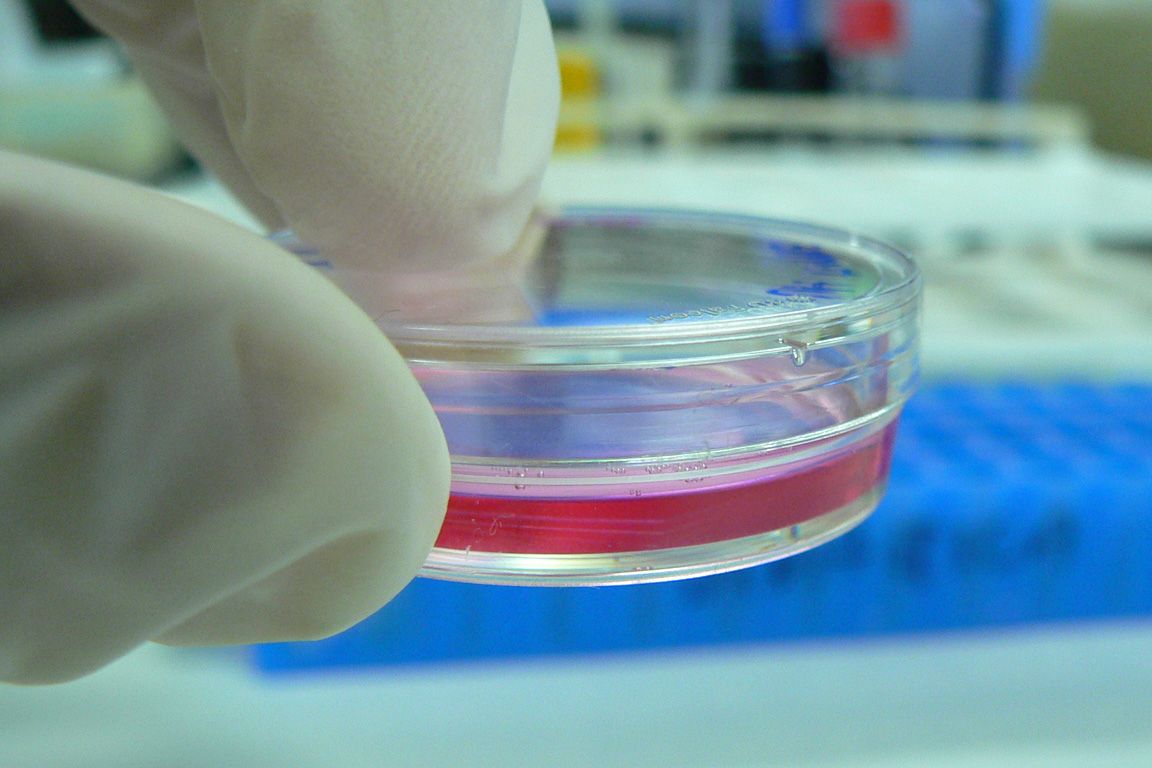 CompoundsPhoto: kaibara87 / Wikimedia Commons, CC BY 2.0
The cagrilintide peptide is a synthetic, long-acting analogue of amylin, a 37-residue hormone belonging to the calcitonin peptide family. The parent molecule is notoriously awkward to work with: in solution it self-associates into amyloid fibrils, and like most unmodified peptides it is cleared quickly in animal pharmacokinetic studies. Cagrilintide was engineered to solve both problems through amino acid substitutions and lipidation, and it has become a useful probe for amylin receptor pharmacology in cell-based and preclinical animal-model research.
This profile covers the parent hormone, the structural basis of amylin aggregation, the design steps that led from early proline-substituted analogues to an acylated molecule, and the receptor complexes cagrilintide engages. It closes with the analytical points that matter when a laboratory sources the cagrilintide research peptide for receptor or formulation work.
Amylin: the parent peptide
Amylin, also called islet amyloid polypeptide (IAPP), was identified in the late 1980s as the main protein component of amyloid deposits found in pancreatic islets. It is produced by pancreatic beta cells, where it is stored and co-secreted with insulin, and it shares a structural family with calcitonin, the calcitonin gene-related peptides (CGRP) and adrenomedullin. Members of the family share a small N-terminal ring closed by a disulfide bond and an amidated C-terminus.
In amylin the ring is formed by a disulfide between cysteines 2 and 7, and the C-terminal tyrosine carries an amide rather than a free carboxylate. Structure-activity work across the family points to a division of labour: the N-terminal ring region is associated with receptor activation, while the C-terminal portion contributes much of the binding affinity. Fragments lacking the first seven residues, such as amylin(8-37), act as weak antagonists in receptor assays, mirroring the better-known behaviour of CGRP(8-37).
Why native amylin aggregates
The amyloid-forming sequence is one of the most aggregation-prone peptides studied. In aqueous solution near neutral pH, monomers pass through oligomeric intermediates and assemble into fibrils with a cross-β architecture, in which β-strands run perpendicular to the fibril axis. The segment spanning roughly residues 20 to 29 is central to this behaviour and contributes to the fibril core.
A natural comparison made the mechanism tractable. The rat and mouse sequences differ from the amyloid-forming sequence at six positions, three of which are prolines at positions 25, 28 and 29. Proline fits poorly into β-sheet structure, because its ring constrains the backbone and it lacks an amide hydrogen for inter-strand hydrogen bonding, and the rodent peptide does not form fibrils under conditions where the amyloidogenic sequence readily does. That observation became a design principle: placing prolines in the aggregation-prone segment suppresses fibril formation while largely preserving receptor activity.
For laboratory work the aggregation tendency has practical consequences. Solutions of amyloidogenic amylin can change over hours, so fibril-kinetics studies start from carefully disaggregated material and follow assembly with thioflavin T fluorescence, circular dichroism or electron microscopy. Analogue design aims to remove that variability, so that a receptor assay measures a defined molecule rather than a shifting mixture of monomer, oligomer and fibril.
From proline substitution to a long-acting analogue
The first generation of stabilized analogues, exemplified by pramlintide, transplanted the rodent prolines into positions 25, 28 and 29. That largely solved fibrillation, but the resulting peptides remained short-lived in animal pharmacokinetic studies for the same reasons as most unmodified peptides: proteolysis and renal clearance.
Cagrilintide reaches extended exposure by a different route, borrowing a strategy established with GLP-1 analogues. The molecule carries a long-chain diacid attached through a linker near the N-terminus, a modification that promotes reversible binding to serum albumin and slows clearance. Alongside the lipidation, the developers introduced substitutions intended to improve chemical and physical stability, including resistance to fibrillation and to degradation routes such as asparagine deamidation. The design rationale and medicinal chemistry are described by Kruse and colleagues in their 2021 report; anyone who needs the exact sequence and modification sites should take them from that publication or from lot documentation rather than from secondary summaries.
The same lipidation logic underlies semaglutide, which is why the two molecules are so often discussed together. Material combining them is available as a semaglutide-cagrilintide dual-peptide research blend, and the formulation and testing questions raised by that pairing are covered in our article on CagriSema and two-peptide formulations.
Amylin receptors: calcitonin receptor plus RAMPs
Amylin has no dedicated receptor gene. Its high-affinity receptors are complexes formed when the calcitonin receptor (CTR), a class B G protein-coupled receptor, associates with one of three receptor activity-modifying proteins: RAMP1, RAMP2 or RAMP3. The resulting complexes are designated AMY1, AMY2 and AMY3. RAMPs are single-transmembrane accessory proteins first characterized through their effect on the calcitonin receptor-like receptor (CLR), which they convert into a CGRP receptor (with RAMP1) or adrenomedullin receptors (with RAMP2 or RAMP3).
The RAMP partner reshapes CTR pharmacology. Alone, CTR binds calcitonin with high affinity and amylin comparatively weakly; co-expression with a RAMP, particularly RAMP1 or RAMP3, raises affinity for amylin. Because AMY1 also responds to CGRP, and because salmon calcitonin is potent at both CTR and the amylin receptors, selectivity within this family is relative rather than absolute. Characterization therefore relies on panels of transfected cell lines expressing CTR alone, each CTR-RAMP combination and the related CLR-RAMP receptors, with Gs-coupled cAMP accumulation as the usual functional readout.
Published characterization describes cagrilintide as a non-selective agonist that activates the amylin receptors and the calcitonin receptor itself in such cell-based assays. Which receptors a given system actually expresses is therefore a key interpretive variable, and expression should be confirmed rather than assumed when results are compared across cell lines. Our overview of peptide receptor binding covers binding and functional assay concepts in more detail.
Handling and analytical considerations
Lipidation changes how an analogue behaves on the bench. Acylated peptides are retained strongly on reversed-phase HPLC columns and may need higher organic content or a less hydrophobic stationary phase than an unmodified peptide of similar length. They also adsorb to plastic and glass surfaces more readily and can form micelle-like assemblies in solution, so stock solutions for analysis are best prepared in low-binding vessels with the solvent, pH and concentration recorded.
Identity confirmation by mass spectrometry should account for the full acylated structure. A mass consistent with the backbone but missing the side chain, or a +1 Da shift consistent with deamidation, indicates a different molecule from the one described. Because the closed disulfide ring is 2 Da lighter than the reduced form, high-resolution measurement can also confirm that the ring is intact. When reviewing a cagrilintide lot and its certificate, compare the observed mass with the theoretical value from the published structure, and check that HPLC purity was measured with a method suited to a lipidated peptide. Lyophilized material is generally kept frozen, protected from light and moisture, and equilibrated to room temperature before opening.
Cagrilintide as a research tool
Cagrilintide is best understood as the answer to two chemistry problems: the aggregation of the amyloidogenic amylin sequence and the short half-life of unmodified peptides. Proline substitution addressed the first; acylation and further sequence engineering addressed the second. What the researcher is left with is a stable agonist of the CTR-RAMP receptor family whose selectivity must be characterized in each assay system. Cagrilintide is supplied for laboratory research use only; not for human or veterinary use.
References
- Kruse T, Hansen JL, Dahl K, et al. Development of cagrilintide, a long-acting amylin analogue. J Med Chem. 2021.
- McLatchie LM, Fraser NJ, Main MJ, et al. RAMPs regulate the transport and ligand specificity of the calcitonin-receptor-like receptor. Nature. 1998.
- Christopoulos G, Perry KJ, Morfis M, et al. Multiple amylin receptors arise from receptor activity-modifying protein interaction with the calcitonin receptor gene product. Mol Pharmacol. 1999.
- Poyner DR, Sexton PM, Marshall I, et al. International Union of Pharmacology. XXXII. The mammalian calcitonin gene-related peptides, adrenomedullin, amylin, and calcitonin receptors. Pharmacol Rev. 2002.
- Hay DL, Chen S, Lutz TA, Parkes DG, Roth JD. Pharmacol Rev. 2015 (review of amylin pharmacology and physiology).
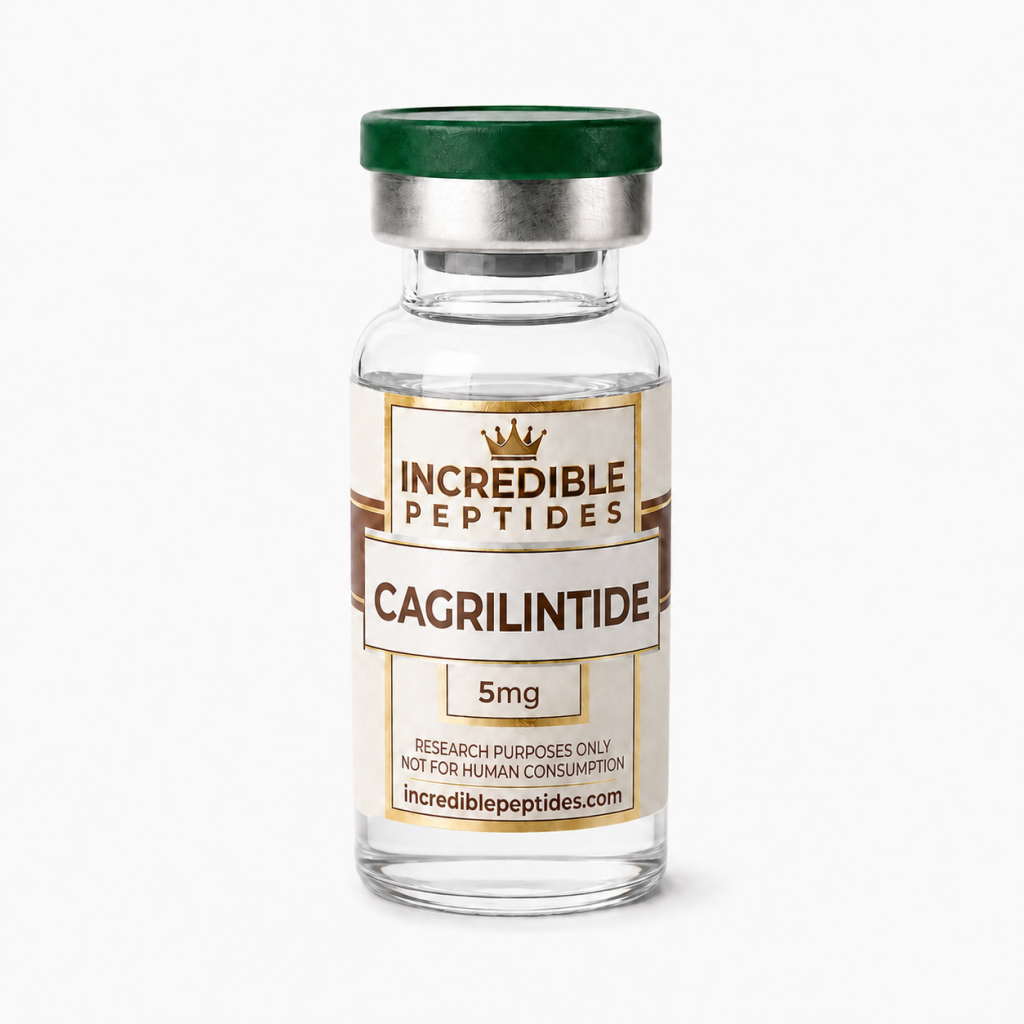
Research Products in This Article
Educational content for research use only. Not for human consumption. Nothing here is medical advice or a claim about safety or efficacy.